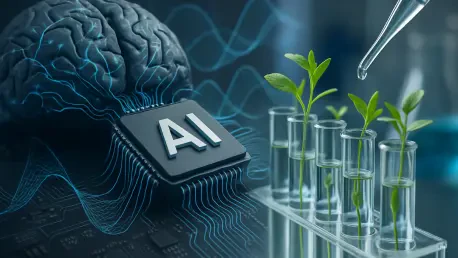

The global pharmaceutical industry stands on the brink of a foundational transformation, propelled not by gradual advancements but by a monumental leap in technological power. The convergence of artificial intelligence (AI) and quantum computing is poised to shatter the inefficient, decades-old model of drug discovery. This analysis explores how this synergy is establishing a new paradigm of prediction and precision, highlighting why the Gulf region, with its ambitious tech-forward vision, is uniquely positioned to emerge as a global leader in this new era of biotechnology. Advanced computational tools are rewriting the rules of research and development, creating an unprecedented opportunity for nations like the UAE and Saudi Arabia to build a world-class life sciences industry from the ground up.
The Broken Blueprint of Modern Drug Discovery
For decades, the path from a promising molecule to an approved drug has been an arduous and uncertain journey. The traditional model is fundamentally broken, characterized by timelines that span over a decade, costs that regularly exceed a billion dollars, and a staggering 90% failure rate for drugs that enter clinical trials. This high-risk, low-yield process has been described as less predictive than Hollywood’s box office analytics. The core issue lies in an inability to accurately foresee how a chemical compound will interact with complex biological systems. This lack of predictive power forces pharmaceutical companies into a costly cycle of trial and error, stifling innovation and delaying life-saving treatments.
Forging a New Paradigm from Trial and Error to Precision and Prediction
The Quantum Leap in Molecular Simulation
The solution to the industry’s deep-seated challenges lies in moving from physical experimentation to digital simulation. This is where the synergy of AI and quantum computing creates a true superpower for medical research. Industry pioneers are pioneering an ecosystem that can simulate biological activity at the subatomic, electron level—a scale governed by the complex laws of quantum mechanics. By harnessing immense computational power, researchers can now accurately predict how a specific drug compound will bind to a target molecule and behave within the body before ever committing to expensive and time-consuming laboratory work. This predictive capability represents a monumental shift, enabling scientists to design and validate new therapeutics with unprecedented speed.
Beyond Mainstream AI the Power of Large Quantitative Models
The artificial intelligence driving this biotech revolution is fundamentally different from the generative AI that has captured the public imagination. Instead of Large Language Models (LLMs) trained on vast swaths of internet data, this new frontier is powered by Large Quantitative Models (LQMs). These sophisticated systems are not built on language but on the fundamental laws of physics and chemistry, ensuring their predictions about molecular interactions are robust and reliable. To accelerate this global shift, vast open datasets with millions of molecular “Lego blocks” are being made available for researchers worldwide to design and build novel therapeutics, fostering a more collaborative ecosystem.
The Gulf’s Unique Advantage a Diverse Genetic Goldmine
The Gulf’s ambition to lead in this sector is anchored by more than just capital; it possesses a unique strategic asset in its population. Initiatives like the Emirati Genome Program are creating one of the most comprehensive and diverse genetic databanks in the world. The UAE’s uniquely cosmopolitan demographic provides an ideal testing ground for developing precision medicines tailored to a wide range of global populations—a significant challenge that major Western pharmaceutical firms have struggled to address. By leveraging this rich dataset with advanced AI and quantum simulation, the region can pioneer treatments that are more effective and inclusive, solidifying its position as an essential hub for personalized medicine.
Charting the Future the Gulf’s Five Year Sprint to Biotech Leadership
The convergence of AI and quantum computing has effectively reset the clock on the pharmaceutical industry, creating a historic opening for new players. The Gulf states, with aggressive national strategies focused on AI and technology, are perfectly positioned to capitalize on this disruption. Instead of spending decades building a legacy biotech infrastructure, the region can bypass traditional development pathways. This allows for the establishment of a globally competitive industry in as little as five to seven years, presenting a critical opportunity to generate and own valuable intellectual property (IP) in a sector where the Gulf currently holds no significant stake.
A Strategic Imperative Seizing the Biotech Opportunity
This technological shift is democratizing the pharmaceutical landscape. It levels the playing field, enabling agile biotech firms and new entrants from emerging markets to compete directly with established industry giants, many of whom are already facing pressure from expiring patents on their blockbuster drugs. For the Gulf, this represents a transformative moment to pivot from being a consumer of global pharmaceuticals to a self-sufficient and innovative producer. The recommended strategy is clear: double down on investments in computational infrastructure, cultivate local talent in bioinformatics and quantum physics, and foster a regulatory environment that encourages rapid innovation.
The Dawn of a Gulf Led Healthcare Revolution
The fusion of artificial intelligence and quantum computing was not merely an improvement on the drug discovery process; it was a fundamental reinvention. By replacing a broken, inefficient model with a new paradigm of prediction and precision, these technologies unlocked a future of faster, cheaper, and more effective medical innovation. This disruption created a once-in-a-generation opportunity for the Gulf to establish itself as a global powerhouse in biotechnology. The ultimate vision was a future where the next generation of life-saving drugs was discovered, patented, tested, and approved in the heart of the Gulf, heralding a true revolution in global healthcare and cementing the region’s legacy as a leader in science and technology.