
A groundbreaking policy shift in Singapore’s healthcare landscape is poised to dramatically alter the daily lives of individuals managing some of the most challenging and rare forms of diabetes. The nation’s Ministry of Health (MOH) has substantially widened its subsidy program for continuous glucose monitoring (CGM) devices, a move effective since December 1 that extends a critical financial lifeline to new, specific groups of patients. This decision represents a significant step towards making advanced medical technology more accessible, aiming to not only ease the heavy financial burden associated with chronic illness but also to profoundly enhance the quality of life and safety for those with complex diabetic conditions. This expansion builds upon an earlier initiative for Type 1 diabetes patients, signaling a clear trend towards more inclusive, personalized, and technology-driven healthcare support for the nation’s diabetic community.
A Closer Look at the New Policy
Expanding Eligibility Who Benefits Now
The updated subsidy framework now casts a wider net, specifically targeting patients at public healthcare institutions who face unique physiological challenges in managing their blood sugar. The first newly included group comprises individuals with pancreatogenic diabetes mellitus, a severe condition that develops as a direct consequence of significant damage to the pancreas, an organ essential for insulin production. A key example of this demographic includes cancer patients who have undergone a pancreatectomy—the complete surgical removal of the pancreas—as a necessary part of their treatment. This procedure effectively eliminates the body’s natural ability to produce insulin, creating a highly volatile and difficult-to-manage form of diabetes. Medical experts note that this particular patient cohort is very small, representing a tiny fraction of the more than 400,000 people living with diabetes in Singapore, yet their medical needs are among the most acute and complex, making access to advanced monitoring tools like CGMs a matter of daily safety and stability.
The second group of beneficiaries now eligible for this vital financial support are patients diagnosed with monogenic diabetes. Unlike the more common forms of diabetes, this type stems from a mutation in a single gene and is often inherited. According to Dr. David Carmody, a senior consultant in endocrinology at Singapore General Hospital (SGH), this group is also relatively small, estimated to constitute less than two percent of all diabetes patients in the country. This targeted inclusion stands in stark contrast to the management of Type 2 diabetes, which accounts for the overwhelming majority of cases in Singapore. Type 2 diabetes is frequently linked to lifestyle factors and obesity, and in many instances, it can be managed or even improved through dietary changes and regular exercise. The government’s decision to focus on pancreatogenic and monogenic diabetes underscores a strategic effort to provide specialized support where the need is greatest, acknowledging that these conditions require intensive medical intervention and monitoring that goes far beyond lifestyle adjustments alone.
The Reasoning Behind the Decision
The Ministry of Health’s decision to expand the subsidies was guided by a pragmatic and patient-centered recommendation from its medical technology advisory committee. The committee openly acknowledged that the body of published scientific evidence focusing specifically on the use of CGM devices for pancreatogenic and monogenic diabetes was limited. However, this lack of specific data did not halt progress. Instead, the committee reached a strong consensus that the fundamental clinical challenges and risk profiles for these patients are remarkably similar to those of individuals with Type 1 diabetes. For Type 1 diabetes, an autoimmune condition, the use of CGM technology is already an established and evidence-backed standard of care. This logical parallel formed the cornerstone of the recommendation, allowing the committee to extrapolate the known benefits of CGM to these new patient groups based on shared clinical characteristics and management needs.
Further bolstering this rationale, the committee looked to international precedents and best practices. It was noted that other developed nations with advanced healthcare systems, including Australia and Canada, already provide reimbursement or subsidies for CGM devices for these same patient populations. This observation provided crucial external validation, indicating that the move was in alignment with a global trend towards broader access to this transformative technology. By considering both the clinical similarities to Type 1 diabetes and the established policies in other countries, the advisory committee concluded that extending the subsidy was not only justified but also a safe, clinically effective, and cost-effective strategy. This comprehensive assessment paved the way for a policy change that prioritizes patient well-being and brings Singapore’s standard of care in line with international benchmarks for managing complex diabetic conditions.
The Real-World Impact on Patients
Demystifying CGM Technology
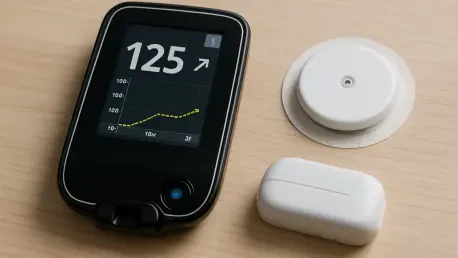
At the core of this policy change is the Continuous Glucose Monitor (CGM), a piece of wearable technology that is revolutionizing diabetes care. Typically worn as a small patch on the body, a CGM device features a tiny sensor inserted just under the skin that continuously measures glucose levels in the interstitial fluid. This data is then transmitted wirelessly in real-time to a dedicated reader device or, more commonly, to a user’s smartphone via a dedicated application. This constant, uninterrupted stream of information provides a dynamic and comprehensive view of a person’s glucose fluctuations throughout the day and night. The system stands in stark contrast to traditional blood glucose monitoring, which relies on frequent and often painful finger-prick tests. While finger-pricks provide a single snapshot of glucose levels at one moment in time, a CGM offers the entire story, revealing trends, patterns, and the speed and direction of glucose changes, empowering both patients and their doctors with a much deeper understanding of their condition.
The true power of CGM technology lies in its ability to translate raw data into actionable insights that can prevent medical emergencies. As explained by senior consultant endocrinologist Dr. Sue-Anne Toh, the immediate feedback loop created by the device is transformative for diabetes management. By observing their glucose trends in real-time, patients can see how their levels respond to food, exercise, stress, and medication. This enables them to make timely and precise adjustments to their insulin dosages, helping them avoid the dangerous and potentially life-threatening extremes of hyperglycemia (dangerously high blood sugar) and hypoglycemia (dangerously low blood sugar). This proactive approach to management not only improves clinical outcomes by helping patients maintain their glucose levels within a target range but also provides a profound sense of security and control, reducing the constant anxiety that often accompanies the management of a volatile chronic illness.
Easing the Financial Burden
The financial relief offered by the new subsidies is profound, directly addressing the high out-of-pocket costs that can make this technology inaccessible for many. The policy provides for subsidies ranging from 30 percent to 80 percent, with the exact amount dependent on the patient’s financial circumstances. Currently, the only model recognized for this program is the Dexcom G6 CGM system. This system involves ongoing costs for its components, which include disposable sensors that last up to 10 days each and a reusable transmitter that has a lifespan of about three months. Without any financial assistance, the monthly expenditure for keeping this system operational can easily exceed $200, a significant and recurring expense that adds to the overall financial strain of managing a chronic disease. The government’s intervention substantially mitigates this barrier, making consistent use of this superior monitoring technology a feasible option for a wider range of patients.
The real-world effect of this financial support is powerfully illustrated by the personal account of Ms. Ng Zhuang Shu, a 32-year-old researcher living with a form of neonatal diabetes. Before the policy expansion, she was ineligible for any CGM subsidies and was personally shouldering the full cost of her device. Her monthly expenses for the essential sensors alone amounted to approximately $230. With the new criteria now in place, Ms. Ng anticipates that her monthly cost will drop significantly to around $147. This saving of over $80 per month represents a tangible relief that helps alleviate the cumulative financial burden of her condition, which also includes recurring expenses for medical consultations, insulin, and other necessary supplies. For patients like her, the subsidy is not just a discount but a meaningful improvement in their ability to manage their health without constant financial stress.
A Life-Saving Lifeline
For some patients, the accessibility of CGM technology transcends convenience and financial relief, becoming a genuine matter of life and death. This reality is vividly captured in the experience of Mr. Danny Raven Tan, a 58-year-old freelance artist. Mr. Tan developed a severe form of pancreatogenic diabetes after his entire pancreas was removed due to a cancer relapse, an ordeal that began with an initial diagnosis in 2010. In 2023, he endured two terrifying hypoglycemic events that underscored the critical danger of his condition. In one instance, his blood sugar plummeted so low that he fainted suddenly at a public hawker center. A second, even more severe episode occurred at home when he administered his insulin dose but fell asleep before eating his lunch, causing him to lose consciousness completely. He was discovered just in time and saved by paramedics who administered emergency fructose to stabilize him.
These harrowing, life-threatening incidents served as a stark wake-up-call, convincing Mr. Tan of the absolute necessity of relying faithfully on a CGM device to monitor his dangerously unpredictable glucose levels. While he currently uses a model that is not covered by the subsidy, the expansion of the program to include cancer patients like him provides a crucial financial lifeline. The immense costs associated with his concurrent diabetes and cancer treatments have placed a heavy strain on his finances. He expressed his immediate intention to discuss switching to the subsidized Dexcom G6 system with his endocrinologists. For Mr. Tan, the subsidy is more than just a cost-saving measure; it is an essential support system that enables him to afford the very technology that helps keep him safe from the sudden and silent threat of a fatal hypoglycemic event, allowing him to manage his complex health battles with one less overwhelming burden.
A Trend Towards Personalized Care
The Singaporean government’s decision to broaden CGM subsidies represented a compassionate and logical evolution in its national healthcare policy. This expansion, which was praised by clinicians and patients alike, was rooted in a thoughtful evaluation of clinical parallels and international best practices, demonstrating a willingness to act decisively even in the absence of extensive, condition-specific published data. The move signaled a significant shift toward a more inclusive and personalized approach to healthcare, officially recognizing that the severe challenges faced by patients with pancreatogenic and monogenic diabetes required access to the same advanced tools available to those with Type 1 diabetes. This policy ultimately ensured that some of the most medically vulnerable individuals within Singapore’s large diabetic community gained access to technology that was not merely beneficial, but in some cases, truly life-saving.