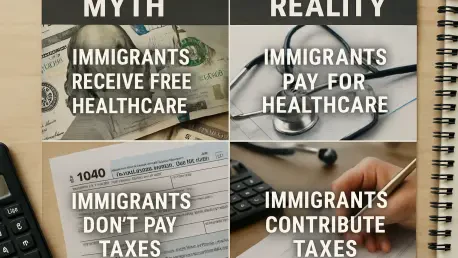

The prevailing narrative surrounding immigrant access to public health benefits often operates on a set of assumptions that stand in direct contradiction to the actual statutory requirements governing the American medical system. While political discourse frequently suggests an open-door policy for government-funded medical care, the reality for millions of foreign-born residents is defined by a landscape of exclusion and rigorous eligibility testing. This disconnect has created a substantial eligibility gap where the acute medical needs of resident populations are met with a wall of administrative and legal barriers that prevent enrollment in programs like Medicaid and the Children’s Health Insurance Program. As the healthcare landscape evolves in 2026, understanding these distinctions is not merely an academic exercise but a necessity for grasping the operational realities of the safety net. The friction between public perception and legal eligibility remains one of the most significant hurdles to achieving a stabilized healthcare market, as millions of residents navigate a system that often prioritizes status over public health necessity.
Roughly one in four children currently residing in the United States lives in a household where at least one parent is an immigrant, a demographic reality that underscores the high stakes of current policy debates. Even in “mixed-status” households where the children are natural-born U.S. citizens and technically eligible for full benefits, the fear of family separation or future legal repercussions often leads to suppressed enrollment rates. This avoidance behavior is not a result of a lack of need but rather a calculated response to a complex web of shifting regulations that many families find impossible to navigate without legal counsel. Consequently, the children of immigrants often experience lower rates of preventive care and higher rates of unmet dental and nutritional needs compared to their peers in native-born households. The resulting disparity creates a long-term public health challenge, as early childhood health outcomes are primary predictors of adult productivity and economic stability, yet current frameworks frequently overlook this intergenerational impact in favor of immediate fiscal restriction.
Federal Barriers: The Myth of Universal Access
The categorical exclusion of undocumented immigrants from federal Medicaid, the Children’s Health Insurance Program, and Medicare represents the most significant barrier within the current U.S. healthcare framework. Despite the political rhetoric suggesting that these populations consume a large share of public health resources, federal law expressly prohibits them from accessing any comprehensive government-sponsored health coverage. Furthermore, these individuals are barred from purchasing private insurance through the Affordable Care Act marketplaces, even if they intend to pay the full premium without any government assistance. Their only point of entry into the federal system is Emergency Medicaid, a highly restrictive program that only provides reimbursement to hospitals for life-saving interventions, such as emergency room visits for trauma or labor and delivery. This program does not cover primary care, management of chronic conditions like diabetes or hypertension, or prescription medications, leaving a massive portion of the population without a viable path to routine medical maintenance.
For those residing in the country with legal status, such as Lawful Permanent Residents or “green-card” holders, the path to coverage is still fraught with significant time-based delays. Most lawfully present immigrants are subject to a mandatory five-year waiting period, commonly known as the five-year bar, before they can even apply for Medicaid or the Children’s Health Insurance Program. While these individuals may be eligible for subsidies to purchase private plans on the insurance exchange during this period, they remain ineligible for the public safety net that is often the only affordable option for low-income workers. Furthermore, specific legal categories such as those under Temporary Protected Status or participants in the Deferred Action for Childhood Arrivals program face even more permanent exclusions, as they are generally considered ineligible for Medicaid regardless of how long they have contributed to the tax base or resided in their communities. These policy choices ensure that a large segment of the legal workforce remains perpetually underinsured, regardless of their legal standing or economic contribution.
Statistical Disparities: Measuring the Coverage Gap
Data from 2025 and 2026 confirms that immigrants are significantly more likely to be uninsured than their U.S.-born counterparts, effectively refuting the myth that they place a disproportionate burden on public insurance. The uninsured rate for immigrant adults currently stands at roughly 19%, which is more than double the 8% rate observed among the native-born population. When looking specifically at undocumented adults, the disparity becomes even more alarming, with nearly 46% lacking any form of health insurance whatsoever. This lack of coverage is not a reflection of employment status, as most immigrants are active participants in the labor force, but rather a direct consequence of legal barriers that prevent them from accessing employer-sponsored or government-provided plans. The reality of the American healthcare system is that immigration status, far more than income level or geographic location, serves as the primary determinant of whether an individual has access to a primary care physician or must rely on emergency services.
While Medicaid and the Children’s Health Insurance Program serve as essential lifelines for millions of Americans, they actually cover a smaller percentage of the immigrant population than the U.S.-born population. In the current fiscal environment, non-citizens represent a mere 6% of the total enrollees in these public programs, a figure that highlights how rarely these populations actually utilize the benefits they are often accused of draining. This statistical reality underscores the fact that the high rate of uninsurance among immigrants is a structural issue driven by policy design rather than a lack of need. Researchers have consistently found that when the same income and employment variables are applied to both native-born and immigrant populations, the immigrant group consistently shows lower enrollment rates in public assistance. This suggests that the legal hurdles and administrative complexities associated with “qualified” status act as a powerful deterrent, keeping enrollment low even among those who have technically met all the necessary requirements for participation in federal programs.
The Chilling Effect: Fear and Public Health Impacts
The “chilling effect” remains a pervasive force in the lives of immigrant families, where federal enforcement strategies and “public charge” policies discourage even eligible individuals from seeking necessary medical care. Many families operate under a constant cloud of fear, believing that participating in a health or nutrition program will jeopardize their ability to renew a visa, apply for a green card, or protect a family member from deportation. This fear is not unfounded, as shifting administrative rules over the past decade have frequently changed the criteria for what constitutes a “public charge.” Even when rules are clarified to exclude health benefits from these determinations, the initial damage to public trust often takes years to repair. Recent surveys indicate that a significant percentage of immigrant households have skipped essential food, housing, or health assistance specifically to avoid government scrutiny, leading to a measurable decline in the overall well-being of these communities.
This climate of insecurity has profound implications for individual mental health and broader public health outcomes, as chronic stress and anxiety become normalized within immigrant populations. Statistics show that over 75% of undocumented residents and nearly half of lawfully present immigrants report experiencing persistent stress related to their immigration status and the fear of detection. This physiological burden is linked to a higher incidence of sleep disorders, hypertension, and other stress-related ailments that go untreated because of the aforementioned barriers to care. When individuals avoid the healthcare system until a crisis occurs, the consequences are felt by the entire community in the form of increased emergency room congestion and the potential for undiagnosed communicable diseases to spread. The narrative accounts of these individuals describe a pervasive sense of discrimination that deters them from engaging with medical professionals, ensuring that they remain on the periphery of the healthcare system until their conditions become life-threatening.
Fiscal Realities: The Limited Scope of Emergency Medicaid
Critics of immigrant healthcare often point to the costs of Emergency Medicaid as a major fiscal drain, but the data tells a far more modest story regarding its impact on the federal budget. In the most recent fiscal cycles, Emergency Medicaid spending has accounted for less than half of one percent of the total Medicaid expenditure, representing a tiny fraction of the $860 billion annual budget. It is important to clarify that this program is not a health insurance plan in the traditional sense; it does not provide for doctor visits, specialists, or preventative screenings. Instead, it serves as a reimbursement mechanism that fulfills the federal mandate under the Emergency Medical Treatment and Labor Act, which requires hospitals to stabilize any patient who enters an emergency room regardless of their ability to pay or their legal status. Without this funding, the financial burden of this mandated care would not disappear; it would simply shift entirely onto the shoulders of state governments and local hospital systems.
By acting as a partial safety net for hospitals, Emergency Medicaid actually helps maintain the financial viability of safety-net facilities that serve all residents, regardless of their background. If this funding were to be eliminated or significantly reduced, the resulting increase in uncompensated care would likely force many community hospitals to cut services or close their doors entirely, affecting the quality of care for every patient in the region. Experts argue that the program is a pragmatic solution to a legal requirement, ensuring that the cost of trauma care and emergency deliveries does not bankrupt the very institutions that the general public relies on during their own medical crises. Rather than being a generous benefit for the undocumented, Emergency Medicaid is a vital accounting tool that prevents the collapse of local healthcare infrastructures under the weight of federally mandated emergency obligations. Its small budgetary footprint suggests that the focus on this program in political debates is often more about symbolic signaling than actual fiscal management.
State-Level Interventions: Bridging the Federal Gap
In response to the limitations of federal policy, several states have taken the initiative to implement their own programs designed to close the insurance gap for vulnerable immigrant populations. As of 2026, over 30 states have exercised their right to waive the five-year waiting period for children and pregnant individuals, recognizing that providing early care is both a moral imperative and a long-term cost-saving measure. Additionally, 14 states and the District of Columbia have gone a step further by providing comprehensive, state-funded health coverage to low-income children regardless of their immigration status. These localized expansions have yielded impressive results; for instance, jurisdictions that offer universal coverage for children have seen significant drops in their uninsured rates and marked improvements in routine wellness checkups. By filling the void left by federal restrictions, these states are demonstrating that inclusive health policies can lead to a more stable and healthy resident population.
The positive health outcomes associated with these state-level expansions are well-documented, particularly in the realm of prenatal care and infant health. States that provide prenatal services regardless of a mother’s status report higher birth weights and lower rates of neonatal intensive care admissions, which significantly reduces long-term healthcare costs for the state. However, these successes are currently facing intense pressure from budgetary constraints and a shifting federal landscape that may limit the ability of states to maintain these independent programs. In states where more restrictive policies remain the norm, immigrants are twice as likely to be uninsured compared to those living in expansive states, creating a “geographic lottery” for health access. This divergence between state policies illustrates a growing national divide in how to handle the medical needs of non-citizens, with some regions prioritizing public health outcomes and others focusing on the immediate reduction of state-funded social services.
Federal Restraints: The Impact of Legislative Shifts
The recent enactment of the H.R. 1 tax and budget law has introduced some of the most significant changes to immigrant healthcare access in a generation, signaling a major retrenchment of federal support. One of the most impactful provisions is the phasing out of Premium Tax Credits for many lawfully present immigrants who previously relied on these subsidies to afford private insurance. This shift means that by early 2027, many refugees, asylees, and survivors of human trafficking will find themselves priced out of the insurance marketplace entirely. For a lawful immigrant living near the poverty line, the loss of these subsidies can cause annual premiums to jump from zero to several thousand dollars, a cost that is simply unattainable for most working-class families. This policy change is expected to drive up the uninsured rate among legal residents, reversing years of progress made in expanding marketplace participation.
In addition to marketplace restrictions, the federal government has moved to narrow the definition of an “eligible alien” for Medicaid, a move that will effectively end coverage for thousands of vulnerable individuals. Starting in late 2026, survivors of domestic violence and certain categories of asylees who were previously exempt from the five-year waiting period will now be subject to the same restrictive timelines as other green-card holders. Furthermore, the federal government is reducing its matching payments for Emergency Medicaid in certain populations, shifting a larger portion of the cost to state budgets. Projections from non-partisan analysts suggest that these combined changes could result in over 1.2 million lawfully present immigrants losing their health coverage over the next two years. The ripple effects of this mass disenrollment are likely to be felt throughout the insurance market, as the removal of younger, healthier immigrants from risk pools could lead to higher premiums for the general public and increased financial strain on safety-net providers.
Economic Contributions: The Paradox of Participation
There exists a profound paradox in the American healthcare system: immigrants are often restricted from utilizing public benefits while simultaneously serving as a primary source of funding and labor for that very system. On a per-capita basis, immigrants consume significantly less healthcare than native-born citizens, with average expenditures being roughly 33% lower than those of U.S.-born individuals. This is largely because the immigrant population is generally younger and enters the country during their prime working years, making them a “low-cost” demographic for insurers and public programs. In effect, the taxes paid by these younger, healthier workers help subsidize the care of an aging native-born population that requires more intensive medical intervention. By contributing to the tax base without drawing equivalent benefits, immigrants provide a net fiscal gain that is essential for the ongoing solvency of programs like Social Security and Medicare.
Beyond their financial contributions, immigrants represent a critical pillar of the healthcare workforce, filling essential roles that would otherwise remain vacant due to chronic labor shortages. They account for nearly 20% of all healthcare workers in the United States, including nearly 30% of physicians and an even higher percentage of direct-care workers in long-term care facilities and nursing homes. As the American population continues to age, the demand for these services is projected to increase significantly, making the presence of foreign-born medical professionals more vital than ever. Without this influx of talent and labor, the healthcare system would face a catastrophic shortage of providers, leading to longer wait times and reduced quality of care for all patients. Recognizing the dual role of immigrants as both essential providers and net contributors to the medical economy is necessary for a balanced discussion on the future of healthcare policy and the sustainability of the national safety net.
Future Stability: Aligning Policy with Reality
The analysis of the current healthcare landscape revealed that the restrictive policies governing immigrant access to Medicaid have often created more long-term costs than short-term savings. By 2026, the cumulative effect of federal rollbacks and administrative barriers had shifted a significant financial burden from the federal government to state budgets and local hospital systems, resulting in a more fragmented and less efficient care model. These findings suggested that a system based on exclusion rather than public health necessity consistently leads to higher rates of untreated chronic illness and an increased reliance on expensive emergency services. To address these systemic weaknesses, policymakers could consider aligning eligibility requirements with actual residency and workforce participation, rather than relying on complex legal categories that do not reflect an individual’s contribution to the community. Such a shift would likely stabilize insurance risk pools and reduce the administrative overhead currently required to manage restricted enrollment tiers.
Moving forward, the focus should be on practical solutions that prioritize the stabilization of the healthcare infrastructure for the benefit of all residents. Actionable steps include expanding state-funded “wrap-around” programs to cover the gap left by federal retrenchment and investing in community-based health centers that can provide primary care outside of the expensive emergency room setting. Furthermore, streamlining the application process for “mixed-status” families could help ensure that eligible citizen children receive the care they need, thereby preventing the intergenerational transmission of health disparities. As the healthcare system continues to adapt to the demographic and economic realities of the mid-2020s, the goal must be a more resilient safety net that recognizes the essential role of every resident in the national economy. Ultimately, the transition toward a more inclusive and preventative model of care would not only improve public health outcomes but also protect the long-term financial viability of the American medical system.