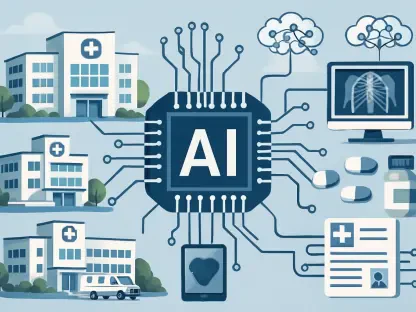

As artificial intelligence continues its rapid integration into nearly every industry, healthcare payers and administrators are confronted with a pivotal decision regarding how to incorporate this transformative technology into their complex operational frameworks. The prevailing industry excitement surrounding generative AI has created a sense of urgency, suggesting a need for a complete technological overhaul, but a far more measured and strategic approach is essential for long-term success. The most prudent path forward involves not a wholesale replacement of foundational administrative systems but rather their intelligent enhancement, ensuring that the core principles of trust, accuracy, and regulatory compliance that form the bedrock of the healthcare system remain steadfastly intact. In this context, the optimal role for AI is not one of a complete takeover but of a powerful and sophisticated augmentation tool that empowers human expertise.
The Foundation: Core Systems Remain the System of Record
At the very heart of any healthcare payer organization, whether it is a health plan, a Third-Party Administrator (TPA), or a delegated risk entity, resides the core administrative platform, which serves as the definitive and authoritative system of record. These platforms are meticulously purpose-built to manage mission-critical functions that demand an unwavering standard of absolute precision and reliability. Essential tasks such as processing complex claims, managing intricate member benefits, invoicing premiums with accuracy, and maintaining provider agreements are inherently deterministic processes. They necessitate outcomes that are not only correct but also fully traceable, auditable, and consistently repeatable—a level of certainty that the probabilistic nature of contemporary AI models is not equipped to guarantee independently. This fundamental distinction underscores why these core systems must retain their primary role in executing the most crucial operational duties within the healthcare administration landscape.
The unique and stringent demands of the healthcare payer industry further solidify the indispensable role of these core administrative systems, as they cannot be delegated solely to probabilistic AI. Payer operations are meticulously governed by a complex and continually evolving web of federal and state regulations, including the strict mandates set forth by entities like Medicare and Medicaid, which these core platforms are specifically engineered to enforce deterministically. Moreover, the imperative for unwavering financial accuracy is paramount; the precise adjudication of claims, the generation of correct encounter data, the accurate calculation of premium bills, and the thorough reconciliation of revenue are foundational to an organization’s financial stability and legal standing. Even minor inaccuracies in these areas can cascade into severe financial repercussions and significant legal consequences, reinforcing the necessity of a trusted, accountable framework that provides the execution and reliability that AI, in its current state, cannot deliver on its own.
AI’s Role: The Intelligent Augmentation Layer
Rather than supplanting these indispensable core platforms, the true and most profound value of artificial intelligence is unlocked when it is implemented to function as an intelligent augmentation layer. This strategic approach harnesses the power of AI to significantly enhance human capabilities, enrich user experiences, and streamline complex workflows, all without compromising the foundational integrity and stability of the core administrative system. Modern administrative platforms are increasingly being designed with this seamless integration in mind, often featuring a modular architecture and robust, API-driven connectivity. These design principles create secure and governed channels that allow emerging AI tools to communicate effectively with the core platform, empowering organizations to embrace cutting-edge innovation without sacrificing the security, stability, and compliance guarantees that their foundational operations depend on. This model allows for a harmonious blend of proven reliability and forward-thinking technology.
This “human in the loop” model, where AI assists rather than directs, has already demonstrated its capacity to unlock significant practical efficiencies across various administrative functions. For example, AI can dramatically accelerate operational workflows, such as the onboarding of new providers, by proficiently summarizing extensive documentation and automating tedious data entry tasks. In the critical areas of claims and authorization reviews, it can adeptly analyze unstructured medical data, flag potential issues for human experts, and summarize complex patient histories, thereby increasing both the speed and consistency of human decision-making. Furthermore, advanced AI tools can meticulously analyze vast datasets to identify subtle patterns, critical anomalies, and potential compliance risks, which substantially improves an organization’s audit readiness and enhances the clarity and insightfulness of its reporting, ultimately leading to more informed and strategic operational management.
A Path to Responsible Adoption
The most effective and sustainable strategy for integrating artificial intelligence into healthcare administration was one that was both measured and responsible. This approach involved prioritizing solutions that intelligently embedded AI-assisted workflows directly into existing operational processes, critically ensuring that a human operator always remained in ultimate control. The development of responsible AI necessitated the establishment of clear and unambiguous guardrails and the maintenance of strict oversight protocols to guarantee that accountability remained firmly anchored to human decision-makers, not to algorithms or automated programs. Instead of hastily pursuing the replacement of proven, reliable systems, leading organizations took the time to evaluate new technologies through the crucial lenses of execution, compliance, and long-term trust. This careful consideration led them to seek out partners who championed an integrated vision, recognizing that the future of healthcare administration technology did not belong to AI or legacy systems in isolation. Rather, it belonged to sophisticated platforms that successfully combined the strengths of both: the robust automation, high configurability, and trusted execution of a core system, intelligently augmented by the advanced analytical and productivity-enhancing capabilities of artificial intelligence.