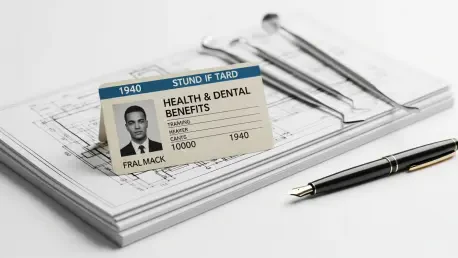

The intricate tapestry of the modern American healthcare system was woven from a century of economic shifts, legislative debates, and wartime necessities that fundamentally altered the national landscape. Understanding the history of health and dental insurance is essential because it explains why the United States relies so heavily on an employer-sponsored model rather than a centralized national system. This timeline explores the critical milestones that transformed medical care from a private, out-of-pocket expense into a cornerstone of labor negotiations and public policy. By examining this evolution, it becomes clear how accidental catalysts and grassroots movements created the frameworks that define medical access for millions of Americans today.
A Chronological Journey Through Policy and Reform
Early 1900s: The Rise of Progressive Healthcare Goals
In the dawn of the 20th century, health insurance was not a standard corporate benefit but a radical political objective. The Progressive Era saw leaders like Theodore Roosevelt championing the idea of mandatory health insurance during his 1912 presidential campaign. By 1915, the American Association for Labor Legislation drafted a bill to provide medical care for low-income workers. Although these early efforts failed to gain legislative traction due to political opposition and the onset of World War I, they established the initial dialogue regarding the government’s role in public health and welfare.
1929 to 1935: The Great Depression and the Committee on Economic Security
The stock market crash and the subsequent Great Depression served as a brutal wake-up call for the American economic system. As poverty surged, Franklin D. Roosevelt established the Committee on Economic Security to address the lack of financial safeguards for citizens. While this era led to the monumental Social Security Act of 1935, comprehensive national health reform was notably absent from the final legislation. Political sensitivities and pressure from various interest groups meant that while retirement and unemployment were addressed, healthcare remained largely individual and unorganized.
1940 to 1945: World War II and the Birth of Employer-Sponsored Care
The most significant turning point in American insurance history occurred not through medical innovation, but through wartime economic stabilization. During World War II, the federal government imposed strict wage freezes to prevent inflation. To attract and retain workers in a competitive labor market, companies began offering health insurance as a non-monetary perk. Because these benefits were not considered wages, they allowed businesses to bypass government restrictions, effectively tethering a citizen’s access to healthcare to their place of employment.
1954: The Internal Revenue Code and the Tax-Exempt Status
Following the war, the temporary trend of employer-sponsored insurance was codified into permanent law. The Internal Revenue Code of 1954 solidified a crucial tax incentive: employer contributions to health insurance plans were excluded from an employee’s taxable income. This federal policy provided a massive financial advantage for both businesses and workers, cementing the workplace as the primary gateway for healthcare. This decision turned a wartime stopgap into the foundational structure of the American medical economy.
1954 to 1955: The Grassroots Emergence of Dental Insurance
While medical insurance became a corporate standard by the mid-1950s, dental care remained an out-of-pocket luxury for most Americans. The shift toward prepaid dental care began on the West Coast through labor union activism. Longshoremen in Washington, Oregon, and California collaborated with local dental professionals to establish the first prepaid dental programs. These regional efforts eventually formed the Washington, Oregon, and California Dental Services, creating the first scalable model for oral health coverage that would eventually spread across the nation.
Turning Points and the Legacy of the Accidental System
The evolution of American insurance revealed that the current system was not the result of a deliberate master plan, but rather a series of adaptations to immediate crises. The most significant turning point was the intersection of wartime wage freezes and subsequent tax policies, which created a path of least resistance for healthcare delivery. A clear pattern emerged where economic necessity consistently outweighed ideological preferences. This history highlighted a notable gap: the delay between general medical coverage and dental coverage, which was only bridged when labor unions took the initiative to innovate outside of traditional legislative channels.
Regional Innovation and the Future of Coverage
The development of insurance was not uniform across the country, as evidenced by the West Coast’s pioneering role in dental health. While the federal government shaped medical insurance through tax law, regional dental service corporations demonstrated that local collaboration between providers and labor groups could create new paradigms for care. As the workforce transitioned into a digital era, the industry began grappling with legacy structures while seeking more flexible ways to provide coverage to a modern population. Future considerations will likely involve reconciling these employer-centric roots with the rise of the gig economy and the increasing demand for portable, individual-based insurance models that do not terminate upon leaving a job. To better understand these shifts, researchers explored the legislative history of the Affordable Care Act and the rise of telehealth initiatives.