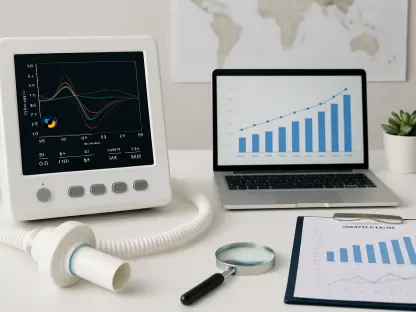

The global healthcare landscape is on the brink of a monumental shift, with Remote Patient Monitoring (RPM) systems at the forefront of this transformation, enabling the continuous oversight of patients’ health from virtually anywhere. This technology, which facilitates the monitoring of individuals outside of traditional clinical settings, is poised for explosive growth as the market, valued at $13.2 billion in 2024, is projected to surge to an astonishing $50.4 billion by 2035. This remarkable expansion, driven by a compound annual growth rate (CAGR) of 12.9%, signals a powerful and enduring move toward the decentralization and digitization of healthcare delivery worldwide, fundamentally altering how care is administered and received. This trend is not merely a technological evolution but a necessary response to pressing global health challenges, promising a future of more proactive, personalized, and efficient medical care. The implications of this growth extend far beyond financial figures, touching upon patient empowerment, healthcare accessibility, and the overall sustainability of health systems globally.
The Confluence of Need and Innovation
A primary catalyst for the RPM boom is the rising global prevalence of chronic diseases, such as diabetes, cardiovascular disorders, and respiratory illnesses, which have become a leading public health challenge. These long-term conditions demand continuous oversight to manage patient health effectively and prevent acute, costly complications. Coupled with a significant demographic shift toward an aging population, particularly in North America and Europe, the need for effective, long-term care solutions that support “aging in place” has never been greater. RPM directly addresses this demand by enabling ongoing, real-time health tracking from the comfort of a patient’s home, reducing the burden on both patients and healthcare facilities. This capability empowers individuals with chronic conditions to maintain their independence while providing clinicians with the vital data needed to intervene proactively, transforming chronic disease management from a reactive to a preemptive model of care.
Fueling this market expansion are rapid technological advancements and a fundamental shift in healthcare economics that create a fertile environment for widespread adoption. The proliferation of sophisticated wearable devices, Internet of Things (IoT)-enabled platforms, and user-friendly mobile health applications has made remote monitoring more accurate, accessible, and reliable than ever before. These innovations ensure that complex physiological data can be collected seamlessly and transmitted securely. Simultaneously, immense pressure to reduce soaring healthcare costs is pushing providers and payers toward more efficient models of care delivery. RPM systems contribute directly to this goal by helping to lower hospital readmissions, shorten inpatient stays, and prevent costly emergency room visits, aligning perfectly with the industry’s accelerating move toward patient-centric, value-based care frameworks that prioritize outcomes over volume.
A Diverse and Segmented Ecosystem
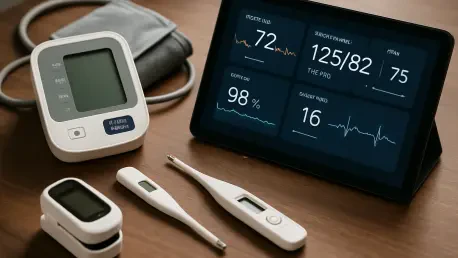
The RPM market is defined by a diverse and highly specialized range of devices and monitors, each tailored to specific health needs, forming a complex technological ecosystem. This core segment includes a variety of vital sign monitors that track key health indicators, such as advanced cardiac monitors for managing heart conditions, continuous blood glucose meters for comprehensive diabetes management, and automated blood pressure monitors for hypertension. Furthermore, devices like pulse oximeters for monitoring respiratory conditions and a host of other specialized medical instruments make up this vibrant landscape, ensuring that a wide array of physiological data can be captured and analyzed remotely. The sophistication of this hardware, combined with powerful software analytics, provides clinicians with a holistic view of a patient’s health status in real time, enabling timely adjustments to treatment plans without requiring an in-person visit.
The application of this powerful technology spans the entire healthcare continuum, demonstrating its versatility and broad impact on modern medicine. While chronic disease management remains the largest and most dominant use case, RPM is also proving to be critical for post-acute care, where it helps monitor patients after hospital discharge to prevent complications and costly readmissions. Its utility extends into highly specialized areas, including remote ICU monitoring, which allows for the extension of critical care expertise beyond the walls of the hospital. Moreover, RPM serves as a key data-gathering component for broader telemedicine consultations and is increasingly used in preventive care, where biometric data is analyzed to identify health risks long before they manifest as serious conditions. These systems are deployed across a variety of settings, with hospitals, clinics, and long-term care facilities embracing the technology, while homecare settings represent the fastest-growing end-user segment due to patient preference and cost-effectiveness.
Global Adoption and Regional Dynamics
At present, North America stands as the leader in the global RPM market, a dominance attributed to its advanced and robust healthcare infrastructure, the widespread adoption of telehealth services, and a framework of favorable reimbursement policies that encourage the use of remote care technologies. The strong presence of key technology manufacturers and medical device companies in the region further solidifies its leading position, fostering an environment of continuous innovation and market penetration. Following closely behind, Europe has established itself as another major market, with highly developed healthcare systems in nations like Germany, the United Kingdom, and France demonstrating a strong and growing uptake of advanced remote monitoring solutions as part of national digital health strategies aimed at improving efficiency and patient access to care.
While these established markets continue to expand at a healthy pace, the Asia-Pacific region is emerging as the fastest-growing market on a global scale, presenting significant opportunities for growth. This rapid expansion is being fueled by a combination of factors, including rising healthcare expenditures, supportive government initiatives promoting digital health transformation, and a vast patient population in populous countries like China, India, and Japan. These nations are increasingly leveraging technology to bridge gaps in healthcare access, particularly in rural areas. Meanwhile, regions such as South America, the Middle East, and Africa are experiencing steady and consistent growth as their healthcare systems evolve. Countries in these regions are making increasing investments in RPM technology as a strategic tool to improve patient outcomes, manage public health challenges, and control rising healthcare costs within their developing infrastructures.
A Competitive Landscape Forged by Investment
The conclusion drawn from this extensive market analysis was that the RPM sector represented a dynamic and highly competitive space, featuring a unique mix of established medical device titans, global technology corporations, and innovative digital health startups. It was noted that industry leaders such as Philips, Medtronic, Abbott Laboratories, and Boston Scientific were at the forefront, actively investing in the development of next-generation devices and fully integrated IoT platforms to meet evolving clinical needs. These giants competed alongside specialized telehealth companies and major technology corporations, all vying to capture a significant share of the rapidly expanding global demand for remote care solutions. This competitive fervor was further intensified by a robust global funding environment, which saw billions of dollars pouring into the digital health sector annually.
The analysis further revealed that this investment was crucial for the continuous research, development, and scaling of RPM technologies, ensuring a pipeline of innovation. The strategic importance of the market was underscored by its alignment with major themes in global health policy. The push for RPM was shown to be intrinsically linked to the pursuit of Universal Health Coverage (UHC), the strategic strengthening of the health workforce with digital tools, and the development of sustainable financing models for healthcare systems worldwide. It became clear that the companies succeeding in this space were not only creating advanced technology but were also positioning themselves as essential partners in achieving these overarching global health priorities, which ensured the market’s trajectory for continued, long-term success was firmly established.