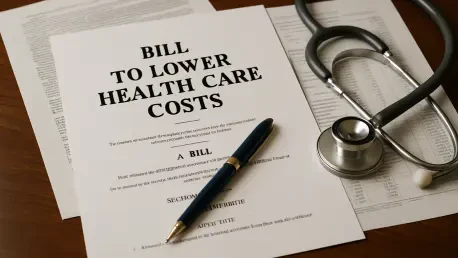

As American families and small business owners continue to grapple with the persistent challenge of rising health insurance costs, Congresswoman Mariannette Miller-Meeks has introduced a significant piece of legislation aimed at providing widespread financial relief. The proposal, titled the “Lowering Health Care Premiums for All Americans Act,” marks a determined effort to reshape the current health care landscape by directly targeting premium affordability. This initiative moves the national conversation beyond existing frameworks, presenting a new strategy that its proponents argue will deliver tangible savings and enhance the ability of small enterprises to provide competitive benefits. By positioning this bill as a direct response to what she describes as the unfulfilled promises of previous reforms, Miller-Meeks is setting the stage for a robust debate on the future of health care access and affordability in the United States, placing the economic pressures felt by everyday Americans at the forefront of her legislative agenda.
A New Vision for Health Care Affordability
At the heart of Congresswoman Miller-Meeks’s legislative push is H.R. 6703, a bill she champions as a solution for working families and small businesses burdened by escalating insurance costs. During a recent press conference, she directly contrasted her proposal with the Affordable Care Act, asserting that the decade-old law failed to deliver on its core promise of lower premiums for the average American. The “Lowering Health Care Premiums for All Americans Act” is designed to create a more favorable environment for consumers by fostering competition and providing new mechanisms for cost control. According to projections released by her office, the bill could reduce average health care premiums by as much as 11 percent. For a typical family, this could translate into an annual savings of up to $1,871, a significant sum that could alleviate financial strain. A key component of the legislation focuses on strengthening the capacity of small businesses to offer affordable and comprehensive health coverage, addressing a critical gap that often leaves smaller employers at a competitive disadvantage against larger corporations.
While the healthcare bill remains a central focus, Congresswoman Miller-Meeks’s legislative record reveals a broad and diverse set of policy interests that span multiple committees and address a wide range of national issues. Her recent activities in Congress demonstrate a commitment to veteran affairs, as seen with her introduction of H.R. 6580, which aims to improve services for former military personnel. She has also prioritized child safety through the SPY Kids Act (H.R. 6273), a bill designed to protect children from online exploitation. Furthermore, her policy work extends to federal nutrition programs with the Keep SNAP Funded Act of 2025 (H.R. 5822), ensuring food security for low-income families. On immigration, she is a proponent of the Afghan Adjustment Act (H.R. 4895), which seeks to provide a pathway to permanent residency for Afghan allies. In the agricultural sector, her Biochar Research Network Act of 2025 (H.R. 4764) supports innovative research aimed at improving soil health and promoting sustainable farming practices. This multifaceted agenda illustrates a comprehensive approach to governance.
Financial Standing and Campaign Strength
The congresswoman’s legislative initiatives are backed by a formidable fundraising operation, ensuring she has the resources necessary to communicate her message and sustain long-term political efforts. According to the most recent Federal Election Commission (FEC) disclosure for the third quarter of 2025, her campaign demonstrated robust financial health. The report indicated that her campaign committee raised an impressive $628,500 during the three-month period while strategically managing expenditures, which totaled $305,100. This disciplined financial approach resulted in the campaign concluding the quarter with a substantial $2.6 million in cash on hand. Such a significant war chest provides considerable strategic advantages, enabling extensive voter outreach, media campaigns, and the organizational infrastructure required to advocate effectively for complex legislation like the proposed healthcare reform bill. This strong financial position underscores her viability as a political force and her capacity to engage in prolonged legislative battles.
Beyond the mechanics of her campaign finances, a broader view of Congresswoman Miller-Meeks’s personal financial standing offers additional context. As of a December 17, 2025, disclosure, her estimated net worth was approximately $1.8 million. This figure places her 265th in terms of wealth among her colleagues in the United States Congress, positioning her in the middle tier of lawmakers. This financial profile provides a degree of transparency that is often a point of public interest, offering insight into the personal economic circumstances of those responsible for crafting national policy. While not among the wealthiest members of Congress, her financial standing is solid and reflects a successful career prior to entering public service. This information, combined with her campaign’s fundraising prowess, completes a comprehensive picture of the resources and personal background that inform her work as a legislator and her advocacy on behalf of her constituents on both a local and national level.
The Legislative Path Ahead
The introduction of the “Lowering Health Care Premiums for All Americans Act” represented a pivotal moment in the ongoing national dialogue surrounding health care reform. The bill’s success hinged on its ability to navigate the intricate and often contentious legislative process, which required building a broad coalition of support from across the political spectrum. The arguments put forth by Congresswoman Miller-Meeks focused on economic relief for families and businesses, a message that resonated with many but also faced scrutiny from those who defended the existing framework. The debate that ensued highlighted the deep-seated ideological divides on the role of government in health care and ultimately tested the capacity for bipartisan compromise. The journey of H.R. 6703 served as a clear indicator of the political dynamics at play and the significant challenges inherent in enacting major policy changes in a closely divided Congress.