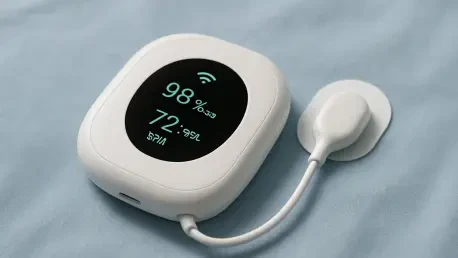

The proliferation of wirelessly connected medical devices has created an unprecedented web of international regulations, leaving many manufacturers struggling to ensure their products meet the necessary compliance standards for global market access. What was once a niche feature has rapidly become a standard component in modern healthcare technology, from patient monitoring systems to diagnostic equipment. This integration of radio technology introduces a new layer of complexity to product safety and compliance, transforming the path to market from a straightforward process into a multifaceted challenge. Professionals responsible for medical devices, whether in development or already commercialized, now face a diverse and often fragmented regulatory landscape. Successfully launching a product requires a deep and unified understanding of the distinct, intricate frameworks governing key international markets, where failure to comply can result in significant delays, costly redesigns, and a complete denial of market entry.
Navigating the European Regulatory Labyrinth
For manufacturers targeting the European Union and the United Kingdom, the compliance journey is dictated by rigorous and evolving directives. The EU’s Radio Equipment Directive (RED), particularly Article 3, stands as a cornerstone of this framework, imposing critical requirements related to health, safety, and electromagnetic compatibility. A key consideration under this directive is Specific Absorption Rate (SAR) testing, a mandatory evaluation that measures the rate at which radiofrequency energy is absorbed by the human body from a device. This is especially crucial for medical technology used in close proximity to a patient. Beyond physical safety, emerging mandates for cybersecurity are becoming an integral part of the compliance puzzle, reflecting a growing recognition of the need to protect sensitive patient data and ensure device integrity against digital threats. Achieving the CE Marking for the EU and the UKCA Marking for the UK signifies that a device has met these comprehensive standards, a non-negotiable prerequisite for market access.
Harmonizing North American and Global Standards
The regulatory environment in North America presented its own distinct set of challenges and approval pathways that required careful navigation. In the United States, the Federal Communications Commission (FCC) governed the rules for radio-frequency devices, while Innovation, Science and Economic Development (ISED) managed similar requirements in Canada. Unlike the European model, these bodies had their own specific rules and certification processes, identified by an FCC ID or ISED ID. A common but complex scenario involved integrating pre-certified radio modules into a larger medical device. Manufacturers had to understand that the module’s certification did not automatically extend to the final product, often necessitating further testing and validation. Ultimately, achieving a holistic compliance strategy meant harmonizing these disparate international standards. It was this unified approach—thoughtfully integrating the requirements for CE, UKCA, FCC, and ISED certifications—that proved essential for any company aiming for successful and timely entry into the global medical device market.