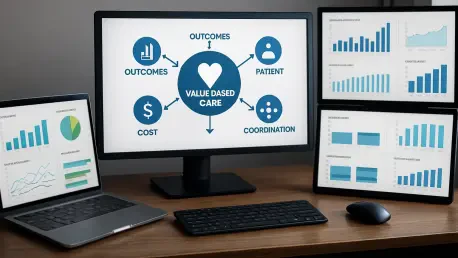

The modern medical landscape stands at a critical juncture where the traditional reliance on the volume of procedures has finally surrendered to a more sophisticated, outcome-oriented paradigm. This transition from fee-for-service to value-based care represents a seismic shift in how hospitals and clinics prioritize their daily operations, placing a premium on the long-term wellness of the patient rather than the mere quantity of office visits or surgical interventions. Since the widespread adoption of the Triple Aim framework, the industry has successfully redirected its focus toward enhancing the individual patient experience and improving the collective health of populations while simultaneously attempting to curb the rising per-capita costs of healthcare. Consequently, the contemporary definition of clinical success in 2026 is no longer found in the total number of billed services but in the tangible reduction of hospital readmissions and the overall stabilization of chronic conditions across diverse demographics. This evolution necessitates a departure from fragmented organizational structures toward an integrated environment where patient outcomes and resource efficiency are the primary metrics of institutional viability.
Despite the theoretical consensus surrounding the benefits of value-based care, many healthcare providers continue to struggle with a significant visibility gap that hinders effective implementation. Clinical data remains trapped in legacy systems, and the inability to synchronize electronic health records with non-clinical factors, such as social determinants of health or patient-reported outcomes, creates a distorted view of the patient journey. Without a unified perspective, healthcare organizations find it nearly impossible to pinpoint specific cost inefficiencies or evaluate the actual effectiveness of their clinical pathways in real-time. This fragmentation often leads to duplicated efforts, wasted resources, and missed opportunities for early intervention. Therefore, the adoption of advanced, enterprise-wide data platforms has become a mission-critical priority for any organization seeking to thrive in a value-oriented market. By bridging the gap between raw data and actionable intelligence, these platforms provide the structural foundation necessary to transform disparate information into a cohesive strategy for health management.
Bridging the Information Gap: Unified Architecture
Establishing a Foundation: Data Discovery and Integration
To effectively transition to a value-based model, healthcare organizations must first master the intricate process of data collection across a vast and diverse array of sources. This initial phase involves the integration of administrative applications that track the movement of patients through the facility, clinical health records derived from electronic medical systems, and technical inputs from modern e-prescribing interfaces. However, the true power of a modern data platform lies in its ability to look beyond the clinical walls by incorporating third-party data and patient-reported outcome measures. These external metrics provide an essential perspective that standard clinical machines and laboratory tests simply cannot capture, offering insights into how patients experience their recovery and manage their conditions at home. By synthesizing these varied data streams, providers can develop a 360-degree view of the patient, ensuring that every medical decision is informed by both physiological data and the social context that influences long-term health.
The subsequent challenge involves the sophisticated ingestion and transformation of this gathered information to ensure it remains highly usable for complex, high-level analysis. Modern platforms utilize a variety of specialized methods to handle different data types, such as bulk transfers for massive volumes of historical records and batch ingestion for large datasets coming from major health systems like Epic or Oracle. For more immediate needs, the implementation of Change Data Capture technology allows organizations to track operational adjustments in near real-time, while streaming ingestion captures immediate events such as social media sentiment or emergency room alerts. This multi-modal approach ensures that the data platform is never working with stale information, providing a dynamic reflection of the organization’s current clinical and operational reality. When data is ingested and transformed with this level of precision, it ceases to be a static record of the past and becomes a living asset that can be queried and analyzed to drive immediate improvements in patient care delivery.
Managing and Refining DatHigh-Performance Use
Once the data has been successfully ingested, it must be stored and managed in a way that facilitates easy curation and rapid retrieval for various stakeholders across the enterprise. In a modern cloud-based environment, raw data is typically held in scalable object storage where it undergoes rigorous batch processing to clean, organize, and refine the information into a structured format. This stage is crucial for removing redundancies and ensuring that the data meets the high-quality standards required for clinical decision-making and financial reporting. By utilizing managed data services, organizations can automate much of the heavy lifting associated with data preparation, allowing clinical analysts to focus on interpreting trends rather than troubleshooting technical inconsistencies. The result is a curated data lake that serves as a single source of truth for the entire organization, eliminating the confusion often caused by conflicting reports from different departments or disparate software systems.
This refined data is eventually moved into high-performance data warehouses that are specifically engineered to handle complex querying and the generation of essential key performance indicators. These warehouses provide the computational power necessary to run sophisticated algorithms that can identify patterns in readmission rates, claims processing efficiency, and resource utilization across different patient cohorts. By centralizing this information, healthcare administrators can gain unprecedented visibility into the financial health of the organization, allowing them to compare actual costs against projected budgets with clinical precision. Furthermore, the high-speed nature of these environments ensures that large-scale reports can be generated in seconds rather than hours, enabling leadership to make data-driven decisions at the pace of modern medicine. This infrastructure not only supports the operational needs of the facility but also provides the transparency required to succeed in outcome-based contracts with insurance providers and government agencies.
Transforming Raw DatActionable Intelligence
Leveraging Analytics: Predicting and Shaping Outcomes
The creation of true intelligence within a healthcare organization is achieved through the application of three distinct levels of analytics that progress from simple observation to strategic recommendation. Descriptive analytics serve as the starting point, allowing providers to visualize current trends such as patient throughput and emergency department admission rates through intuitive dashboards. Diagnostic analytics then delve deeper to identify the underlying causes of statistical anomalies, such as an unexpected spike in nursing costs or a sudden decline in patient satisfaction scores within a specific department. However, the most transformative phase is prescriptive analytics, which goes beyond identifying problems to suggest specific clinical or procedural adjustments designed to improve the overall quality of life for the patient. This tiered approach allows healthcare leaders to not only understand what is happening within their facilities but also to take active steps toward optimizing every aspect of the care delivery process.
In addition to traditional analytics, the integration of machine learning models plays a pivotal role in predicting patient outcomes by analyzing vast quantities of historical and real-time data simultaneously. These models can identify patients who are at high risk for readmission or those who may be prone to developing complications after a specific surgical procedure, allowing clinicians to intervene proactively before a crisis occurs. These predictions are shared across the organization through integrated application programming interfaces, ensuring that the right information reaches the right staff member at the perfect moment in the clinical workflow. By automating these complex insights, the data platform empowers both clinical and administrative personnel to interpret sophisticated data trends without requiring an extensive background in data science. This democratization of information shifts the organizational culture from one of reactive treatment to one of proactive health management, where the primary goal is the prevention of illness rather than the mere management of symptoms.
Measuring Performance: Driving Operational Change
The ultimate utility of an advanced data platform is its ability to translate abstract insights into practical, operational changes through the constant measurement of performance against established international benchmarks. Organizations can monitor resource allocation with granular detail, tracking everything from the claims processing rate to the frequency of claim denials and the effectiveness of different treatment protocols. This high level of visibility ensures that the healthcare delivery model remains cost-effective while still providing the high-quality care that modern patients expect. By comparing internal metrics with global standards, facilities can identify areas where they are underperforming and implement targeted improvements that have a direct impact on both patient wellness and institutional reputation. This continuous feedback loop of measurement and adjustment is the hallmark of a mature value-based care strategy, allowing for the steady refinement of clinical operations over time.
Furthermore, a robust data strategy enables healthcare organizations to address the social determinants of health, which are often the primary drivers of long-term medical outcomes. By incorporating data related to a patient’s environment, education level, and economic stability, providers can create more personalized care plans that account for the challenges patients face outside the hospital walls. This holistic approach ensures that interventions are not just clinically sound but also practically feasible for the individual patient, reducing the likelihood of non-compliance and subsequent re-hospitalization. When performance is measured through this broader lens, the organization can more accurately evaluate the success of its outreach programs and community health initiatives. This shift toward a more comprehensive measurement framework ensures that the delivery of care is both equitable and effective, ultimately leading to a more resilient healthcare system that serves the needs of all population segments.
Realizing Strategic Advantages: A Data-Driven Model
Enhancing Patient Understanding: Resource Sustainability
A data-driven strategy allows healthcare providers to gain a much deeper understanding of human needs by incorporating direct feedback through the systematic use of patient-reported outcome measures. This focus ensures that clinical benchmarks are not the only indicators of success, as the patient’s perspective on their own recovery and functional status becomes a primary driver of the care plan. By listening to the patient’s voice through standardized questionnaires and digital health interactions, organizations can identify gaps in care that traditional clinical metrics might miss. This enhanced understanding naturally leads to more sustainable resource management, as staff and technology can be directed toward the areas and interventions where they will have the most significant impact on actual human wellness. Such an approach balances the ethical necessity of high-quality care with the practical requirement of maintaining a financially stable and sustainable operation.
The sustainability of the healthcare system also depends on the equitable and transparent allocation of limited resources, a task that is greatly simplified by the insights provided by advanced data platforms. When administrators have access to clear data regarding the utilization of expensive medical technologies and the workload of specialized staff, they can make informed decisions that prevent burnout and minimize waste. This transparency fosters a culture of accountability where every investment is evaluated based on its contribution to patient outcomes rather than its potential for short-term revenue generation. Over time, this focus on sustainability ensures that the organization can continue to provide top-tier care even in the face of fluctuating economic conditions or shifting reimbursement models. By prioritizing long-term health impacts over immediate volume, healthcare entities can build a reputation for reliability and excellence that attracts both talented professionals and a loyal patient base.
Combating Clinical Waste: Public Health Challenges
Enhanced data visibility serves as a powerful and indispensable tool for eliminating various forms of clinical waste, such as the overdiagnosis of minor conditions and the over-prescription of expensive or potentially harmful medications. By identifying unwarranted variations in care—where two patients with similar conditions receive vastly different treatments—organizations can standardize their protocols around the most effective and efficient evidence-based practices. This reduction in unnecessary procedures not only lowers the overall cost of care but also protects patients from the risks associated with redundant tests and interventions. The ability to track prescribing patterns in real-time is particularly effective in addressing broader public health crises, such as the ongoing challenges related to antimicrobial resistance and the opioid epidemic. Data platforms allow for the immediate detection of outlier prescribing behaviors, enabling swift corrective action and the implementation of more rigorous safety guidelines.
Ultimately, these systematic improvements lead to a significantly healthier bottom line by reducing the overuse of expensive medical technologies and minimizing the frequency of unplanned, costly hospital admissions. By shifting the focus toward prevention and the efficient management of chronic diseases, healthcare organizations can achieve a more stable financial position while providing superior care to their communities. This data-centric approach also facilitates better collaboration between providers and insurers, as both parties can work from a shared set of objective facts regarding the cost and quality of care. As the industry continues to move further into the era of value-based care, those who leverage advanced data platforms to combat waste and address public health challenges will be best positioned for long-term success. The integration of high-end analytics into daily clinical workflows ensures that the healthcare system remains both economically viable and socially responsible, fulfilling the ultimate promise of the value-based model.
The transition toward a comprehensive value-based care system reached a critical milestone as healthcare organizations successfully moved from simply recording patient history to actively predicting and shaping it through data. Leaders in the sector prioritized the implementation of flexible, cloud-based architectures that allowed for the seamless synthesis of clinical, financial, and social data streams. By investing in prescriptive analytics and machine learning, these institutions gained the unique ability to anticipate patient needs before they escalated into costly medical emergencies, which effectively lowered the overall cost of care without compromising the quality of the experience. The industry adopted a more rigorous and standardized approach to data governance, ensuring that social determinants of health remained a central component of every clinical decision-making process. Moving forward, providers used these integrated platforms to refine outcome-based contracts, providing a clear and objective roadmap for insurers and medical professionals to collaborate more effectively on behalf of the patient. This profound shift ensured that the human element remained the focal point of every operational decision, cementing data-driven care as the definitive and ethical standard for modern medicine.