
The landscape of modern oncology is shifting toward highly personalized treatment pathways, necessitating diagnostic precision that can only be achieved through the integration of sophisticated molecular and cellular analysis tools. Agilent Technologies has underscored its commitment to this evolution by entering a definitive agreement to acquire Biocare Medical, a prominent provider of pathology solutions, in a cash transaction valued at approximately $950 million. This strategic move aims to fortify Agilent’s existing portfolio within the clinical pathology and oncology markets by incorporating Biocare’s specialized diagnostic instruments and reagents. Formerly owned by private equity firms Excellere Partners and GHO Capital, Biocare has demonstrated a trajectory of consistent growth, reporting a substantial revenue of $90 million in 2025. By merging these capabilities, Agilent seeks to provide a more holistic suite of tools to pathologists who are under increasing pressure to deliver faster, more accurate results.
Strategic Expansion of the Pathology Portfolio
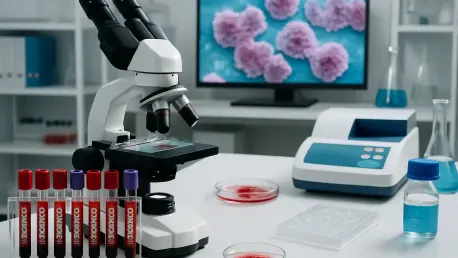
At the core of this acquisition lies Biocare’s extensive and highly specialized collection of immunohistochemistry and in situ hybridization technologies, which are essential for identifying specific cancer markers. This portfolio includes an impressive library of more than 300 specialized antibodies that enable clinicians to distinguish between various subtypes of tumors with high degrees of specificity. For laboratories that rely on automated staining systems and advanced reagents, the inclusion of Biocare’s proprietary technologies offers a significant upgrade in operational efficiency and diagnostic confidence. Agilent intends to leverage these molecular assets to accelerate the internal development and subsequent commercialization of new in vitro diagnostic products. By combining Biocare’s technological depth with its own engineering excellence, the company is positioning itself to address the growing demand for companion diagnostics that are vital for the latest generation of targeted therapies.
Beyond the raw technological gains, the deal provides Agilent with a vastly improved commercial footprint within the United States, where Biocare has established strong, long-standing relationships with clinical pathology labs. This regional strength complements Agilent’s expansive global operations, creating a unified platform that can serve a significantly broader range of research and clinical customers worldwide. The integration of these two entities is expected to yield a versatile ecosystem where research-grade discoveries can more easily transition into standardized clinical practices. Furthermore, the synthesis of Biocare’s fluorescence in situ hybridization capabilities with Agilent’s existing genomic analysis tools creates a powerful synergy for diagnosing complex genetic rearrangements. This level of vertical integration is becoming a prerequisite for companies aiming to lead the oncology space, as healthcare providers increasingly seek single-vendor solutions that can streamline their complex workflows and minimize technical variability.
Economic Stability and Market Consolidation
From an organizational and financial perspective, this $950 million investment represents Agilent’s second major acquisition in a relatively short timeframe, following the $925 million purchase of the contract development and manufacturing organization BIOVECTRA. These consecutive multi-million dollar deals signal a clear strategy of disciplined capital allocation focused on high-growth segments within the life sciences sector. Following the anticipated closure in the fourth quarter of the 2026 fiscal year, Biocare will be folded into Agilent’s Life Sciences and Diagnostics Markets Group. This specific division has already proven its financial viability, having generated $679 million in revenue during the first quarter of the current fiscal year alone. Corporate leadership has indicated that the acquisition is projected to become accretive to earnings per share approximately 12 months after the transaction is finalized. This financial outlook suggests that the integration process is designed to be efficient, maximizing the immediate value of Biocare’s intellectual property.
The broader implications of this merger point toward a significant consolidation in the diagnostics industry, where scale and specialized expertise are becoming the primary drivers of competitive advantage. Industry analysts noted that Agilent’s move was a calculated response to the rising complexity of cancer care, which now requires a multi-modal approach combining protein expression data with genetic sequencing. For stakeholders, the focus shifted toward establishing standardized diagnostic protocols that can be implemented globally to ensure equitable access to precision medicine. Moving forward, laboratories should evaluate their existing infrastructure to ensure compatibility with these evolving integrated platforms, while developers must prioritize the creation of open-architecture systems that facilitate data sharing. The successful alignment of these corporate strategies reflected a commitment to clinical impact and product quality that transcended simple market share gains. Ultimately, the industry moved closer to a future where diagnostic speed and therapeutic accuracy are inextricably linked.