
A groundbreaking study from Portuguese hospitals is challenging the long-standing conventions of chronic heart failure management, introducing a specialized telemonitoring dashboard that could redefine how clinicians care for one of the most vulnerable patient populations. This innovation directly confronts the limitations of traditional monitoring methods, which frequently provide an incomplete and delayed picture of a patient’s health. By developing a more intuitive, comprehensive, and data-driven system, the research presents a transformative approach that promises to reshape the management of at-risk patients. This new model could enhance the quality of care and foster a more proactive, predictive healthcare paradigm, moving beyond reactive treatments to preemptive interventions that save lives and improve patient well-being. This shift represents a significant step forward in leveraging technology to address the complex and persistent challenges of chronic disease.
Designing a New Standard of Care
Addressing the Core Challenge
The management of heart failure, often referred to as a silent epidemic due to its chronic nature and high prevalence, demands meticulous and continuous oversight that traditional healthcare models struggle to provide. Researchers identified that conventional indicators, such as periodic weight checks or blood pressure readings, are frequently insufficient to capture the full, dynamic spectrum of a patient’s health status. These discrete data points fail to paint a complete picture, often missing subtle yet critical changes that could signal an impending health crisis. To overcome this significant gap in care, the team conceptualized a system designed to synergistically combine objective clinical outcomes with subjective patient-reported metrics. This integration creates a truly holistic and multi-dimensional view of the patient’s well-being, moving beyond simple biometrics to encompass quality of life, symptom severity, and overall experience with the condition, thereby offering a more nuanced and accurate health assessment.
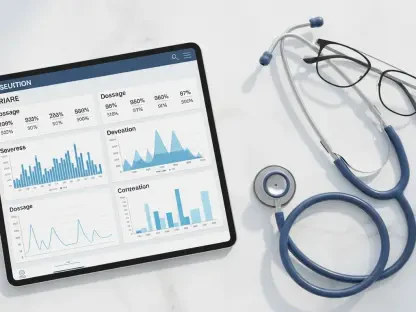
The overarching goal of this initiative was to design a tool that not only excels at data collection but also transforms complex information into a clear, actionable format to facilitate superior clinical decision-making. The challenge with modern healthcare technology is not a lack of data, but rather an overabundance of it, often presented in a fragmented or overwhelming manner. This dashboard was engineered to solve that problem by synthesizing diverse data streams—from vital signs and lab results to patient-reported symptoms—into a single, intuitive interface. This consolidated view empowers healthcare professionals to quickly identify trends, recognize early warning signs of deterioration, and intervene before a patient’s condition becomes critical. By making data meaningful and immediately usable, the system aims to streamline clinical workflows, reduce the cognitive load on providers, and ultimately enable more timely and effective care for those living with heart failure.
A Collaborative Blueprint
A central theme of the study is its unique and highly effective methodological approach, which utilized a “modified nominal group technique” to ensure the final product was both robust and relevant. This systematic and structured method facilitates prioritized discussions among a wide array of stakeholders, a crucial element in a field as complex as healthcare technology development. In this environment, the perspectives of clinicians, technical researchers, and, most importantly, patients are all essential but can be difficult to align into a cohesive vision. The nominal group technique provided a framework for navigating these differing viewpoints, ensuring that every voice was heard and that priorities were established through a democratic and evidence-based process. This collaborative foundation was instrumental in avoiding the common pitfalls of top-down technology design, where tools are often created without sufficient input from the end-users who will rely on them daily.
The outcome of this consensus-driven process was a dashboard that successfully closes the feedback loop between healthcare providers and their patients, guaranteeing a final product that is both clinically sound and genuinely user-centric. By engaging clinicians from the outset, the team ensured the dashboard’s features and data visualizations would meet the practical needs of a busy medical practice. Simultaneously, involving patients in the design process ensured that the tool would be intuitive and that the patient-reported outcomes it collects would be meaningful and easy to provide. This meticulous, multi-stakeholder approach was instrumental in building not just a piece of software, but a comprehensive care management tool. It fostered a sense of shared ownership and created a system that reflects a deep understanding of the real-world challenges faced by both those delivering and receiving heart failure care, making it far more likely to be adopted and used effectively.
The Dashboard in Action: Features and Philosophy
From Reactive to Proactive Monitoring
The resulting dashboard is engineered for real-time data collation and presentation, a feature that stands as one of its most significant and transformative advantages over conventional monitoring. This powerful functionality allows healthcare providers to maintain continuous oversight of a patient’s health status, enabling them to identify significant trends or early signs of deterioration with unprecedented speed and precision. The system incorporates a variety of predefined indicators derived from both objective clinical data and real-world evidence gathered directly from the patient’s daily life. A crucial aspect of this sophisticated design is its inherent adaptability; these indicators can be dynamically tailored to the specific needs, comorbidities, and conditions of each patient. This capability facilitates a truly personalized care approach, moving away from a one-size-fits-all model to one that is finely tuned to the individual’s unique health journey and risk profile.
This data-driven strategy marks a fundamental and much-needed shift from reactive to proactive healthcare, a change that is particularly critical in the management of chronic conditions like heart failure. Instead of only responding to adverse events such as hospital readmissions after they have already occurred, clinicians are empowered to anticipate and mitigate potential complications before they escalate. For example, a gradual increase in weight combined with patient-reported shortness of breath could trigger an alert, prompting a telehealth consultation or a medication adjustment long before the patient would have otherwise sought emergency care. This predictive capability is a game-changer, transforming the care model from one of crisis management to one of continuous, preventative maintenance. It gives clinicians the tools to intervene earlier, more effectively, and with greater confidence, ultimately improving patient outcomes and reducing the burden on the healthcare system.
Placing the Patient at the Center
A consensus viewpoint emerging from the research underscores the profound importance of delivering truly patient-centric care, a philosophy embedded in the dashboard’s core design. The study places a strong and deliberate emphasis on the integration of patient-reported outcomes (PROs), recognizing that insights gathered directly from patients offer an invaluable contextual layer that raw clinical data alone cannot provide. By systematically incorporating metrics related to a patient’s daily experience, symptom burden, and overall quality of life, the dashboard equips healthcare providers with a much fuller and more nuanced understanding of the patient’s condition. This holistic perspective, which values the patient’s subjective experience as much as objective biometrics, fosters more empathetic and effective healthcare solutions. This approach aligns with a global trend toward patient empowerment, where individuals are seen as active partners in their own care rather than passive recipients of treatment.
This patient-focused design does more than just enhance clinical decision-making; it also strengthens the relationship between patients and their care teams, fostering a greater sense of trust and collaboration. When patients know that their daily experiences and concerns are being monitored and valued, they are more likely to engage with their care plan and communicate openly with their providers. Furthermore, the dashboard encourages individuals to take a more active and informed role in managing their own health. By visualizing their own data and seeing how their actions impact their well-being, patients become more educated about their condition and are motivated to adhere to treatment regimens and make healthier lifestyle choices. This empowerment transforms the dynamic of chronic disease management, creating a partnership where technology facilitates better communication, shared goals, and ultimately, improved long-term health outcomes for individuals.
Beyond the Dashboard: Implications and the Path Forward
A Paradigm Shift with Practical Hurdles
The main findings of this research highlight that the telemonitoring dashboard is far more than a simple technological tool; it represents a genuine paradigm shift in the approach to chronic disease management. The implications of this study extend well beyond the specific context of heart failure. The core methodology and the adaptable dashboard framework are potentially transferable to a wide range of other chronic conditions, such as diabetes, chronic obstructive pulmonary disease (COPD), or hypertension. This suggests a tantalizing prospect for revolutionizing patient care across numerous medical specialties, offering a blueprint for how technology can be used to create more responsive, personalized, and proactive care models. The potential to apply this consensus-driven, patient-centric design philosophy to other diseases could fundamentally alter how healthcare systems manage long-term illness, leading to better outcomes and more efficient use of resources across the board.
However, alongside this transformative potential, the researchers also pragmatically acknowledge the inherent challenges that accompany the widespread implementation of such advanced digital health technologies. One of the most significant hurdles is the necessity for stringent protocols governing data privacy and security. As healthcare becomes more data-intensive, the responsibility to protect sensitive patient information grows exponentially. The study strongly advocates for the establishment of robust governance frameworks and a rigorous, proactive ethical approach to ensure that all patient information remains confidential and securely protected from unauthorized access or misuse. This includes not only technical safeguards like encryption but also clear policies on data ownership, usage, and consent. Successfully navigating these ethical and security challenges is paramount to building patient trust and ensuring that individuals can benefit from technological innovation without compromising their fundamental right to privacy.
A Call for Collaborative Innovation
This pivotal research served as a clarion call for a more integrated and collaborative approach to healthcare innovation. It underscored the absolute necessity for diverse groups—including healthcare professionals, administrative policymakers, and technology developers—to converge on creating solutions that expertly leverage real-time data while steadfastly prioritizing patient engagement. The successful development of the management dashboard for heart failure telemonitoring was a testament to what can be achieved when clinical expertise, technological ingenuity, and patient insights are combined. This collaborative model is a vital step toward a future where technology and a human-centric focus are not seen as separate domains but are seamlessly intertwined to produce demonstrably better patient outcomes. The study made it clear that siloed efforts are no longer sufficient to tackle the complex challenges of modern healthcare; progress requires a unified front.
The insights gleaned from this project helped pave the way for a new era of optimized, responsive, and data-driven care that remains firmly anchored in the ultimate goal of saving lives and improving the quality of life for those battling chronic illness. By embracing such innovations, the healthcare landscape demonstrated its capacity to continue evolving, tackling pressing health challenges with far greater efficiency and effectiveness than ever before. The study by Miranda and her collaborators marked a substantial and lasting contribution to the ongoing discourse on healthcare innovation. It provided not just a new tool, but a new philosophy—one that champions a proactive, personalized, and participatory approach to medicine. This work has become a cornerstone for future developments, inspiring further exploration into how technology can be harnessed to create a more empathetic and effective healthcare system for all.