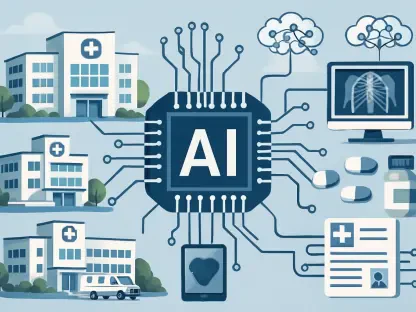

The National Health Service finance departments stand at a pivotal crossroads, where the relentless pressure of transactional duties clashes with the urgent need for strategic financial guidance. These teams are inundated with high-volume tasks, tight payment deadlines, and escalating governance requirements, leaving them with little capacity to innovate. Yet, within this high-stakes environment lies an unprecedented opportunity for transformation through the strategic adoption of Artificial Intelligence and automation. This technological evolution is not merely a path to greater efficiency but a fundamental reshaping of the finance function, empowering it to move beyond administrative processing and become an indispensable strategic partner in delivering better healthcare outcomes for the nation. The journey requires a shift in mindset, a practical implementation strategy, and a clear vision for how technology can unlock human potential.
Navigating a Crisis of Capacity
NHS finance teams operate within a crucible of intense and compounding pressures that strain their resources to the breaking point. The sheer volume of transactional work, from processing invoices to managing payroll, creates a constant operational burden. This is exacerbated by demanding payment cycles and an ever-increasing need for stringent financial assurance and governance to meet regulatory standards. Simultaneously, these teams are expected to provide critical support for broader organizational goals, including ambitious productivity agendas and complex cost improvement programs. The environment is further complicated by frequent structural changes within the NHS, which require finance professionals to manage intricate tasks such as developing business cases for redundancies or calculating the stranded costs associated with service reconfigurations, sometimes even planning for reductions within their own departments. This confluence of demands leaves the workforce profoundly overwhelmed, lacking the necessary time and mental “headspace” to engage proactively with significant business change.
The cumulative effect of this high-pressure environment is a state of perpetual reactivity that stifles innovation and strategic foresight. When teams are entirely consumed by meeting immediate deadlines and navigating complex administrative hurdles, their capacity for forward-thinking is severely diminished. The focus remains locked on maintaining operational stability rather than exploring transformative solutions that could fundamentally improve their processes. This creates a difficult paradox: the very teams that stand to benefit most from automation are often too resource-constrained to even begin the journey of exploration and implementation. The lack of foundational understanding and the sheer mental exhaustion prevent them from planning for a future where their roles are augmented by technology. Without a strategic intervention to break this cycle, finance departments risk remaining trapped in an outdated operational model while the rest of the healthcare landscape evolves around them, unable to unlock their true potential as strategic advisors to the organization.
Shifting Perceptions from Skepticism to Advocacy
Contrary to common assumptions, the most significant barrier to AI adoption within NHS finance is not a deficiency in technological capability or an inherent resistance to change from the workforce. Instead, the primary obstacle is a widespread lack of awareness and a significant underestimation of automation’s true potential. Recent survey data reveals a telling perception gap: most finance professionals believe that less than a quarter of their daily tasks could be automated, with very few envisioning a scenario where automation could handle more than half of their workload. This viewpoint is typical of organizations where employees have not yet been exposed to tangible, role-specific demonstrations of AI in action. The technology remains an abstract concept rather than a practical tool, leading to skepticism about its applicability to the nuanced and complex financial processes of the NHS. This initial apprehension is not rooted in opposition but in a simple lack of exposure to what is genuinely possible.
This perception barrier can be effectively dismantled through a strategy centered on education and real-world application. The key to shifting mindsets from skepticism to advocacy lies in showcasing automation successfully handling familiar, everyday NHS tasks. When finance professionals witness AI accurately processing invoices they handle daily or generating forecasts based on data they compile manually, the technology is instantly demystified. This is where a peer-led adoption model proves far more effective than top-down corporate directives. Seeing colleagues successfully use and benefit from new tools fosters a sense of trust and curiosity that corporate mandates often fail to inspire. These tangible demonstrations serve as powerful catalysts, sparking an organic and enthusiastic uptake as employees begin to recognize the direct benefits for their own roles—reduced manual effort, greater accuracy, and more time for value-added analysis. This grassroots momentum is crucial for building a culture that not only accepts but actively champions technological innovation.
A Blueprint for Building Trust and Momentum
A pragmatic, bottom-up implementation strategy is essential for successfully integrating AI into the complex financial ecosystem of the NHS. The core principle is to “start small” by targeting processes that are both high-volume and “rule-stable,” meaning they are repetitive and follow a clear, established logic. A prime example is invoice processing, where automation can be deployed to manage a significant workload with high accuracy. Achieving these “rapid wins” is vital, as they serve as powerful proof-of-concept demonstrations for the wider organization. These initial successes build crucial belief in the technology, proving its value in a tangible way and generating the necessary momentum to tackle more ambitious projects. This phased approach mitigates risk, allows for learning and adaptation, and ensures that the adoption of AI is a carefully managed evolution rather than a disruptive revolution, fostering confidence among staff and stakeholders at every stage.
Alongside a strategic implementation plan, building unwavering trust in automated systems is paramount, particularly within the finance function, where 100% accuracy is the required standard. Staff must have complete confidence that the outputs of AI-driven tools are reliable and correct. This trust is cultivated through several key practices, starting with a user-centric design approach. Involving finance professionals at every stage of the development lifecycle ensures that automation models are not only fit for purpose but also feature clear and transparent logic that users can understand and verify. Furthermore, confidence is reinforced by embedding human review points and audit checks within automated workflows. These checks not only prove the accuracy of the system but also serve to strengthen overall internal controls. Finally, all automation initiatives must be underpinned by robust governance, aligning with strict information governance standards and ethical frameworks to protect sensitive financial and HR data, ensuring that innovation and compliance go hand in hand.
Redefining the Finance Function for a New Era
The most profound benefit of AI integration extends far beyond mere efficiency gains; it lies in the fundamental transformation of the finance function and its workforce. By automating the core transactional and routine tasks that consume so much time and energy, AI-driven tools accelerate the evolution of finance teams from being transactional hubs into becoming true strategic partners to the wider organization. This shift has a direct and positive impact on the workforce. The remaining, non-automated work becomes inherently more stimulating, analytical, and rewarding. Professionals can dedicate their expertise to complex problem-solving, financial modeling, and strategic advisory, which can significantly improve team morale and help reduce the risk of burnout associated with repetitive tasks. Moreover, working within a modern, future-focused team that leverages cutting-edge technology makes the NHS a more attractive employer, aiding in the recruitment and retention of high-caliber finance professionals who are eager to work in an innovative environment.
This evolution empowers finance professionals to transcend the traditional role of an accountant and become an invaluable business partner within the healthcare system. With critical information readily available at their fingertips and increased capacity freed from mundane tasks, they can engage more meaningfully with colleagues across the NHS. This is particularly crucial in NHS trusts, where finance staff can dedicate more time to collaborating directly with clinicians. By gaining a deeper understanding of operational challenges and seeing financial issues from a clinical perspective, they can provide high-value analysis and insights that contribute directly to strategic decision-making. This collaborative approach ensures that financial planning is not done in a vacuum but is instead fully integrated with the core mission of improving patient care pathways. The result is a more agile, responsive, and strategically aligned finance function that actively contributes to the health of the organization and the community it serves.
An Expanded Vision for Corporate Services
The journey of transformation that AI enabled within NHS finance ultimately provided a compelling blueprint for other corporate services. It was understood that the opportunities unlocked by automation were not confined to a single department; functions such as Human Resources and procurement were equally positioned for a similar evolution. Generative AI-powered chatbots were deployed to handle routine employee queries, providing staff with instant, accurate answers and freeing HR teams to concentrate on strategic initiatives like workforce planning and talent development. In procurement, AI tools analyzed vast sets of supplier performance data, proactively flagging supply chain risks and optimizing purchasing decisions to achieve better value for the taxpayer. When these technologies were combined with shared service models, they delivered significant economies of scale across entire integrated care systems, creating a more cohesive and efficient corporate backbone for the NHS. The challenge was never about whether to adopt automation, but how quickly and effectively it could be scaled, and the dedicated support provided to the initial finance teams proved to be the key catalyst for this broader, system-wide modernization.