With the federal government dramatically altering its guidance on childhood immunizations, the landscape of pediatric care has been thrown into uncertainty. We sat down with a leading expert in public health and infectious disease to unpack what this shift means for parents, doctors, and the health of our nation’s children. With decades of experience on the front lines, our expert provides a clear-eyed analysis of the risks and realities behind the new policy that has sidelined six critical vaccines.
Experts are described as “baffled” by the new guidance. Given that a model country like Denmark sees 1,200 annual rotavirus hospitalizations, what specific public health consequences do you anticipate from this policy shift, and what are the biggest flaws in the provided justification?
Frankly, “baffled” is the right word. The justification doesn’t hold up to scrutiny. Pointing to Denmark as a model is profoundly misguided. They accept around 1,200 infant hospitalizations from rotavirus every year in a country of only six million people. That’s a rate we worked for decades to eliminate. These hospitalizations are just the tip of the iceberg when it comes to the sheer misery this virus causes. We decided as a nation that this level of childhood suffering was unacceptable. The biggest flaw is the logic that we should emulate a country with worse outcomes; they should be trying to emulate the success we’ve had in nearly eradicating this horrible disease from our emergency rooms.
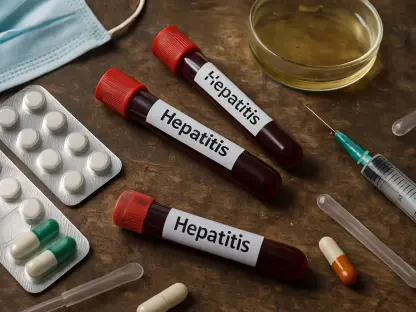
The new guidance moves six vaccines to “shared clinical decision-making.” In a busy clinic, how does this change your conversation with parents about the Hepatitis B vaccine, which led to a 99% decline in cases? Please walk us through the key points you’d need to cover.
This change fundamentally alters the dynamic in a very challenging way. Before, it was a straightforward, urgent recommendation. Now, it’s a long, complex negotiation in a 15-minute appointment slot. For Hepatitis B, I’d have to start by explaining that this isn’t just some abstract threat. It’s a virus that causes liver cancer, especially when contracted by infants, and it can survive on surfaces for a full week. I’d have to emphasize that the vaccine has been a stunning public health victory, leading to a 99% drop in cases among children and a parallel plummet in pediatric liver cancer. Then I would have to explain that the virus is still circulating, with thousands of acute cases and over 17,000 chronic cases reported just last year among unvaccinated adults—many of whom don’t even know they’re infected. It shifts the burden from a clear public health directive to a complex risk analysis that parents are now expected to undertake with me.
The article suggests this change could “muddy the water,” implying a vaccine’s safety is in question. For a disease like RSV, the top cause of infant hospitalization, how might this new status impact parental trust, and what specific language can you use to clarify the vaccine’s importance?
It absolutely muddies the water, and that’s what is so dangerous. When parents hear “shared clinical decision-making,” they don’t hear “let’s have a chat.” They hear “there must be a reason for doubt.” It implies a safety concern where none exists for the vast majority of children. For RSV, I have to be incredibly direct. I would say, “This vaccine’s new status has nothing to do with its safety. In fact, these vaccines are held to a safety standard higher than any other medical intervention we have. RSV is the single most common reason babies are hospitalized in this country, and roughly 80% of those hospitalized infants have no identifiable risk factors. This isn’t about choice; it’s about keeping your child out of the hospital, potentially on a ventilator, and this vaccine is our best and safest tool to do that.”
Before its vaccine, rotavirus caused 70,000 child hospitalizations a year. What does this history teach us about the value of a routine recommendation versus individual choice, and could you describe what it was like for pediatricians to treat these now-preventable diseases?
That history teaches us that a routine recommendation is the bedrock of a successful public health program. It removes ambiguity and creates a powerful shield of community immunity. Before 2006, rotavirus was a seasonal nightmare we called “winter vomiting syndrome.” My colleagues and I saw a constant stream of infants and toddlers who were miserably ill, dehydrated, and inconsolable. We admitted about 70,000 kids a year for IV fluids, and tragically, around 50 children died annually. A routine recommendation transformed that reality almost overnight. It told the public, “This is vetted, this is essential, this is what we do to protect our children.” Relying on individual choice reopens the door to that suffering, because the virus hasn’t vanished; it’s still on surfaces, just waiting for our defenses to fall.
What is your forecast for the rates of these now-sidelined preventable childhood diseases over the next five years, and what key factors will most influence that outcome?
My forecast is deeply concerning. I predict we will see a slow, but steady, resurgence of these diseases. We won’t see 70,000 rotavirus hospitalizations next year, but we will see the numbers creep up as vaccination rates decline. We will see more RSV, more hepatitis, and more meningococcal disease. The outcome will be influenced by three key factors. First, the commitment of pediatricians to continue strongly recommending these vaccines based on sound medical evidence. Second, our ability to counteract the inevitable parental confusion this new guidance will cause. And third, the resilience of state-level vaccination laws, which currently serve as a crucial backstop. But make no mistake, this federal shift sends a powerful and dangerous signal. We are risking a return to an era where children suffered and died from illnesses we had already beaten. Last season alone, 289 children died from the flu—this is the kind of tragedy we are inviting by weakening our resolve.