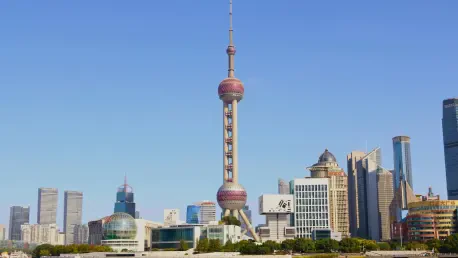

In a move that reverberates across the global pharmaceutical landscape, AstraZeneca has committed to a monumental $15 billion long-term investment in China, signaling a profound strategic alignment with the nation’s rapidly ascending role as a biopharmaceutical powerhouse. This massive financial injection, set to unfold through 2030, is not merely an expansion but a deep integration into one of the world’s most dynamic healthcare markets. It represents a calculated wager on China’s transformation from a manufacturing base into a global epicenter for cutting-edge medical innovation. The initiative is meticulously designed to bolster the company’s research, development, and production capabilities, positioning AstraZeneca to both capitalize on and contribute to the country’s ambitious healthcare agenda. This decision underscores a broader industry trend where multinational corporations are increasingly looking to China not just for market access, but for pioneering science and collaborative growth, fundamentally reshaping the future of drug development worldwide.
A Dual-Pronged Strategy for Growth
AstraZeneca’s ambitious strategy is anchored by a massive two-pronged investment aimed at simultaneously advancing its research frontiers and scaling its production capacity to an unprecedented level. A significant portion of the capital is earmarked for enhancing the company’s R&D infrastructure, with a sharp focus on highly specialized and advanced therapeutic modalities like cell therapy and radioconjugates. This investment is designed to fuel a robust drug pipeline targeting critical disease areas such as oncology, hematology, and autoimmune disorders. The plan involves a substantial expansion of its established strategic R&D centers in Beijing and Shanghai, transforming them into hubs of innovation capable of leading global research efforts. By concentrating on these cutting-edge fields, AstraZeneca is not just building laboratories; it is cultivating a self-sustaining ecosystem of discovery that can harness local talent and scientific breakthroughs to address unmet medical needs both within China and across the globe.
Parallel to its R&D push, the investment will fund a sweeping expansion of AstraZeneca’s manufacturing operations, ensuring its innovations can reach patients efficiently and at scale. This initiative follows a dual approach: first, it involves upgrading and modernizing the company’s four existing production facilities located in Wuxi, Beijing, Qingdao, and Taizhou to meet next-generation manufacturing standards. Concurrently, new capital will finance the construction of entirely new, state-of-the-art production sites across the country. This comprehensive overhaul aims to achieve two critical objectives. Primarily, it will increase production capacity to satisfy the burgeoning domestic demand within China’s vast healthcare market. Beyond that, it is intended to fortify China’s position as a crucial global supply hub for AstraZeneca, as its current facilities in the country already export essential medicines to approximately 70 international markets, making this expansion a cornerstone of its global supply chain resilience.
Capitalizing on an Emerging Innovation Powerhouse
This substantial financial commitment is strategically timed to leverage China’s dramatic evolution from a primary producer of generic drugs to a formidable source of novel, innovative medicines. Driven by significant regulatory reforms and a national push for scientific excellence, the country’s pharmaceutical sector has undergone a profound transformation. Chinese biotech and pharmaceutical companies are increasingly shifting their focus from imitation to invention, pioneering original R&D that is reshaping the global drug development pipeline. This pivot has turned the nation into a vital and attractive partner for Western pharmaceutical giants, who are now actively seeking to collaborate with Chinese firms to access groundbreaking therapies and replenish their own product portfolios. AstraZeneca’s investment is a direct response to this paradigm shift, recognizing that future growth lies in deep integration with this burgeoning innovation ecosystem.
The numbers powerfully illustrate China’s ascendant role in global drug discovery, with a recent report indicating that Chinese companies are now responsible for an impressive 20% of all drugs currently in development worldwide. This surge in innovation has made the country a hotbed for high-value licensing deals, and AstraZeneca has positioned itself as a leader in this trend. A prime example is its recent $5.2 billion agreement with CSPC, one of several lucrative partnerships forged to secure promising drug candidates. Experts predict that this dealmaking, particularly in the highly competitive oncology sector, will continue to be a powerful engine of growth for China’s pharmaceutical industry. By investing heavily in its local presence and forging strategic alliances, AstraZeneca is not just building infrastructure but is actively tapping into a rich and expanding source of scientific creativity that is critical for long-term success.
Navigating Geopolitical and Policy Landscapes
The timing of AstraZeneca’s announcement carries significant geopolitical weight, strategically coinciding with a diplomatic visit to Beijing by UK Prime Minister Keir Starmer, which was aimed at rebuilding and strengthening economic ties between the United Kingdom and China. Starmer’s public endorsement of the investment, noting that the expansion will help the “British manufacturer continue to grow,” cast the decision in a favorable light, framing it as a mutually beneficial move that strengthens international commerce. However, this endorsement also subtly highlights underlying concerns among some experts that the United Kingdom risks losing its long-held status as a global life sciences hub. A perceived lack of sufficient domestic investment in innovative drug development at home makes AstraZeneca’s major overseas commitment a poignant symbol of the shifting global dynamics in the pharmaceutical industry, where capital and talent are increasingly flowing toward innovation-friendly environments.
Beyond its geopolitical implications, AstraZeneca’s expansion strategy is in perfect alignment with President Xi Jinping’s landmark “Healthy China 2030” initiative. This comprehensive, long-term national health plan, the first of its kind since 1949, signals a profound commitment from the Chinese government to fundamentally overhaul its healthcare system. The strategy’s ambitious goals—to improve the quality of medical care, enhance public health infrastructure, and shift the national focus from treatment toward disease prevention—create an exceptionally favorable environment for investment. By concentrating on developing and manufacturing advanced therapies locally, AstraZeneca directly supports these national objectives. This synergy between corporate strategy and top-level state policy provides a stable and supportive foundation for the company’s long-term growth, ensuring its investment not only flourishes commercially but also contributes meaningfully to China’s public health vision.
A Decisive Step into a New Era
Ultimately, AstraZeneca’s multi-billion-dollar commitment represented a clear and decisive action, reflecting a sophisticated understanding of China’s pivotal new role in the global pharmaceutical ecosystem. It was a multi-pronged strategy designed to enhance R&D and manufacturing in lockstep, positioning the company to both leverage and contribute to the nation’s powerful shift toward innovation. This move was further strengthened by its astute alignment with China’s domestic health policies and the evolving dynamics of international economic relations. Through this investment, AstraZeneca not only secured its footprint in a critical market but also positioned itself at the forefront of a new era of global health, where collaboration and innovation in emerging pharma powerhouses would define the future of medicine.