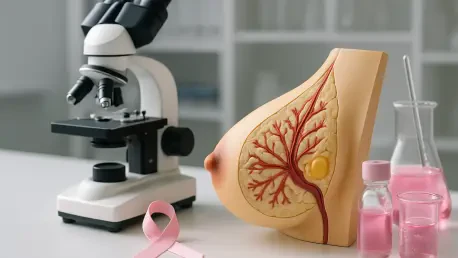

Imagine a disease so pervasive that it touches the lives of 1 in 8 women across their lifetime, casting a shadow over families and communities worldwide. Breast cancer stands as a formidable health challenge, yet the relentless pursuit of knowledge through cutting-edge research offers hope and direction. Every year, scientists uncover new layers of complexity about this illness, revealing that it’s not just a singular condition but a spectrum shaped by genetics, lifestyle, and unexpected environmental factors. These discoveries are vital, not only for understanding the disease but for crafting strategies to prevent and treat it effectively. Among the most impactful efforts is a long-term initiative that tracks thousands of women to decode the intricate puzzle of breast cancer risk. This exploration dives into the profound findings from such studies, shedding light on how far science has come and where it’s headed next in the battle against this global concern.
The journey of understanding breast cancer is far from simple, as it involves peeling back layers of influence that span a person’s entire life. Research shows that no single cause drives the disease; instead, it emerges from a complex interplay of elements that can start in childhood and evolve over decades. Hormonal milestones, daily habits, and even the air breathed or products used can contribute in ways that are only now becoming clear. Groundbreaking studies have provided a roadmap, guiding public health efforts and personal choices alike. By delving into these insights, a clearer picture emerges of how to confront breast cancer—not just through medical intervention but through informed, proactive steps that could lessen its impact on future generations. This narrative aims to capture the essence of these revelations, weaving together the threads of science and human experience.
Hormonal and Lifestyle Influences on Breast Cancer Risk
Understanding Established Risk Factors
Hormonal factors have long been recognized as pivotal in shaping breast cancer risk, with elements like the age at which menstruation begins or the use of hormone replacement therapy often playing significant roles. These biological markers, intertwined with reproductive choices such as the number of children a woman has, create a unique risk profile for each individual. Research highlights that early menstruation can increase exposure to estrogen over time, subtly elevating the chances of developing the disease. Similarly, therapies that alter hormonal balance, once thought to be purely beneficial, have shown mixed outcomes, sometimes contributing to higher risk in certain populations. This nuanced reality underscores the importance of personalized medical advice when considering such treatments. Beyond biology, these hormonal influences often intersect with other life choices, painting a broader picture of susceptibility that demands attention from both researchers and healthcare providers.
Lifestyle choices further complicate this landscape, with factors like physical activity and body weight carrying substantial weight in determining breast cancer likelihood, especially after menopause. Studies consistently show that regular exercise can act as a protective shield, reducing risk by balancing hormone levels and boosting overall health. On the flip side, obesity in later years has been linked to increased chances of the disease, largely due to excess fat tissue producing additional estrogen. This connection reveals a critical window for intervention—maintaining a healthy weight through diet and movement isn’t just about general wellness but could be a direct line of defense against breast cancer. The interplay of these lifestyle elements with hormonal factors illustrates how everyday decisions ripple into long-term health outcomes, urging a closer look at habits that might seem unrelated to such a complex illness.
Mapping the Personal Impact
The personal toll of these risk factors often goes beyond statistics, shaping life decisions and health strategies in profound ways. For many women, learning about hormonal risks prompts a reevaluation of medical options, like whether to pursue certain therapies or delay them until risks are better understood. This awareness can empower, yet it also brings a burden of choice—balancing potential benefits against unseen dangers. Research emphasizes that knowledge of these factors isn’t meant to alarm but to equip individuals with tools for informed dialogue with healthcare professionals. The emotional weight of navigating these risks, especially for those with a family history, adds another layer to the conversation, highlighting the need for supportive resources alongside scientific data.
Moreover, lifestyle adjustments, while beneficial, aren’t always straightforward to implement, as socioeconomic factors, access to healthy options, and cultural norms often stand in the way. The evidence linking inactivity or weight gain to breast cancer risk calls for community-wide efforts to promote wellness, not just individual resolve. Programs that encourage exercise or provide nutritional guidance can bridge gaps, making prevention more accessible. These insights into hormonal and lifestyle influences push for a dual approach—personal accountability paired with systemic support—to tackle risk at its roots. As research deepens, the focus remains on translating these findings into actionable steps that resonate with real lives, ensuring that science serves not just as knowledge but as a practical guide.
Environmental Exposures and Novel Risks
Uncovering Hidden Environmental Threats
Beyond the familiar terrain of hormones and lifestyle lies a less visible but equally critical contributor to breast cancer risk: environmental exposures. Studies reveal that elements like air pollution, particularly fine particulate matter, pose subtle yet significant threats, especially when exposure spans years. These pollutants, often unavoidable in urban settings, may seem negligible on an individual level, but their cumulative impact across large populations can translate into thousands of additional cases. Research, such as that from long-term cohort studies, has unearthed these hidden dangers, showing how the air breathed daily might quietly influence cellular health. This discovery shifts the narrative, urging a broader consideration of surroundings as much as personal choices when assessing risk.
Additionally, everyday items like personal care products—think hair dyes or chemical straighteners—have come under scrutiny for containing ingredients that could disrupt hormonal balance or act as carcinogens. While no definitive causal link has been cemented, the patterns emerging from data on 50,000 women suggest a correlation worth exploring. These products, often marketed as safe, highlight a gap in regulation and awareness that research is beginning to address. The significance lies not just in identifying these risks but in recognizing their widespread use, which amplifies their potential impact. As science uncovers these environmental threats, it becomes clear that breast cancer prevention must extend beyond the body to the world around, prompting calls for both caution and change on a societal scale.
The Role of Exposomics in Research
Enter the innovative field of exposomics, a game-changer in understanding how a myriad of environmental exposures interact with human health over a lifetime. Unlike traditional studies that focus on one chemical at a time, exposomics employs advanced tools like mass spectrometry to analyze hundreds of substances in blood samples simultaneously. This holistic approach, championed by leading researchers, captures both known hazards like PFAS—ubiquitous in consumer goods—and novel compounds that might otherwise slip through the cracks. The result is a comprehensive snapshot of the “exposome,” revealing historical and current influences on breast cancer risk. This method marks a leap forward, offering a clearer lens on how modern life, saturated with synthetic chemicals, might contribute to rising disease rates.
The power of exposomics lies in its ability to connect dots across time, linking exposures from childhood to adulthood with health outcomes decades later. For instance, chemicals like phthalates or plasticizers, found in everything from packaging to cosmetics, are now measurable in ways that weren’t possible before, providing data on their long-term effects. This approach not only enhances the detection of risks but also fuels advocacy for stricter controls on harmful substances. By mapping the chemical landscape of human exposure, exposomics underscores that breast cancer isn’t just a personal battle but a societal one, intertwined with industrial practices and environmental policies. The implications are vast, pushing research to evolve alongside the complexities of the modern world.
Bridging Science and Public Awareness
The revelations from environmental research carry a dual mission: to inform science and to awaken public consciousness about often-invisible risks. Air pollution, for instance, isn’t just a distant environmental issue but a health concern that demands local action, from reducing emissions to creating green spaces. Studies highlight that while personal avoidance of pollutants is tough, collective efforts can shift the needle, lowering community-wide risks. This perspective transforms abstract data into a rallying point for change, showing that environmental health is deeply personal. Public campaigns drawing on such research can play a pivotal role, turning complex findings into relatable messages that spur action.
Meanwhile, the spotlight on personal care products opens a dialogue about consumer power and responsibility. Research into chemicals like parabens or benzene suggests a need for vigilance, even if the evidence isn’t yet conclusive. This uncertainty can be frustrating, but it also empowers—encouraging individuals to question product safety and demand transparency from manufacturers. As environmental studies progress, they weave a narrative of connection, linking personal health to global systems. The challenge now is to ensure that these scientific breakthroughs don’t remain in labs but ripple out, fostering a culture of awareness and precaution that complements medical advances in the fight against breast cancer.
Breast Cancer Subtypes and Specific Risks
Differentiating Risks by Subtype
Breast cancer isn’t a monolithic disease; it manifests in various subtypes, each with distinct characteristics and risk profiles that complicate prevention and treatment. Research from extensive cohort studies, involving tens of thousands of participants, reveals that environmental and lifestyle factors don’t impact all subtypes equally. For instance, exposure to certain pollutants might heighten the risk for hormone-receptor-positive cancers more than for other forms. This variability means that a one-size-fits-all approach to prevention falls short—strategies must be tailored to address the unique triggers of each subtype. Understanding these differences is a critical step, as it allows medical professionals to refine screening and intervention plans based on specific risk patterns, ultimately improving outcomes.
The ability to detect these subtle distinctions is a testament to the scale and depth of modern research, which tracks thousands of cases to uncover patterns that might otherwise remain hidden. Subtype-specific risks also highlight why some women respond differently to the same exposures, whether it’s a chemical in a household product or a hormonal therapy. This insight pushes the field toward precision medicine, where treatments and preventive measures are customized to match not just a diagnosis but the underlying drivers of the disease. As science hones in on these variations, it becomes evident that breast cancer demands a nuanced lens—one that sees beyond the surface to the intricate biological diversity beneath, guiding more effective and targeted responses.
Implications for Targeted Prevention
The recognition of subtype-specific risks opens doors to more precise prevention strategies, a shift that could redefine how breast cancer is approached on a population level. For example, knowing that certain environmental exposures disproportionately affect specific cancer types enables public health initiatives to focus resources where they’re most needed, perhaps prioritizing air quality improvements in areas with higher rates of vulnerable subtypes. This targeted approach maximizes impact, ensuring that efforts aren’t spread too thin across generalized measures. It also underscores the value of large-scale studies that provide the statistical power to detect these fine-grained differences, offering a roadmap for where to direct future research and funding.
Equally important is the way this knowledge influences individual health decisions, as awareness of subtype risks can guide personal screening and lifestyle adjustments. Women with a family history linked to a particular subtype might opt for earlier or more frequent mammograms, while others could focus on minimizing specific exposures tied to their risk profile. However, translating these complex findings into practical advice remains a challenge, requiring clear communication between scientists, doctors, and the public. The push toward subtype-focused prevention reflects a broader trend in oncology—moving away from broad strokes to detailed, data-driven tactics that acknowledge the diversity of breast cancer itself. This evolution holds promise for reducing incidence rates through smarter, more individualized efforts.
Personal and Systemic Strategies for Risk Reduction
Empowering Individual Actions
While the scope of breast cancer risk factors can feel overwhelming, research emphasizes that individuals hold considerable power to influence their odds through intentional choices. Simple yet impactful steps, like cutting back on alcohol consumption, have been shown to lower risk, as even moderate drinking can elevate chances of the disease. Similarly, maintaining a healthy weight, particularly after menopause, serves as a protective factor by reducing excess estrogen production in fat tissue. These actions, rooted in robust scientific evidence, offer a sense of agency—proof that daily habits can build a defense against a complex illness. The message from studies is clear: small, consistent changes in lifestyle can add up to meaningful risk reduction over time.
Beyond diet and exercise, caution with personal care and household products emerges as another actionable strategy, given emerging concerns about chemical exposures. While the direct link between substances like endocrine disruptors and breast cancer isn’t fully proven, research suggests minimizing contact with potential hazards as a prudent step. This might mean opting for products free of parabens or phthalates when possible, or at least becoming a more discerning consumer by reading labels. Such choices, though seemingly minor, align with a broader push for prevention that starts at home. Empowering individuals with this knowledge transforms abstract research into tangible steps, fostering a proactive mindset that complements medical interventions and underscores the personal stake in breast cancer prevention.
Advocating for Policy and Transparency
Individual efforts, while vital, can only go so far when systemic barriers limit control over broader environmental risks like air pollution or unregulated chemicals. This is where policy reform enters the conversation, with research advocating for stronger regulations and better product labeling to safeguard public health. Transparent labeling, for instance, would enable consumers to identify and avoid potentially harmful ingredients in everyday items, from cosmetics to cleaning supplies. Studies highlight that without clear information, even the most motivated individuals struggle to make safe choices, pointing to a gap that only systemic change can bridge. The call for policy action isn’t just about protection—it’s about equity, ensuring that everyone has access to the information needed to reduce risk.
Furthermore, addressing environmental contributors on a larger scale requires coordinated efforts, such as reducing industrial emissions or phasing out hazardous substances in manufacturing. Research findings fuel these advocacy efforts by providing hard evidence of the population-wide impact of exposures, pushing lawmakers to prioritize health over profit. This dual focus—supporting personal vigilance while demanding systemic accountability—creates a comprehensive framework for risk reduction. It acknowledges that while personal actions matter, they must be paired with structural solutions to tackle the root causes of environmental threats. As science continues to uncover these connections, it lays the groundwork for policies that could reshape how society approaches breast cancer prevention, making safety a shared responsibility.
Future Directions in Breast Cancer Research
Exploring Emerging Factors
The horizon of breast cancer research is ever-expanding, with ongoing studies poised to address new and evolving challenges that reflect the complexities of modern life. Scientists are now turning their attention to emerging factors, such as the potential health impacts of weight management medications that have surged in popularity. These drugs, while promising for addressing obesity—a known risk factor—raise questions about long-term effects on cancer risk that only longitudinal research can answer. The adaptability of large cohort studies ensures that data collected today can pivot to investigate such contemporary issues, keeping science aligned with real-world developments. This forward-thinking approach is crucial for staying ahead of trends that could influence breast cancer incidence in unexpected ways.
Additionally, the exploration of environmental chemicals remains a dynamic frontier, as new substances enter the market faster than their safety can be fully assessed. Research continues to probe how these novel exposures, alongside existing ones like PFAS, interact with genetic and lifestyle factors over decades. The commitment to tracking these variables through expansive datasets offers a pathway to anticipate risks before they become widespread public health concerns. This proactive stance isn’t just about reacting to known dangers but about forecasting future ones, ensuring that prevention evolves alongside innovation. As studies delve into these uncharted areas, they promise to refine the understanding of breast cancer’s causes, paving the way for interventions that are as current as the challenges they address.
Identifying Protective Measures
Equally compelling is the focus on protective factors, which offer a counterbalance to the narrative of risk by highlighting ways to build resilience against breast cancer. Research suggests that maintaining a healthy weight, even for brief periods during critical life stages like early adulthood or post-menopause, may reduce susceptibility to the disease. This insight shifts the conversation from merely avoiding harm to actively fostering health, providing a positive framework for prevention. It also emphasizes the importance of timing—showing that strategic lifestyle changes at specific points in life can yield outsized benefits. Such findings encourage a mindset of opportunity, where proactive steps are seen as investments in long-term well-being.
Moreover, uncovering protective measures extends beyond individual actions to societal benefits, as identifying what works can inform public health campaigns and educational efforts. For instance, promoting physical activity or nutritional programs during key developmental windows could become a cornerstone of prevention strategies, backed by data on their protective effects. This dual lens—pinpointing risks while championing resilience—reflects the holistic nature of current research, aiming to offer a balanced toolkit for addressing breast cancer. As science progresses, the hope is to expand this arsenal of protective strategies, ensuring that prevention isn’t just about dodging threats but about cultivating strength. This optimistic focus, grounded in rigorous study, underscores the potential for research to not only solve problems but also inspire healthier futures.