
The rapid escalation of global temperatures has forced a fundamental rethink in how medical researchers track the environmental stressors impacting reproductive health during the critical window before conception. While traditional climate studies often focus on broad atmospheric trends, modern scientific inquiry is shifting toward the specific, localized experiences of individuals as they navigate their daily routines. This transition is particularly vital for the preconception cohort—women who are planning or likely to conceive—as environmental conditions during this phase can exert lasting biological effects on both maternal health and the early stages of fetal development. By moving away from static, localized meteorological data and toward individualized, high-resolution thermal monitoring, researchers are uncovering a hidden layer of physiological risk. This emerging field of precision environmental health utilizes wearable sensors to provide a more granular understanding of heat-related dangers that traditional epidemiological methods frequently overlook. The goal is to identify how specific microclimates affect human biology, ensuring that medical advice and public health interventions are based on actual exposure rather than regional averages.
For decades, the standard approach for assessing heat-related health impacts relied almost exclusively on outdoor air temperature data collected from centralized weather stations. These stations are typically located in open-air, standardized environments like airports or parks, which rarely reflect the complex microclimates where people spend the vast majority of their lives. Most individuals move through a series of indoor spaces, transit corridors, and localized areas of shade or heat retention that a distant thermometer cannot possibly capture. Consequently, relying on these outdoor proxies often leads to significant exposure misclassification, where the actual thermal stress experienced by a person is either underestimated or entirely missed. In the context of preconception health, even minor thermal fluctuations can trigger physiological responses that interfere with reproductive outcomes. This discrepancy highlights the urgent need for tools that can measure the lived experience of heat, providing a more accurate baseline for assessing risks to fertility and early gestational development in an era of unpredictable climate patterns.
Technological Innovation in Thermal Tracking
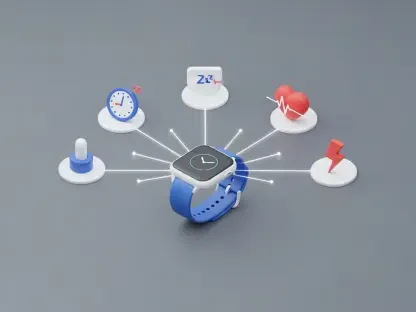
To address the inherent inaccuracies of traditional temperature monitoring, researchers have turned to advanced body-worn sensors designed for continuous, high-resolution data collection. These wearable devices are capable of recording personal heat exposure by measuring the temperature in the immediate proximity of the wearer’s skin throughout the day and night. This technological leap allows scientists to track thermal variations during a wide range of activities, including sleep, work, commuting, and domestic chores, creating a comprehensive profile of an individual’s thermal environment. By deploying these sensors during the preconception phase, the research establishes a baseline of exposure that could influence health long before a pregnancy is clinically confirmed. This longitudinal approach is essential because it captures temporal fluctuations—the spikes and dips in temperature that occur over hours or days—that static data points from a weather station simply cannot replicate. The result is a high-fidelity dataset that bridges the gap between environmental science and personal biology.
The data gathered from these wearables has already revealed a substantial divergence between personal sensor readings and official weather reports, challenging long-held assumptions about heat safety. Participants in recent studies were frequently exposed to higher and more volatile temperatures than ambient data suggested, with many of the most significant heat spikes occurring while individuals were indoors. Activities that involve heat generation, such as cooking in a poorly ventilated kitchen or commuting in a vehicle without efficient climate control, created localized thermal burdens that remained completely invisible to standard meteorological instruments. These findings suggest that the indoor environment is not always a reliable refuge from extreme heat; in fact, certain domestic and transit settings can exacerbate exposure. This revelation is critical for public health, as it implies that previous studies relying on outdoor temperature may have significantly underestimated the level of risk faced by individuals in their everyday environments, particularly those who lack control over their immediate surroundings.
Clinical and Socio-Economic Implications
Accurate heat measurement is not just a technological achievement; it is a vital necessity for preventing adverse pregnancy outcomes that are increasingly linked to thermal stress. Clinical research has long associated excessive heat with complications such as preterm birth, low birth weight, and hypertensive disorders like preeclampsia. By utilizing the refined data provided by wearable technology, medical professionals can develop more precise risk models that account for the specific thresholds at which personal heat exposure becomes dangerous. This shift allows public health officials to move away from generalized heat wave warnings and toward individualized health guidelines that can be tailored to a person’s specific lifestyle and environment. During the preconception phase, where environmental insults can potentially impact ovulation and early embryonic growth, having access to real-time, accurate exposure data could allow for interventions that significantly improve the chances of a healthy pregnancy and long-term fetal well-being.
The social determinants of health also play a major role in how heat exposure is distributed across different populations, revealing a clear link between economic status and environmental risk. While access to reliable air conditioning is a primary factor in reducing personal heat burden, the study of wearable data shows that occupational conditions and transit methods are equally influential. Individuals working in industrial settings without climate control or those who rely on public transportation in poorly ventilated urban corridors face sustained periods of high thermal stress regardless of the official outdoor temperature. This interdisciplinary perspective highlights how lifestyle constraints and socio-economic disparities intersect with climate change to produce unequal health outcomes. By integrating behavioral data with wearable sensor readings, researchers can pinpoint exactly where and why certain groups are more vulnerable. This information is essential for creating targeted interventions and policy changes that address the root causes of environmental health disparities, ensuring that the benefits of precision health reach those who need them most.
Technical Integrity and Future Applications
Successfully implementing wearable technology in large-scale health research requires overcoming several technical hurdles to ensure the reliability and accuracy of the collected data. Researchers must account for phenomena such as sensor drift, where electronic components lose precision over time, as well as the potential for the wearer’s own body heat to interfere with ambient temperature readings. To maintain data integrity, sophisticated algorithms are employed to filter out artifacts and noise, ensuring that the final dataset reflects the actual environmental conditions encountered by the participant. Furthermore, maintaining high levels of participant adherence is crucial for the success of longitudinal studies. Devices must be designed with a user-centric focus to ensure they are comfortable enough to be worn consistently over long periods. These technical advancements provide a necessary blueprint for managing the massive amounts of data generated by continuous environmental monitoring, turning raw sensor readings into actionable health insights that can be used by both researchers and clinicians.
The integration of wearable thermal sensors with digital health platforms represents a transformative step toward proactive, preventive medicine in a warming world. Future applications could involve linking these sensors to smartphone applications that provide real-time, individualized heat alerts, prompting users to hydrate, seek shade, or reduce physical exertion when their personal exposure reaches a critical level. This approach supports the broader goals of precision environmental health by recognizing that the same external weather event can affect individuals in vastly different ways based on their specific microenvironments and biological sensitivities. As global temperatures continue to rise, these tools offer a scalable way to safeguard maternal health and protect marginalized communities from escalating risks. By prioritizing data privacy and ensuring that these technologies remain accessible to diverse populations, society can better navigate the challenges of climate change while fostering a deeper understanding of the intricate relationship between our environment and our reproductive future.
The researchers concluded that the transition to wearable monitoring was essential for identifying hidden thermal risks that had previously gone undetected by traditional methods. They determined that the widespread use of centralized weather data had inadvertently created a gap in public health knowledge, particularly regarding the dangers of indoor and transit-related heat spikes. By analyzing the high-resolution data from the preconception cohort, the team established that personalized interventions were significantly more effective than generalized advice. They recommended that future health policies should prioritize the distribution of low-cost wearable sensors to high-risk populations to bridge the gap in environmental equity. The findings also supported the development of new clinical guidelines that incorporate personal heat exposure as a standard metric in prenatal and preconception care. Ultimately, the study demonstrated that technological integration was the most viable path forward for protecting vulnerable groups from the physiological impacts of an increasingly volatile climate.