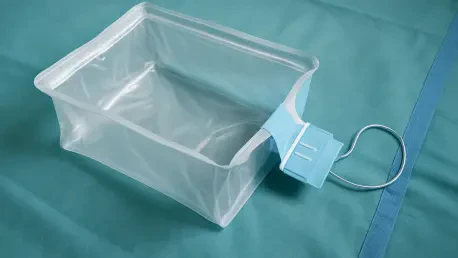

In the relentless battle against severe localized infections, traditional systemic antibiotics often fall short, unable to penetrate the complex and hostile environment of an infected wound, a problem that has persisted for decades in modern medicine. These aggressive infections can escalate with alarming speed, causing rapid tissue degradation and overwhelming the body’s defenses. To combat this challenge, a team at the University of Utah has developed a groundbreaking medical device: the Vetlen Pouch, a refillable surgical reservoir designed to deliver a high concentration of antibiotics directly to the site of infection. This innovation is not only transforming veterinary medicine but also paving a clear path toward human applications. By successfully treating animals, researchers are gathering invaluable clinical data and demonstrating the device’s potential to address some of the most stubborn infections in people, embodying a “One Health” approach where advancements in animal care directly inform and accelerate progress in human health.
A Targeted Solution for a “Wildfire” Problem
The Challenge and the Proof of Concept
Severe wound infections present a formidable medical challenge, often described by research assistant professor Nicholas Ashton, PhD, as a “wildfire” that, once ignited, spreads uncontrollably. When bacteria establish a deep-seated presence in tissue, they create an environment that is remarkably resistant to conventional treatments. Systemic antibiotics, whether administered orally or intravenously, struggle to reach the infection site in sufficient concentrations to be effective. The compromised blood flow in damaged tissue and the protective biofilms that bacteria form create formidable barriers. This results in a frustratingly common scenario where infections persist, leading to chronic complications, limb loss, or even life-threatening sepsis. The need for a more direct and potent method of drug delivery has long been recognized, but effective solutions have remained elusive. The Vetlen Pouch was conceived to meet this exact need by bypassing the circulatory system entirely, creating a localized, high-dose antibiotic environment that can overwhelm even the most entrenched bacterial colonies and give the body a fighting chance to heal.
The remarkable efficacy of this targeted approach was powerfully demonstrated in the case of Major, a terrier who suffered a severe leg injury from another dog’s attack. A delay in treatment due to a snowstorm allowed a dangerous infection to take hold, complicated by multiple strains of bacteria that threatened his life and limb. Facing a grim prognosis, Major became a candidate for the new device. The Vetlen Pouch was surgically placed directly inside the infected wound, where it was filled with a potent antibiotic solution. Over the next ten days, the pouch was periodically refilled through a port, ensuring a continuous and concentrated dose of medication precisely where it was needed most. This sustained, localized therapy accomplished what systemic drugs could not. The infection was steadily eradicated, the damaged tissue began to heal, and Major made a complete recovery. His case transcended a single success story; it became a compelling proof of concept, illustrating how the pouch could overcome the limitations of traditional antibiotic therapy and save patients from the devastating consequences of severe, localized infections.
The Genesis of an Idea
The creation of the Vetlen Pouch stemmed from a profound sense of frustration with the static nature of infection control in medicine. Dustin Williams, PhD, a professor of orthopedic surgery at University of Utah Health, had dedicated much of his prior research to developing antimicrobial coatings for medical implants. While innovative, he found these coatings to be fundamentally limited. They can only be impregnated with a finite quantity of antibiotic, which is released over a set period. Once this supply is depleted, the implant loses its antimicrobial protection, leaving the patient vulnerable to subsequent infection. This built-in obsolescence meant that coatings were a temporary measure, not a definitive solution for preventing or treating persistent infections. This constant struggle against the limitations of existing technology spurred Dr. Williams to seek a more dynamic and durable solution. The core problem was not the antibiotic itself but the delivery method, a challenge that demanded a complete departure from conventional thinking and a willingness to look for inspiration in unconventional places.
The breakthrough, a moment Dr. Williams describes as “pivotal,” came from a deeply personal and unexpected source: the memory of his late uncle’s dialysis machinery. While contemplating the principles of dialysis, he was struck by the function of the permeable membranes used to filter fluids and remove waste from the blood. This sparked a revolutionary idea of startling simplicity. Instead of a finite coating that releases a drug until it is gone, he envisioned a soft, refillable reservoir—a pouch or bag—made from a similar permeable material. This pouch could be surgically implanted at the site of an infection and filled with a liquid antibiotic. The drug would then continuously seep through the membrane into the surrounding tissue, creating a high-concentration antimicrobial zone. Most importantly, the reservoir could be easily replenished through an external port as many times as needed until the infection was completely eradicated. This concept transformed the treatment paradigm from a one-time, depleting defense to a sustained, adaptable, and potent offensive strategy against infection.
From Veterinary Success to Human Application
Proving Efficacy in Veterinary Medicine
The strategic decision to first introduce the innovative pouch into the veterinary market was a deliberate and insightful move by Dr. Williams and Dr. Ashton. They recognized that the device’s inherent characteristics—its versatility in size and application, its portability, and its straightforward ease of use—made it an exceptionally good fit for animal patients. This pathway offered more than just a market opportunity; it provided an immediate and ethical way to help animals suffering from severe infections while simultaneously building an indispensable repository of real-world clinical data. Each successful case in a veterinary setting would serve as a powerful data point, demonstrating the pouch’s safety, efficacy, and practicality across a variety of biological systems and infection types. This approach allowed the technology to mature and prove its value in a clinical environment much faster than would be possible if it had started with the lengthy and complex human trials process, all while providing tangible benefits to beloved pets who would otherwise have limited options.
The Vetlen Pouch has since been utilized in a wide array of challenging veterinary cases, consistently proving its value and versatility. It has been instrumental in healing dogs with severe tissue damage from car accidents, horses suffering from debilitating post-injury complications, and cats afflicted with stubborn bone infections, a condition notoriously difficult to treat. The device offers a significantly less stressful method of treatment, particularly for animals like cats, which can be exceptionally challenging to medicate orally multiple times a day. As Dr. Williams notes, refilling the pouch is a simple, quick procedure that the animal barely registers, allowing the wound to heal undisturbed. This non-disruptive, continuous delivery of medicine ensures that the animal remains comfortable while receiving powerful, life-saving treatment, a combination of benefits that has led to countless successful outcomes. In a very real sense, the animals treated with the pouch are not just patients; they are pioneers helping to validate a technology that holds immense promise for the future of medicine.
The Ultimate Goal of Healing People
While the success in healing animals is a significant achievement in its own right, the researchers have always viewed it as a means to a greater end. The overarching consensus is that every successfully treated animal reinforces the device’s immense potential for human application. Each case, from a dog’s wounded leg to a horse’s infected joint, provides crucial data that builds a stronger case for its eventual use in people. This intentional leveraging of veterinary medicine as a proving ground for human medical technology lies at the core of their mission. Dr. Ashton powerfully articulates this vision, stating, “every time you see it working there, every one of those could be a way you could use the device in humans.” The robust evidence gathered from these diverse animal cases is not merely anecdotal; it forms the scientific and clinical foundation required to move forward with human trials. This “One Health” approach, where the well-being of animals and humans are inextricably linked, is accelerating the translation of a promising innovation from the lab to the clinic.
The ultimate ambition for the Vetlen Pouch was always to address a massive, unmet need in human medicine. Dr. Williams’s motivation had been deeply personal, rooted in his military family background and a powerful desire to help heal soldiers, who frequently suffer from severe orthopedic injuries highly susceptible to infection. The urgency of this work was underscored by a stark and sobering statistic he often cited: “The rates of infection for orthopedic procedures have gone unchanged for 70 years.” This long plateau in progress highlighted a critical gap in medical technology that the pouch was uniquely positioned to fill. By proving the device’s efficacy and safety in beloved companion animals, the researchers systematically built a robust foundation of evidence. This journey, from a moment of inspiration to a series of veterinary triumphs, has paved the way for the device’s transition to healing people, fulfilling the dual promise of biomedical innovation to improve the lives of all species.