
A pervasive shadow economy now accounts for nearly one out of every five alcoholic beverages consumed in South Africa, creating a multi-faceted crisis that poses an escalating threat to public health, economic stability, and national security. This thriving underground market, valued at an astonishing R25.1 billion, represents a volume of illegal alcohol so vast it could fill approximately 1,600 swimming pools each year. The proliferation of smuggled, counterfeit, and dangerously concocted homebrewed products is no longer a fringe issue but a mainstream challenge that has deeply embedded itself within communities across the nation. The consequences are far-reaching, eroding the foundations of a key economic sector, fueling organized crime, and, most tragically, claiming lives. This illicit trade has grown from a secondary concern into a primary national crisis demanding immediate and decisive intervention from all sectors of society before its devastating impact becomes irreversible.
The Genesis of a Thriving Black Market
The explosive growth of South Africa’s illicit alcohol sector can be traced directly to the stringent alcohol sales bans imposed during the COVID-19 lockdowns that began in 2020. These prohibitions, intended to curb the pandemic’s spread, inadvertently created a perfect storm for an underground economy to flourish. As legal channels for purchasing alcohol were severed, a massive and sudden demand gap emerged, which illicit producers and smugglers were quick to exploit. Research from Euromonitor International confirms that this period did not just cause a temporary spike in illegal sales but fundamentally reshaped the market, establishing new supply chains and normalizing the consumption of unregulated products for a significant portion of the population. The bans effectively served as an accelerator, transforming a manageable problem into a deeply entrenched, multi-billion-rand industry that has continued its aggressive expansion long after the restrictions were lifted, leaving a legacy of lasting damage.
The scale of this underground economy has now reached staggering proportions, fundamentally altering the country’s beverage landscape. The illicit market is not monolithic; it comprises a complex network of counterfeiters who mimic established brands, large-scale smugglers who transport products across borders to evade taxes, and countless small-scale brewers who produce homemade concoctions in often unsanitary conditions. This diverse supply chain ensures that illegal alcohol is readily available and affordable, particularly in lower-income communities. The persistence of this trade highlights a critical failure in regulatory oversight and enforcement, allowing criminal enterprises to operate with a troubling degree of impunity. The result is a parallel market that operates outside the law, accountable to no one, and poses a direct and ongoing threat to both the formal economy and the well-being of consumers who are often unaware of the lethal risks they are taking with every sip.
A High Price for Public Health and the Economy
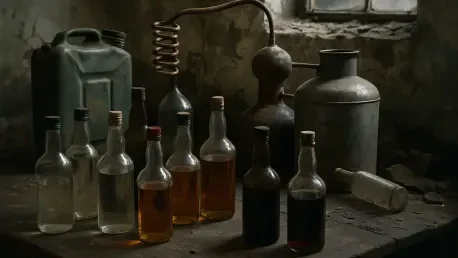
The most immediate and tragic consequence of the flourishing illicit alcohol market is the severe and often fatal threat it poses to public health. Unregulated alcoholic products, especially counterfeit spirits and homebrews, are frequently manufactured in unsanitary environments and adulterated with dangerous substances to increase their perceived potency. Methanol, industrial solvents, and other toxic additives are commonly found in these drinks, leading to poisoning, blindness, organ failure, and death. This is not a distant or abstract danger; it has a real human cost, as tragically demonstrated by the 2024 deaths of four farmworkers in Stellenbosch after consuming a lethal batch of homebrewed alcohol. Furthermore, research underscores the widespread impact of this public health crisis, revealing that nearly one-third of South Africans personally know someone who has died as a result of consuming illegal alcohol, a statistic that paints a grim picture of the crisis’s reach into communities nationwide.
Beyond the devastating human toll, the illicit alcohol trade inflicts substantial damage on the national economy by systematically undermining one of its most vital industries. The legal alcohol sector is a cornerstone of the South African economy, supporting one in every 31 jobs and contributing over R100 billion in annual tax revenue that is essential for funding public services. Every illicit sale directly chips away at this foundation. The shadow economy operates entirely outside the tax system, leading to massive fiscal losses for the government. It is estimated that in 2024 alone, the National Treasury was deprived of R16.5 billion in potential revenue due to the untaxed sale of illegal alcohol. These are not just numbers on a balance sheet; they represent lost funds that could have been invested in critical areas such as healthcare, education, and infrastructure development, thereby compounding the societal harm caused by the crisis.
The Nexus of Crime and the Path Forward
A clear and troubling link has been established between the illicit alcohol market and the broader ecosystem of organized crime, transforming a trade issue into a significant national security threat. The immense profits generated from this unregulated industry provide a steady and substantial revenue stream for criminal syndicates, which use the funds to finance other illegal activities, including drug trafficking, weapons smuggling, and theft. These criminal networks are adept at exploiting vulnerable communities, where they can operate with relative ease, fostering a climate of lawlessness and corruption. This places an immense strain on already overstretched law enforcement agencies, which often lack the resources and capacity to dismantle these sophisticated, multi-provincial operations. The illicit alcohol trade is, therefore, not merely about tax evasion; it is a critical enabler of a criminal underworld that erodes public safety and destabilizes communities.
The consensus among industry leaders and researchers was that this escalating crisis had become a “wake-up call” for the entire nation, demanding a unified and urgent response. Experts like Richard Rivett-Carnac of South African Breweries and Dr. Shamal Ramesar of the Drinks Federation of South Africa (DF-SA) argued that the problem’s effects—from lost government revenue and threats to legitimate businesses to the exposure of citizens to harmful products—were felt by everyone. It became evident that tackling this complex challenge required a coordinated, multi-pronged strategy involving a committed partnership between the government, the legal alcohol industry, and civil society. The proposed path forward centered on three key pillars: strengthening the enforcement of existing regulations to dismantle illegal production and distribution networks; launching comprehensive public education campaigns to inform consumers about the lethal dangers of unregulated alcohol; and fostering economic conditions that reduce the appeal of the illicit market. This unified approach was seen as the only viable way to curb the crisis before its human and economic costs escalated further.