
The emergence of the Merlin AI model marks a definitive turning point in the evolution of medical diagnostics by providing a sophisticated, general-purpose framework for interpreting complex 3D imaging. Developed through extensive funding from the National Institutes of Health and rigorous research at Stanford University, this system departs from the traditional landscape of narrow, task-specific artificial intelligence. Instead of focusing on a single pathology, Merlin functions as a vision-language foundation model trained on an unprecedented scale of clinical data, including nearly a million diagnostic codes and thousands of detailed radiology reports. This holistic approach allows the technology to synthesize visual markers from abdominal scans with the descriptive language of clinical records, creating a unified understanding of patient health that was previously unattainable. As the healthcare industry moves deeper into 2026, the necessity for such integrated systems is becoming clear, as they offer a scalable solution to the increasing complexity of modern medical data.
Streamlining Clinical Workflows: Addressing the Physician Shortage
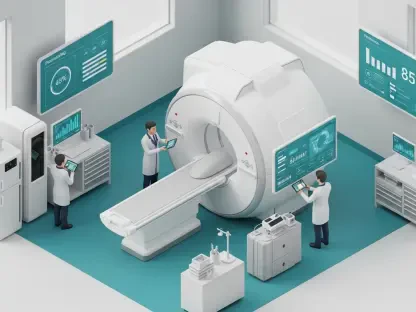
The current state of medical imaging is characterized by a significant bottleneck that stems from the labor-intensive nature of manual radiological interpretation. Each 3D computed tomography scan contains a staggering amount of information that a human specialist must meticulously review to identify potential abnormalities, a process that frequently results in diagnostic delays and the need for repetitive testing. This operational strain is further intensified by a chronic shortage of qualified physicians across the United States, leaving many healthcare facilities struggling to manage rising patient volumes effectively. Merlin offers a strategic intervention by automating the initial transition from raw visual imaging to preliminary diagnostic insights, effectively serving as a high-speed analytical assistant. By handling the foundational aspects of data interpretation, the model empowers clinicians to bypass routine administrative hurdles and focus their expertise on high-level treatment planning and direct patient care coordination.
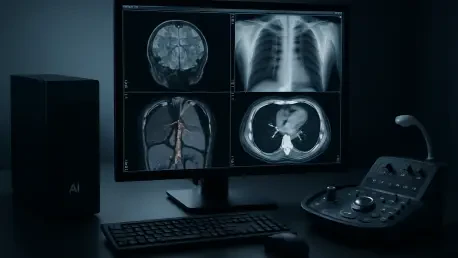
The underlying strength of this artificial intelligence system is derived from its massive training foundation, which encompasses the largest curated collection of abdominal computed tomography data ever assembled for research. By analyzing more than 15,000 unique 3D scans paired with their original clinical reports, the research team enabled Merlin to develop a sophisticated vision-language architecture that mirrors human cognitive processes. This training methodology relied on unlabeled datasets, allowing the model to independently discover the relationships between specific visual patterns and professional medical terminology without constant human intervention. Consequently, the model has acquired an intrinsic ability to connect physical findings with diagnostic language, mimicking the years of specialized education typically required for a radiologist to gain such proficiency. This robust architectural foundation ensures that the model remains adaptable to a wide range of clinical scenarios, providing a reliable backbone for diverse medical environments.
Versatility and Precision: A New Benchmark for Diagnostic Performance
To evaluate the true clinical utility of the Merlin model, researchers subjected it to a rigorous evaluation involving a gauntlet of 750 distinct medical tasks categorized across various diagnostic and prognostic activities. The results of these tests confirmed that the system functions as a highly capable multi-tasking tool, often outperforming older, specialized models that were designed for only a single type of analysis. In a validation study involving 50,000 previously unseen scans from four different hospital systems, Merlin demonstrated an impressive 81% accuracy rate in predicting diagnostic codes across nearly 700 different conditions. For a more focused subset of approximately 100 common diagnostic codes, the model’s precision reached a remarkable 90%, illustrating its potential to serve as a stable and highly accurate resource for clinicians. This level of performance across such a broad spectrum of tasks proves that foundation models can maintain high accuracy while offering much greater versatility than traditional systems.
Beyond its performance in standard diagnostic tasks, Merlin demonstrated an exceptional ability to generalize its knowledge to anatomical regions it had never encountered during its primary training phase. When challenged to interpret chest computed tomography scans, an area outside its original abdominal focus, the model matched or exceeded the performance of specialized artificial intelligence systems that were built exclusively for chest imaging. This cross-anatomical capability suggests that Merlin has mastered universal principles of disease presentation and structural identification that transcend specific body parts. Additionally, the model can be fine-tuned for highly technical activities such as 3D organ segmentation or the generation of full radiology reports from scratch. This flexibility makes it an invaluable asset for modern radiology departments that require tools capable of evolving alongside rapidly changing clinical needs, providing a unified platform that can be customized for specific institutional requirements or research goals.
Proactive Healthcare: Identifying Hidden Biomarkers for Early Detection
Perhaps the most significant advancement offered by the Merlin model is its capacity to detect subtle, “hidden” biomarkers that are often invisible to even the most experienced human observers during routine reviews. In specific studies targeting otherwise healthy patients, the model was tasked with predicting the five-year risk for chronic conditions such as diabetes, cardiovascular disease, and osteoporosis. Merlin correctly identified individuals at high risk for these diseases with 75% accuracy, which represents a substantial improvement over other contemporary artificial intelligence models that averaged closer to 68% in similar tests. By analyzing minute changes in tissue density and structural integrity that might be overlooked during a standard scan, the system provides a window into a patient’s future health status. This predictive capability allows for a fundamental shift in medical practice, moving away from a reactive model toward a proactive strategy that emphasizes early intervention.
The ability to identify chronic disease markers years before clinical symptoms manifest could fundamentally alter the long-term management of public health and individual patient outcomes. Instead of waiting for a condition to become symptomatic or advanced, clinicians can use the insights provided by Merlin to implement preventative measures, such as lifestyle modifications or early-stage medical therapies. This approach not only improves the quality of life for patients but also reduces the long-term financial burden on the healthcare system by preventing the progression of costly, chronic ailments. The model’s success in this area highlights the unique advantages of using large-scale, multi-modal data to uncover complex biological relationships that were previously hidden from view. As these predictive tools become more integrated into routine clinical practice, they will likely become the standard for screening protocols, ensuring that risk factors are identified and addressed at the earliest possible stage.
Collaborative Integration: The Strategic Path Toward Global Implementation
The development of Merlin represents more than just a technological breakthrough; it signals a new era of democratization and collaboration in the field of medical artificial intelligence development. By releasing the model as a foundational “backbone,” the research team has provided a platform that other medical institutions can utilize and adapt to their specific patient demographics and local clinical needs. This open approach encourages a collaborative ecosystem where data from diverse populations can be used to further refine the model’s accuracy and cultural relevance. Rather than every hospital building its own siloed system from the ground up, they can now leverage the pre-trained expertise of Merlin, significantly reducing the cost and technical barriers associated with implementing advanced diagnostic tools. This strategy ensures that the benefits of high-level artificial intelligence are not limited to elite research universities but can be accessed by healthcare providers globally.
To ensure the safe and effective integration of this technology into daily clinical workflows, a strategic regulatory pathway is currently being established, starting with less complex administrative tasks. Initial applications will likely focus on automated diagnostic coding and quality assessment, allowing healthcare systems to gain confidence in the model’s reliability before moving toward more critical clinical functions. As the technology matures, the focus will shift toward assisting in the creation of comprehensive radiology reports and providing real-time decision support for complex surgical planning. By prioritizing a phased implementation, the medical community can address potential ethical and technical challenges in a controlled manner, ensuring that the technology remains a supportive tool for human clinicians. The success of this NIH-funded project underscored the importance of using meticulously curated data to expand the boundaries of artificial intelligence, providing a scalable and highly accurate foundation for future healthcare innovations.