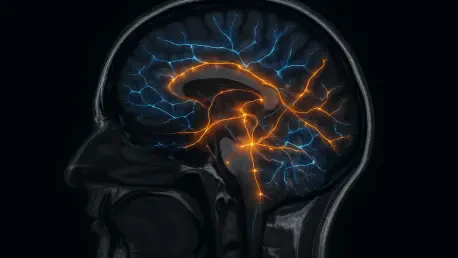

Deep within the intricate network of the human brain, a constant and overwhelming conversation takes place among billions of neurons, a dialogue that underpins every thought, memory, and action. For decades, neuroscientists have been able to detect the loud “shouts” of this conversation—the moments a neuron fires an output signal—but have remained deaf to the far more numerous and subtle “whispers” of incoming information. These faint, fleeting inputs are the very building blocks of neural computation, where countless small signals are weighed and integrated to produce a single, decisive response. The inability to observe this granular level of communication has represented a significant barrier to fully understanding how the brain processes information. It has been like trying to comprehend a complex story by only reading the final word of every sentence, leaving the rich context and nuance completely obscured. This gap in knowledge has limited progress in both fundamental neuroscience and the development of treatments for a wide range of neurological disorders that originate from faulty communication at this microscopic level.
Making the Invisible Visible
A groundbreaking engineered protein sensor is now poised to fill this critical gap, finally allowing scientists to perceive the brain’s most elusive signals. Developed through a collaborative effort between leading research institutions, this new tool, designated iGluSnFR4, has been aptly nicknamed the “glue sniffer” for its remarkable ability to detect glutamate, the most abundant chemical messenger, or neurotransmitter, in the brain. When a neuron releases glutamate to send a signal to a neighbor, iGluSnFR4 latches onto it and lights up, effectively translating the invisible chemical whisper into a visible flash of light. This process enables researchers, for the very first time, to watch in real-time as a single neuron receives thousands of distinct input signals across its intricate dendritic branches within living brain tissue. It transforms the previously theoretical process of neural integration into an observable phenomenon, providing an unprecedentedly clear view of the brain’s internal language as it is being spoken at the most fundamental level.
The capacity to visualize the full scope of neural input fundamentally alters the study of the brain by providing a complete picture of the dialogue between neurons. Before this innovation, scientists could only measure the end result of a neuron’s complex calculation—its singular output fire—without any insight into the thousands of inputs that informed that decision. Dr. Kaspar Podgorski, a lead author on the study, compares the breakthrough to finally understanding how individual words on a page connect to form a meaningful sentence. With iGluSnFR4, researchers can now see the order, timing, and location of each incoming signal, revealing the sophisticated logic that governs how neurons prioritize and process information. This newfound clarity is expected to unlock profound insights into the mechanisms behind learning, memory, and decision-making, moving neuroscience from a state of inference to one of direct observation and deciphering the intricate rules that govern the brain’s computational power.
A New Frontier for Medical Science
The implications of this technological leap extend far beyond fundamental research, opening significant new avenues for understanding and treating complex neurological and psychiatric conditions. Many of the most challenging brain disorders, including Alzheimer’s disease, schizophrenia, autism, and epilepsy, are linked to abnormalities in glutamate signaling and synaptic communication. Until now, studying these connections has been indirect and challenging. The iGluSnFR4 sensor provides a powerful and direct method to investigate the root causes of these diseases at the synaptic level. Researchers can now visualize precisely how and where communication breaks down in models of these disorders, observing the subtle yet devastating failures in neural input that may precede clinical symptoms. This capability offers a much clearer target for therapeutic intervention and could lead to earlier and more accurate diagnostic tools, shifting the paradigm from managing symptoms to addressing the underlying pathology of brain disease.
The development of iGluSnFR4 marked a transformative moment for neuroscience and drug discovery. The tool, a product of extensive cross-institutional collaboration, was made widely available to the global research community, empowering scientists everywhere to explore the brain’s deepest mysteries with newfound clarity. Its release heralded a new era in which pharmaceutical companies could directly test how potential treatments affect synaptic activity, providing a far more accurate picture of a medicine’s efficacy and dramatically speeding up the development of better therapies. By illuminating the complete conversation between neurons, this powerful sensor provided a key that was poised to unlock a more profound understanding of the mind and offered a powerful new weapon in the fight against a host of debilitating neurological disorders.