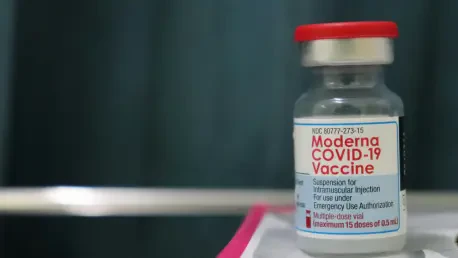

The global pharmaceutical landscape has undergone a seismic shift following the formal announcement that Moderna has agreed to a massive two-point-two-five billion dollar settlement with Genevant Sciences and Arbutus Biopharmaceutical to resolve long-standing disputes over lipid nanoparticle technology. This resolution arrived at a critical juncture, concluded just days before a high-stakes jury trial was scheduled to begin in a federal court. For years, the legal shadow cast by allegations of patent infringement regarding the delivery systems used in the Spikevax COVID-19 vaccine has influenced investor sentiment and operational planning. By finalizing this agreement, the company has effectively dismantled a primary source of financial volatility that has persisted since the peak of the pandemic. The settlement signifies a strategic choice to prioritize future innovation over protracted litigation, allowing the executive leadership to redirect focus toward a burgeoning pipeline of therapeutic candidates. This move provides the necessary legal clearance to operate without the immediate threat of a court-mandated injunction or unpredictable damages being awarded by a jury, which could have been significantly higher than the agreed-upon sum.
The Broader mRNA Patent War
Legal Volatility: A High-Stakes Environment
The agreement reached between these entities is far from an isolated incident; rather, it serves as a major benchmark in what industry analysts have dubbed the “mRNA patent wars.” This conflict involves a complex web of litigation where several pharmaceutical giants are aggressively defending or challenging the intellectual property that underpins the current generation of genetic medicines. For instance, Genevant is simultaneously pursuing similar infringement claims against Pfizer and BioNTech regarding their co-developed vaccine, Comirnaty. Furthermore, Moderna remains locked in its own separate legal battles against those same competitors across multiple international jurisdictions, including Germany and the United Kingdom. These multi-jurisdictional disputes underscore a fundamental reality in the modern biotech sector: while the rapid deployment of mRNA vaccines proved the technology’s clinical efficacy, the legal ownership of the foundational tools required to deliver these treatments remains a fiercely contested frontier. The resolution of the Genevant dispute provides a template for how other companies might seek to mitigate risk through negotiated settlements rather than risking the uncertainty of a courtroom verdict.
Intellectual Property: Defining Ownership Rights
At the core of this specific litigation was the proprietary lipid nanoparticle technology, which acts as a sophisticated delivery vehicle for messenger RNA. Because mRNA molecules are inherently fragile and would be destroyed by the body’s immune system before reaching their target cells, they must be encapsulated within these specialized fat bubbles to ensure safe transit. Arbutus and its licensee, Genevant, contended that Moderna’s specific formulation utilized their patented innovations without proper authorization or the payment of royalties. This settlement now grants Moderna a non-exclusive license to utilize these disputed delivery systems for a wide range of infectious disease applications, thereby securing its freedom to operate in its primary commercial market. The dispute highlighted how critical these “enabling technologies” are to the success of the entire mRNA platform. Without a validated delivery mechanism, even the most advanced genetic sequences remain therapeutically unviable. By securing these rights, the company has ensured that its ongoing work in viral respiratory vaccines can proceed without further legal challenge from these specific patent holders, effectively stabilizing its technical foundation for the remainder of the decade.
Financial Recovery and Strategic Pivot
Pursuing Profitability: The Path to 2028
The financial architecture of the settlement is designed to balance immediate payouts with long-term fiscal stability as the company transitions through its post-pandemic recovery phase. The agreement stipulates an initial upfront payment of nine hundred and fifty million dollars, followed by a potential secondary disbursement of one-point-three billion dollars. This additional amount is strictly contingent upon the outcome of ongoing legal appeals concerning government contractor immunity, specifically relating to Section 1498 of the U.S. Code. While internal financial projections currently categorize the likelihood of this secondary payment as “not probable,” the commitment demonstrates the scale of the liability that has been managed. This clarity is vital for the company’s stated goal of returning to revenue growth in 2026 and achieving a full break-even point by 2028. After reporting substantial net losses in late 2024 due to the cooling of the commercial vaccine market, the elimination of this legal burden provides a more predictable path toward financial health. Investors have responded to this move as a necessary “clearing of the decks,” allowing for a more accurate valuation of the company based on its future clinical potential rather than its past legal liabilities.
Pipeline Expansion: Moving Beyond Vaccines
With the legal hurdles surrounding its primary delivery technology largely addressed, the strategic focus has shifted toward high-margin therapeutic areas such as oncology and rare diseases. This transition is intended to insulate the company from the seasonal and often unpredictable fluctuations of the infectious disease market. However, this diversification strategy requires navigating a rigorous regulatory landscape that has become increasingly demanding. The U.S. Food and Drug Administration has recently requested more comprehensive data regarding the efficacy of combination vaccines and seasonal influenza candidates, such as mRNA-1010. These regulatory hurdles necessitated the withdrawal and planned resubmission of certain applications to ensure that the data meets the high bar required for commercial approval. Despite these delays, the company is leveraging its mRNA platform to develop personalized cancer vaccines and treatments for metabolic disorders, which represent more stable long-term revenue streams. The ability to apply licensed lipid nanoparticle technology to these new areas without the threat of further litigation is a cornerstone of this expansion. By evolving into a diversified platform entity, the organization seeks to prove that its technological success was not a one-time occurrence but the start of a new era in medicine.
The conclusion of this multi-year legal saga provided a definitive roadmap for the company’s next phase of commercial and clinical development. By opting for a structured settlement, the leadership successfully removed a significant barrier to institutional investment and focused its resources on late-stage clinical trials. This move signaled a broader industry trend toward consolidation and the clearing of “legacy” legal matters as the first generation of mRNA products matured. Stakeholders observed that the resolution allowed for a more aggressive pursuit of the 2028 profitability targets, as the company moved to integrate its delivery systems into a wider array of therapeutic candidates. Future considerations shifted toward optimizing these lipid nanoparticle formulations for chronic administration, a technical requirement for the oncology and rare disease markets. Ultimately, the decision to settle reflected a pragmatic approach to intellectual property management in a rapidly evolving field. This step ensured that the organization remained a dominant player in the genetic medicine space, possessing the legal certainty required to navigate the complexities of the global healthcare market. The path forward was characterized by a renewed emphasis on platform scalability and the rigorous validation of new therapeutic modalities.