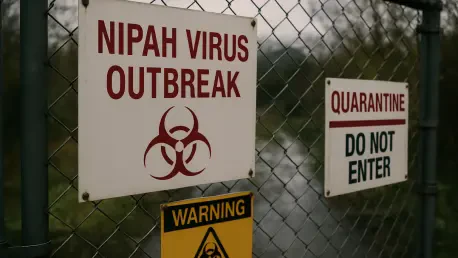

The emergence of a deadly Nipah virus outbreak in neighboring India has cast a long shadow across the border, compelling Nepal’s Ministry of Health and Population to issue a sweeping public health advisory. While the World Health Organization (WHO) currently assesses the public health risk to the wider South-East Asia region as low, the Nepalese government is taking no chances, opting for a strategy of heightened vigilance over passive observation. The nation’s health authorities are moving swiftly to fortify defenses against a pathogen known for its high fatality rate and multiple transmission routes. Through its Epidemiology and Disease Control Division (EDCD), the government has initiated a series of proactive measures, cautioning health facilities nationwide and rolling out a specialized algorithm designed specifically for tracking the Nipah virus. This approach underscores a critical lesson learned from past global health crises: in the face of a potential epidemic, proactive preparation is invariably superior to reactive crisis management, even when the immediate threat seems distant.
Proactive Measures and Public Guidance
In a direct address to the public and healthcare sector, Ministry spokesperson Dr. Prakash Budhathoki emphasized a message of responsible caution, urging citizens to remain alert without succumbing to panic. The core of the government’s strategy lies in a multi-pronged approach that combines institutional readiness with public education on preventive practices. Health facilities have been placed on high alert, instructed to implement stringent patient identification, isolation, and infection control protocols should a suspected case arise. Simultaneously, a comprehensive public awareness campaign is underway, focusing on simple yet effective measures to mitigate risk. Citizens are being advised to thoroughly wash all fruits and vegetables before consumption, a critical step to remove potential contaminants from infected bats. The advisory also stresses the importance of drinking only pure or boiled water and maintaining rigorous personal hygiene, including frequent handwashing with soap. In public spaces, especially crowded areas, the use of masks is recommended, a practice that has become more commonplace. For those handling animals or meat, protective gear such as gloves and masks is now strongly encouraged to prevent zoonotic transmission.
Understanding Transmission and Symptoms
A crucial component of Nepal’s preparedness plan involves educating the populace about the virus’s insidious nature and its telltale signs. Nipah virus can spread to humans through several pathways, most notably through the consumption of fruit or fruit products, like raw date palm sap, that have been contaminated by the saliva, urine, or feces of infected fruit bats. Transmission can also occur through direct contact with infected animals, such as pigs, or from person to person through close contact with an infected individual’s bodily fluids, including blood, saliva, or urine. The Ministry has clearly outlined the symptoms to watch for, which initially present as fever, headache, muscle pain, coughing, and breathing complications. As the infection progresses, more severe signs may develop, such as dizziness, vomiting, and a potential loss of consciousness, indicating neurological involvement. In response, health officials instructed anyone experiencing these symptoms to immediately seek medical attention at the nearest health facility or to contact a dedicated national hotline (1115) for guidance, ensuring a rapid and coordinated response to any potential case.