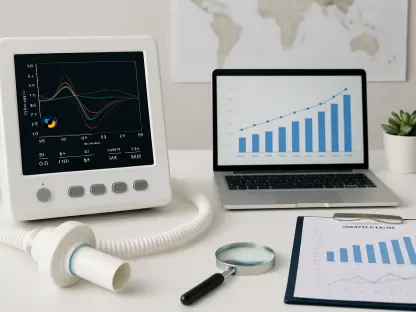

A quiet renaissance is underway in clinical research, fundamentally transforming the long-established methods for capturing and quantifying the complete patient experience. The ascent of integrated platforms, driven by sophisticated electronic clinical outcome assessment (eCOA) systems and advanced digital health technologies, signals a definitive move away from the traditional, often cumbersome, and error-prone techniques of data collection. This technological evolution is meticulously designed to gather robust, highly traceable, and authenticated data directly from the patient. This shift is gaining significant momentum, propelled by increasing advocacy from regulatory bodies like the U.S. Food and Drug Administration, which are actively championing a more patient-focused paradigm in drug development. In this new landscape, the value of high-quality, direct-from-patient data has been elevated to an unprecedented level of importance. The seamless integration of medical devices with these digital platforms stands as a critical enabler of this revolution, automating the flow of information, eradicating the manual data entry that has historically plagued clinical research, and ultimately simplifying the patient’s daily routine while profoundly enhancing the fidelity and depth of the data collected through real-time monitoring and AI-powered insights.
The Tipping Point Why Integration is Happening Now
The Obesity Research Catalyst
The explosive emergence of obesity as a “mega-therapeutic area” has served as a powerful catalyst for the widespread adoption of integrated digital platforms in clinical trials. The economic scale of this field is staggering, with market research projecting the global obesity therapeutics market could reach a peak of $150 billion by 2035, a monumental leap from its approximate $15 billion in sales in 2024. This financial boom is mirrored by an intense surge in research and development activity; as of early 2025, there were 173 obesity drugs in development or already on the market, an increase of 53 from the previous year alone. This rapidly expanding and fiercely competitive research environment creates immense pressure on trial sponsors to conduct studies that are not only scientifically rigorous but also highly streamlined, efficient, and patient-centric. The inherent complexity of obesity trials, which often span several years and involve diverse objectives such as initial weight loss, long-term weight maintenance, and the management of co-morbidities, makes traditional data collection methods increasingly untenable. The need to minimize patient burden over these extended periods is no longer a secondary consideration but a primary driver of trial success and participant retention, making integrated platforms an essential tool.
The specific demands of obesity research make it a prime exemplar for the benefits of integrated platforms, highlighting why these technologies are becoming indispensable. The long-term nature of these studies requires sustained patient engagement and compliance, which is notoriously difficult to maintain when participants are burdened with manual tracking, multiple devices, and complex reporting schedules. Reducing this burden is directly correlated with higher retention rates and better data quality. In a high-stakes, competitive landscape where speed to market is critical, the efficiency gains from automated data capture are invaluable. Integrated platforms ensure that complex, longitudinal data is collected continuously and accurately without overwhelming the patient. By turning the trial experience into a more seamless and less intrusive part of a person’s life, these technologies address the core challenges of long-term studies. This shift not only improves the reliability of the data but also respects the patient’s contribution, fostering a more collaborative relationship between researchers and participants, which is essential for the successful completion of ambitious, multi-year clinical trials.
A Convergence of Forces
The current momentum behind integrated platforms is not the result of a single factor but rather a perfect storm created by the convergence of four powerful trends. First, intense market pressure, particularly in competitive therapeutic areas, has created a historic demand for new treatments, which in turn necessitates clinical trials that can manage long-term patient engagement effectively. In this environment, minimizing patient burden has transitioned from a “nice-to-have” feature to a critical determinant of trial success and retention. Second, digital health technology has reached a pivotal stage of maturity. These systems have evolved far beyond simple data capture tools; they are now sophisticated, connected platforms capable of seamless medical device integration, real-time data synchronization across multiple sources, and the automation of complex workflows that were previously manual and time-consuming. This technological readiness provides the practical foundation for a new generation of clinical research.
These market and technological forces are amplified by parallel shifts in patient expectations and regulatory guidance. Influenced by the broader digitalization of daily life, especially in the wake of the pandemic, patients now expect and often prefer digital-first healthcare experiences. This includes remote monitoring, telehealth consultations, and the use of user-friendly mobile applications to manage their health, and these expectations naturally extend to their participation in clinical trials. Finally, this entire movement is being legitimized and encouraged by regulatory agencies. The U.S. Food and Drug Administration, for example, is actively promoting a patient-centered approach to drug development. This includes explicitly encouraging the collection of patient-reported outcomes (PROs) through a variety of validated technology platforms, lending official support and a clear regulatory pathway for the digital transformation of clinical research. The confluence of these four trends has created a unique and critical moment, pushing integrated platforms from the periphery to the very center of modern trial design and execution.
The Challenge of Modern Trial Complexity
Integrated solutions are a direct and necessary response to the escalating complexity of modern clinical trials, particularly for conditions like obesity where patients often present with multiple co-existing health issues. The clinical reality is that these participants are rarely dealing with a single condition in isolation. For instance, U.S. claims data reveals that among patients with obesity, 59% also suffer from cardiovascular disease or hypertension, 56% from dyslipidemia, 33% from degenerative joint disease, and 32% from type 2 diabetes. This web of co-morbidities demands that clinical trials measure a vast and diverse array of endpoints simultaneously. These can range from objective physiological measures, such as glucose levels, blood pressure, and body composition, to more subjective ones, including quality-of-life surveys, pain assessments, and physical activity levels. Attempting to capture this multifaceted data across fragmented, non-integrated systems places an immense logistical and cognitive burden on both patients and clinical site staff.
This complexity, when managed with disconnected tools, introduces numerous opportunities for critical failures that can compromise the integrity of a trial. When a patient must juggle multiple devices that do not communicate with each other, manually record readings in a paper diary, and then separately complete electronic questionnaires, the potential for human error skyrockets. Data can be transcribed incorrectly, entries can be forgotten, and recall bias can distort subjective reports as memory fades. This friction not only frustrates participants, increasing the likelihood that they will drop out of the study, but it also fundamentally threatens the quality and reliability of the data being collected. Since high-quality data is the bedrock of any successful clinical trial, this fragmentation represents a significant risk. Integrated platforms address this challenge at its core by creating a unified, automated ecosystem where data flows seamlessly from multiple sources into a single repository, reducing patient burden and preserving data integrity.
The Core Innovation Automating the Flow of Information
From Manual Burden to Seamless Capture
The contrast between the classic clinical trial modality and the modern, integrated approach is stark, illustrating a paradigm shift in data collection philosophy. The traditional method is an active, manual, and fragmented process that places a significant burden on the participant. Consider a patient in a diabetes study: they must prick their finger to use a glucose meter, read the result, manually transcribe that numerical value onto a paper form or into a separate digital diary, and later, perhaps hours or even days later, complete a questionnaire about the symptoms or activities associated with that reading. This multi-step, user-dependent process is highly susceptible to a cascade of potential issues, including transcription errors, simple forgetfulness in a busy day, and recall bias, which inevitably affects the accuracy of subjective reporting over time. The result is often a dataset that is incomplete, inconsistent, or inaccurate, undermining the scientific validity of the research.
In sharp contrast, the integrated model is designed to be passive, automated, and contextual, capturing a richer, more reliable picture of the patient’s experience with minimal effort. Using the example of a hypoglycemic episode in an obesity trial, the new workflow is elegantly simple for the patient. A connected glucose meter automatically logs a reading when it dips below a predefined critical threshold. This objective event instantly and automatically triggers a notification on the patient’s smartphone, prompting them to complete a brief, relevant questionnaire about their symptoms and experience in near real-time. The system can even send intelligent reminders to minimize any delay. Critically, the objective data point—the precise glucose level—is automatically and permanently linked with the subjective data from the questionnaire responses, creating a complete, time-stamped, and highly reliable record of the entire event. This seamless process captures crucial data that would frequently be lost in the disorienting aftermath of a low-blood-sugar incident, demonstrating the profound impact of automation on data fidelity.
The Technology Powering the Change
This sophisticated level of integration is supported by a robust and multi-layered technical framework designed for reliability, scalability, and security. At the core of this framework are Application Programming Interfaces (APIs), which serve as the digital bridges allowing for transparent and seamless data flow between disparate systems, such as medical devices and eCOA platforms. These APIs are the conduits that enable a connected blood pressure cuff, for example, to transmit its readings directly into the central trial database without any manual intervention. This process is governed by real-time data synchronization protocols, which ensure that information is available for review and analysis by researchers almost instantaneously. This immediate availability stands in sharp contrast to older, less efficient methods that relied on batching data and processing it at a later time, which introduced significant delays in monitoring patient safety and trial progress.
Beyond the initial data transfer, the management and security of this information are paramount. Modern platforms utilize cloud-based data lakes, which are centralized, highly scalable repositories capable of bringing together diverse data streams—including device data, patient-reported outcomes, and clinical site assessments—into a single, unified source of truth. This centralized model simplifies analysis and provides a holistic view of each participant and the trial as a whole. Surrounding this entire infrastructure are rigorous, HIPAA-compliant security frameworks. These protocols are essential for protecting highly sensitive patient data from unauthorized access while ensuring it remains readily accessible to authorized researchers and clinicians. This combination of seamless connectivity, real-time processing, centralized storage, and robust security creates a trustworthy and powerful ecosystem for modern clinical research.
Beyond Efficiency A New Ecosystem of Benefits
Predictive Management and Enhanced Safety
The true promise of integrated platforms extends far beyond merely eliminating manual data entry; they enable entirely new, proactive approaches to trial management and patient safety. By leveraging machine learning algorithms, these systems can analyze vast streams of integrated data to identify subtle patterns that predict patient behavior. For instance, an algorithm might detect a gradual decline in a patient’s adherence to medication schedules or a drop in physical activity measured by a wearable sensor. These insights can then trigger automated, personalized interventions. An AI-powered patient engagement system could send a motivational message to the patient or, for more serious concerns, alert a study coordinator to initiate a personal check-in. This shifts trial management from a reactive model, where teams respond to problems after they occur, to a proactive one that can prevent issues like non-compliance or participant dropout before they happen, significantly improving long-term trial retention rates and data consistency.
Furthermore, the ability to integrate and time-synchronize data from multiple sources creates unprecedented opportunities for sophisticated safety monitoring. In a traditional, siloed system, a researcher might see a patient’s reported headache, a slightly elevated blood pressure reading from a clinic visit, and a weight fluctuation as separate, perhaps insignificant, data points. However, when these data streams are unified on a single platform and viewed in context, a more complex and potentially concerning pattern may emerge. An adverse event that appears minor in isolation may reveal itself to be part of a larger trend when correlated with other physiological and subjective data. This holistic view allows researchers to identify complex safety signals that would otherwise remain hidden, leading to earlier detection of potential risks and enhancing overall patient safety. This capability also facilitates more agile and responsive adaptive trial designs, where protocols can be modified in real-time based on incoming data, making studies more efficient and ethically sound.
A Unified Value Proposition for Patients
For patients, the most significant and transformative benefit of integrated platforms is the drastic reduction in the daily burden of trial participation. The implementation of passive and automated data capture technologies allows individuals to focus their energy on managing their health rather than on the administrative and logistical tasks required by the study. This fundamental shift changes the nature of their involvement, transforming the clinical trial experience from what can often feel like a demanding chore into a process of empowerment and meaningful contribution to science. When a patient’s data is collected seamlessly in the background through a wearable sensor or a connected device, their role evolves. They are no longer just a passive source of data points but are recognized as an empowered partner in the scientific process, whose dignity and time are respected.
This vastly improved patient experience has direct and tangible benefits for the success of the clinical trial itself. A participant who feels less burdened and more valued is far more likely to remain engaged and compliant over the long term. This is especially critical in studies for chronic conditions that can last for several years, where high dropout rates are a major threat to the validity of the research. By making data capture a dignified and unobtrusive part of a patient’s life, these technologies create a positive feedback loop. The patient has a better experience, which leads to higher retention and more consistent, high-quality data submission. This, in turn, strengthens the scientific rigor of the trial and increases the likelihood of a successful outcome. The technology, therefore, serves a dual purpose: it enhances the human experience of research participation while simultaneously improving the quality of the scientific evidence being generated.
Empowering Sites, Sponsors, and Science
The advantages of this integrated approach had rippled across the entire clinical trial ecosystem, delivering distinct value to each group of stakeholders. For clinical sites, the platforms provided real-time dashboards with richer insights into patient compliance, safety, and data quality. The automation of data mapping and reconciliation freed up an enormous amount of staff time, which had previously been spent on tedious manual tasks, allowing them to focus on what they do best: providing direct, high-quality patient care and building stronger relationships with participants. This shift not only improved operational efficiency but also enhanced the overall quality of site performance and staff morale.
For trial sponsors, the benefits were equally compelling. They gained a unified, real-time view of all patient data from across every site, enabling them to identify and resolve potential issues much earlier in the trial process. This ability to make faster, more informed decisions could cut months from development timelines, providing a tangible operational and competitive advantage, especially in fast-moving therapeutic areas like obesity. Ultimately, the broader scientific community was the greatest beneficiary. These platforms generated a new class of integrated, time-synchronized data of unparalleled quality and depth. This high-fidelity information enabled novel types of analysis that could uncover previously obscured relationships between variables, informing the design of future research and fundamentally advancing medical science. The thoughtful design and implementation of these holistic platforms were seen not just as a way to streamline trial efficiency—they were recognized as a fundamental expansion of what was possible in the field of medical research.