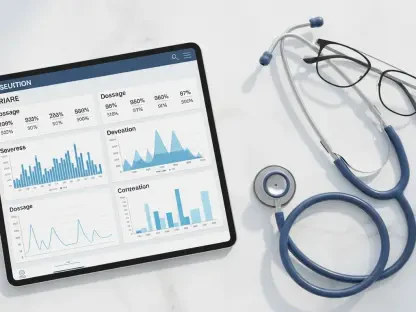

The global healthcare landscape in 2026 demands a level of predictive accuracy that traditional epidemiological models simply cannot sustain amidst the rapid emergence of novel pathologies and complex treatment pathways. As pharmaceutical developers navigate a marketplace defined by hyper-specialized therapies, the reliance on fragmented data sets has become a significant liability for long-term strategic planning. DelveEpiAI emerges as a pivotal solution to this fragmentation, integrating artificial intelligence with expert-curated repositories to provide a unified perspective on patient burdens across the globe. By consolidating data from more than 500 disease indications, the platform effectively bridges the gap between historical prevalence and future incidence trends. This shift represents more than just a technological upgrade; it is a fundamental reimagining of how stakeholders interpret disease trajectories. With coverage extending across the seven major markets, the platform ensures that decisions regarding market entry and resource allocation are grounded in a comprehensive, real-world understanding of the therapeutic environment.
The Strategic Impact: Elevating Epidemiological Standards
Global Integration: A Unified View of Disease Trends
Building on the need for global connectivity, DelveEpiAI offers an unprecedented scope that spans the United States, Japan, the United Kingdom, and the EU4 nations of Germany, France, Italy, and Spain. This expansive reach is critical because disease dynamics are rarely uniform across borders; variations in healthcare infrastructure and genetic predispositions necessitate a localized yet synchronized approach to data analysis. The platform addresses this by synthesizing vast quantities of country-level information into a singular “source of truth,” which allows multinational organizations to maintain consistency in their global reporting. Moreover, the inclusion of over 500 indications ensures that even the most specialized therapeutic areas, such as complex neurology or niche immunology, receive the same level of analytical rigor as high-prevalence conditions like cardiovascular disease. This systemic integration eliminates the silos that traditionally hinder collaborative research, fostering a more agile environment for pharmaceutical innovation and public health planning.
Furthermore, the sophistication of this AI-driven approach lies in its ability to process multi-dimensional data sets that traditional statistical methods often overlook or oversimplify. In the current 2026 landscape, the convergence of electronic health records, insurance claims, and registry data requires an intelligence layer capable of identifying subtle shifts in patient populations before they become obvious trends. DelveEpiAI utilizes advanced algorithms to filter through these noise-heavy environments, providing a clear view of the diagnosed prevalence that drives market demand. This technological capability is particularly vital for organizations looking to mitigate the financial risks associated with drug development cycles. By offering a standardized framework for evaluating disease burden, the platform enables commercial teams to present more robust business cases to investors and internal stakeholders. This level of transparency is essential for maintaining momentum in an industry where the cost of entry continues to rise, ensuring that every dollar spent on research is backed by high-fidelity epidemiological insights.
Precision and Clinical Validation: Moving Beyond General Statistics
Beyond broad numbers, the true utility of an epidemiological tool is measured by its granularity, specifically how well it segments patient populations into actionable clinical cohorts. DelveEpiAI excels in this regard by breaking down data into specific demographics such as age and gender, while also incorporating clinical nuances like biomarker-defined populations and disease severity scales. This depth allows researchers to move beyond general incidence figures to understand the specific “treatable pool” of patients who are most likely to benefit from a particular intervention. In 2026, where personalized medicine is the standard rather than the exception, having access to such detailed segmentation is indispensable for designing effective clinical trials and optimizing patient recruitment strategies. Instead of casting a wide net, developers can now pinpoint specific geographic regions or demographic groups where a condition is most prevalent or underserved. This surgical precision not only accelerates the path to market but also improves the overall success rate of late-stage clinical programs.
To ensure that these mathematical models remain grounded in clinical reality, the platform incorporates primary analysis validated by leading Key Opinion Leaders across various medical disciplines. This human-led verification process serves as a necessary check on the AI outputs, ensuring that the forecasted trends align with the practical experiences of physicians working on the front lines of patient care. In an era where purely algorithmic predictions can sometimes drift from real-world outcomes, this hybrid approach provides a layer of credibility that is often missing from automated databases. By blending artificial intelligence with the nuanced perspectives of medical experts, the platform creates a more holistic picture of how therapy lines are distributed and how treatment paradigms are evolving. This validation is especially important when assessing distribution by lines of therapy, as it reflects the actual prescribing habits and hurdles faced by clinicians. Consequently, stakeholders gain a more realistic expectation of market penetration and a clearer understanding of the barriers that might impede the adoption of new medical treatments.
Future-Proofing Healthcare Strategy: Forecasting and Access
Portfolio Optimization: Anticipating Market Shifts Through 2034
Looking toward the horizon, the ability to project disease trends through 2034 provides a massive strategic advantage for organizations engaged in long-term portfolio planning and risk assessment. These 10-year forecasts are not static predictions but dynamic models that account for shifting lifestyle factors, aging populations, and the potential impact of preventative healthcare initiatives. For research and development teams, this means the ability to identify “white space” opportunities years before competitors, allowing for the early prioritization of compounds that address future unmet needs. This forward-looking capability is essential in 2026, as the development timeline for innovative therapies often spans nearly a decade, requiring planners to anticipate market conditions far in advance. By visualizing the treatable patient pool over such a long duration, commercial strategists can better estimate the lifetime value of a product and make informed decisions about life-cycle management. This proactive stance transforms epidemiology from a retrospective reporting tool into a cornerstone of proactive corporate strategy and market leadership.
Additionally, the interactive dashboards provided by the platform allow for a level of scenario testing that was previously labor-intensive or technically inaccessible for non-data scientists. Users can manipulate variables to see how changes in diagnostic rates or the introduction of a new screening technology might impact the overall patient burden within specific markets. This flexibility is vital for commercial teams who must prepare for multiple market entry contingencies and potential shifts in the competitive landscape. By democratizing access to complex data visualizations, the platform ensures that insights are not trapped within specialized departments but are available to all decision-makers across the organization. This collaborative environment encourages a more data-driven culture, where strategic debates are settled with evidence rather than intuition. As a result, companies can respond more quickly to emerging public health challenges or competitive threats, maintaining their edge in a rapidly evolving global market. This agility is a defining characteristic of successful healthcare enterprises in the latter half of this decade.
Niche Markets: Bridging the Intelligence Gap in Rare Diseases
The platform is particularly significant for its depth in the rare and ultra-rare disease sectors, where data has traditionally been scarce and difficult to verify. In these niche markets, traditional epidemiological methods often fail due to small sample sizes and the lack of comprehensive patient registries. DelveEpiAI addresses this challenge by applying its sophisticated AI models to aggregate disparate data points, providing a clearer picture of rare disease prevalence and the associated unmet medical needs. For orphan drug developers, this information is invaluable, as it helps justify the high costs of specialized research and supports applications for regulatory designations. By identifying previously hidden patient clusters, the platform enables companies to focus their efforts on the regions where their interventions can have the greatest impact. This focus on underserved populations not only drives commercial success but also fulfills a critical public health objective by bringing life-saving treatments to those who have historically been overlooked by the broader pharmaceutical industry.
Building on this specialized insight, the platform facilitates a more effective market entry strategy by highlighting the specific clinical barriers and distribution challenges unique to rare conditions. Understanding the nuances of patient journeys—from initial symptoms to final diagnosis—allows organizations to build more supportive patient-access programs and advocate for better reimbursement policies. This holistic view ensures that once a drug is approved, it actually reaches the patients who need it most. Furthermore, the ability to forecast trends in rare diseases through 2034 allows for the development of sustainable, long-term business models in an area often characterized by high volatility. As the industry continues to shift toward gene therapies and highly targeted biologics, the intelligence provided by DelveEpiAI will be a fundamental driver of innovation. Ultimately, the platform serves as a critical partner for niche drug development, ensuring that data scarcity no longer acts as a barrier to medical progress. This empowerment leads to a more equitable healthcare system where no disease is too rare to be understood or treated effectively.
Industry Evolution: Advancing Data-Driven Decision Making
The implementation of advanced forecasting tools established a new benchmark for how healthcare stakeholders approached market analysis and patient care. By centralizing complex data into an accessible, AI-powered framework, the industry successfully moved away from reactive planning and toward a model of proactive intelligence. Organizations that adopted these standardized epidemiological models reported a significant increase in the accuracy of their commercial projections and a more streamlined path for their clinical development programs. This shift allowed for a better alignment of resources with actual patient needs, reducing waste and accelerating the delivery of innovative therapies to diverse markets. Moving forward, the focus must remain on the continuous refinement of these models, ensuring they adapt to new diagnostic technologies and evolving clinical paradigms. Stakeholders should prioritize the integration of real-world evidence into their strategic workflows to maintain a competitive advantage. This commitment to data integrity and clinical validation proved to be the most effective way to navigate the complexities of a globalized therapeutic environment.