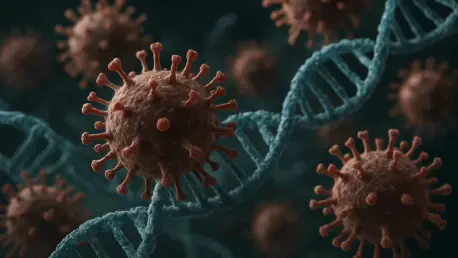

The silent, invisible spread of a novel virus across continents has become a defining challenge of our time, demanding a response that moves faster than the pathogen itself. In this high-stakes race, traditional epidemiological methods of contact tracing and symptom monitoring, while still essential, are no longer sufficient on their own. The modern frontier of public health defense has shifted to the molecular level, delving into the very genetic code of the viruses that threaten global stability. This field, known as genomic epidemiology, represents a paradigm shift from reacting to outbreaks to proactively understanding and anticipating their trajectory. By sequencing the DNA or RNA of pathogens like Mpox, measles, and SARS-CoV-2, scientists can construct intricate family trees that reveal how a virus is transmitted, how quickly it is evolving, and whether it is developing resistance to treatments or vaccines. This granular level of detail provides public health officials with unprecedented intelligence, transforming a generalized response into a highly targeted, data-driven strategy. It is an intricate discipline that requires a unique blend of expertise, bridging the complex world of virology with the practical realities of on-the-ground public health intervention.
The Architect of Genomic Defense
At the heart of this revolution are specialists who possess a rare combination of laboratory and field experience, capable of translating complex genomic data into actionable public health policy. A prime example of this new breed of scientific leader is a genomic epidemiologist with a PhD in Virology and a Masters of Applied Epidemiology, a background that perfectly marries deep scientific knowledge with practical application. Serving as the Deputy Head of Epidemiology at a leading virology institute, such experts direct their focus on high-consequence viruses, including Hepatitis A and E, in addition to more prominent outbreak agents. Their work is not confined to a single country; with over 15 years of experience in both developed and developing nations, these professionals understand the global landscape of infectious disease and the unique challenges faced by different health systems. This international perspective is critical, as viruses do not respect borders. Furthermore, their commitment extends to nurturing the next generation of specialists through academic roles, such as coordinating university courses on Infectious Diseases Epidemiology, ensuring that this vital expertise continues to grow and adapt to future threats.
The true measure of this work lies in its tangible impact on global health security, where theoretical knowledge is converted into life-saving interventions and policies. The research generated by these leading scientists frequently appears in the world’s most prestigious scientific journals, including The Lancet, New England Journal of Medicine, and Nature Medicine, signaling its significance and influence among peers and policymakers. This influence extends beyond academia, with experts serving on national public health committees where their insights directly shape domestic response strategies. On an international scale, their expertise is sought by the World Health Organization (WHO), contributing to expert panels and technical working groups. A recent, crucial contribution involved guiding the development of the WHO’s “Analytical considerations for genomic surveillance of mpox virus,” a document designed to empower countries worldwide to strengthen their own surveillance capabilities. This type of guidance is instrumental in building a more equitable and effective global defense network against infectious diseases, ensuring that all nations have the tools to fight outbreaks at the genetic level.
A Unified Approach to Future Pandemics
The effectiveness of genomic epidemiology is magnified through robust international collaboration, which is essential for tracking pathogens in real time across the globe. Key figures in the field often serve as nominated focal points for critical global networks like the WHO’s Global Outbreak Alert and Response Network (GOARN) and the international Global Virus Network (GVN). These appointments place them at the center of global information exchange, facilitating rapid communication and coordinated action during health emergencies. This networked approach ensures that a genetic variant identified in one part of the world is quickly shared and analyzed by a global community of experts. This work is often conducted within specialized research groups that employ a ‘One Health’ perspective, recognizing the deep interconnection between human, animal, and environmental health. This holistic view is vital, as many emerging infectious diseases, originate in animals before spilling over into human populations. By monitoring pathogens at this interface, scientists can identify potential threats before they become widespread epidemics.
Ultimately, the synthesis of advanced biostatistical methods, traditional epidemiology, and sophisticated modeling transformed the global capacity for infectious disease response. By leveraging these powerful tools, research teams were able to move beyond simply tracking outbreaks and began to predict their behavior, identify vulnerable populations, and assess the potential impact of public health interventions with greater accuracy. This integration of disciplines created a more resilient and proactive public health framework. The meticulous work of decoding viral genomes, combined with a commitment to global collaboration and a comprehensive ‘One Health’ strategy, established a new gold standard in disease surveillance. The insights gained from this genetic-level analysis provided the critical intelligence that allowed health systems to not only fight existing threats more effectively but also to build a more formidable defense against the inevitable pandemics of the future.