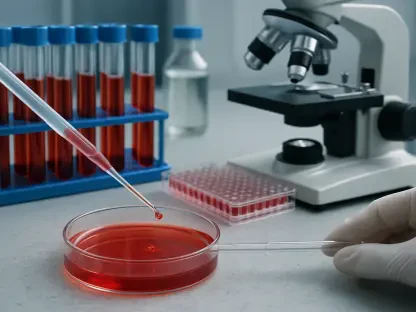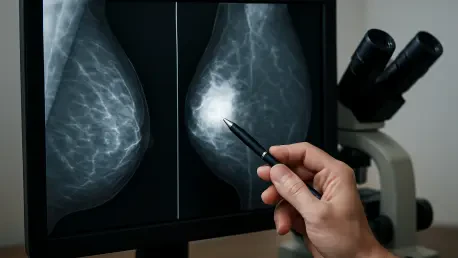

In a laboratory at Harvard Medical School, rows of pink-lidded jars hold not just donated breast tissue samples, but the potential to prevent a disease that will affect one in eight American women. For years, this lab, led by renowned cancer researcher Dr. Joan Brugge, has been meticulously working toward a future where breast cancer is stopped before it ever begins. This research, once a beacon of hope, now faces an existential threat, caught in the crossfire of political turmoil and budgetary warfare. The story of this lab is more than an isolated incident; it is a stark illustration of a national crisis where groundbreaking scientific discovery, on the verge of transforming millions of lives, is being jeopardized by forces entirely unrelated to its merit, raising a critical question about the nation’s commitment to its scientific future.
On the Brink of a Cure, On the Edge of a Cliff
The breakthrough arrived in late 2024, a culmination of years of painstaking work. Dr. Brugge’s team identified the elusive “seed cells” containing the genetic precursors to breast tumors. By analyzing over 100 tissue samples with advanced microscopy and sophisticated computer algorithms, they discovered that these mutant cells were surprisingly common, present even in the healthy tissue of every individual examined. This pivotal finding suggested that the origins of cancer were far more widespread than previously understood, lying dormant within countless individuals.
This discovery promised a monumental paradigm shift in medicine. The focus could now move from the difficult, often devastating, process of late-stage treatment to outright prevention. The lab’s next goal was clear: develop methods to detect, isolate, and neutralize these precursor cells before they could proliferate into malignant tumors. Such a development would represent one of the greatest advances in modern oncology, offering a proactive defense against a disease that has claimed millions of lives.
However, this moment of profound scientific promise collided with an equally powerful political force. Just as the research was entering its most critical phase, external pressures began to mount, threatening to dismantle the entire project. The central question became agonizingly clear: what happens when a potential cure for cancer becomes a casualty of political discord? The answer, unfolding in real-time, has sent a chilling message throughout the American scientific community.
The Engine of Discovery: Fueling Science for a Healthier Future
The foundation of this groundbreaking research was built on federal support. A seven-year, $7 million grant from the National Cancer Institute, a division of the National Institutes of Health (NIH), provided the essential fuel for Dr. Brugge’s six-year investigation. This funding was not merely a financial transaction; it was an investment in the long-term, high-risk, high-reward science that commercial enterprises are often unwilling to undertake. It enabled the purchase of cutting-edge equipment, the hiring of specialized talent, and the sustained effort required for a project of this magnitude.
The meticulous process funded by this grant involved a deep dive into the cellular architecture of breast tissue. Each of the more than 100 donated samples was carefully mapped, with researchers using complex algorithms to trace the lineage of cells and identify the subtle mutations that mark the very first steps toward cancer. This was not a search for a single, obvious target but a comprehensive analysis of a complex biological ecosystem, a process that demanded both time and significant resources, both of which the NIH grant provided.
With the “seed cells” identified, the lab’s work transitioned from observation to action. The next critical step was to develop innovative techniques to target these mutant cells for destruction before they could form a tumor. This phase of the research held the potential to create a preventative therapy, a new frontier in the fight against breast cancer. The entire project was poised on the precipice of translating a fundamental biological discovery into a life-saving medical intervention, a journey made possible by stable federal funding.
A System in Peril: When Research Becomes a Political Casualty
The progress came to an abrupt and jarring halt in April 2025. Dr. Brugge’s NIH grant was frozen, not due to any scientific shortcomings, but as part of a broader political action by the administration to withhold federal funds from Harvard University over the institution’s handling of on-campus issues. The decision, made far from the laboratory, had immediate and devastating consequences for the researchers whose work depended entirely on that funding stream.
The fallout was swift. Research activity slowed to a crawl as the lab’s financial foundation crumbled. Staff members on federal fellowships lost their funding, and Dr. Brugge could no longer guarantee the salaries of her employees. The uncertainty bred anxiety and instability, undermining the collaborative and focused environment essential for scientific discovery. The lab, once a hub of innovation, became a center of crisis management.
Even after the funding was restored in September, the wound proved to be a lasting one. A subsequent, temporary ban on Harvard researchers applying for new grants caused Dr. Brugge to miss the critical deadline to renew her seven-year funding. This administrative blow means her current grant will expire in August, placing the entire project, and the unique knowledge it has cultivated, in existential jeopardy. A short-term political decision has created a long-term crisis, threatening to permanently terminate a promising path toward cancer prevention.
The Ripple Effect: Quantifying the National Threat to Medical Innovation
The turmoil in Dr. Brugge’s lab is a microcosm of a larger, national threat to medical innovation. Experts warn that unpredictable and politically motivated funding cuts have a tangible, quantifiable cost. The American Cancer Society, for instance, directly links the 34% decline in cancer death rates since the 1990s to the consistent federal funding of research through agencies like the NIH. Interrupting this flow of resources risks reversing decades of progress.
Projections from nonpartisan government and academic sources paint a stark picture of the future under reduced budgets. The Congressional Budget Office has calculated that even a 10% cut to the NIH budget could result in two fewer new drugs or treatments reaching the market each year. Further reinforcing this link, research from MIT concluded that over half of the drugs developed with NIH funding since 2000 would likely not exist if the agency had been operating with a 40% smaller budget. These figures transform the debate from an abstract fiscal argument into a concrete matter of public health.
This data emerges amid a deeply divided political landscape concerning the value of federally funded science. The current administration has proposed slashing the NIH budget by nearly 40% for the upcoming fiscal year, accusing the agency of wasteful spending and promoting dangerous ideologies. In stark contrast, appropriations committees in Congress have forged a bipartisan compromise bill that calls for a modest budget increase, reflecting a long-held consensus on the importance of medical research. This clash leaves the entire scientific ecosystem in a state of precarious uncertainty.
The Human Cost: A Brain Drain and a Discouraged Generation
Beyond the stalled projects and delayed discoveries lies a profound human cost. The instability in Dr. Brugge’s lab triggered an exodus of irreplaceable talent. Seven of her eighteen team members—a mix of staff scientists, postdoctoral fellows, and graduate students—have departed, scattering their specialized expertise and disrupting the collaborative synergy that drives innovation. This brain drain represents a long-term loss of intellectual capital that cannot be easily replaced.
Among those who left was a foreign computational biologist, anonymized as “Y.,” whose skills were integral to analyzing the project’s complex data. Following the grant freeze, she abandoned her plans in the U.S. and accepted a position in a PhD program in Switzerland, stating that she no longer saw America as a “safe place for scientists to learn and grow.” Her story is emblematic of a larger trend where funding instability and political hostility are actively deterring the world’s best and brightest from contributing to American science.
This problem is compounded by new administrative hurdles. The administration’s new, prohibitive visa fees for certain foreign researchers have forced Dr. Brugge to stop considering top international candidates, shrinking the available talent pool. Meanwhile, her own role has dramatically shifted. Once a full-time scientific leader, she now spends approximately half her time on fundraising, managing the anxiety of her remaining staff, and monitoring political news. This diversion of a top scientist’s focus from research to damage control represents a profound waste of the nation’s intellectual resources.
Dr. Brugge’s fight to save her lab, and the immense potential stored within its tissue samples, became a symbol of a larger struggle. The political and budgetary battles that unfolded had inflicted deep and lasting damage, not only on a single project but on the trust and stability of the entire research enterprise. Though the work to prevent breast cancer was far from over, the path forward had been irrevocably altered by forces that had nothing to do with the science itself.