
The journey of a new drug from a laboratory concept to a patient’s bedside is notoriously fraught with failure, with a staggering nine out of ten candidates failing in human clinical trials due to unforeseen safety or efficacy issues. This high attrition rate not only represents a massive financial and scientific investment but also raises a fundamental question about the predictive power of our preclinical testing models. For decades, animal studies have been the cornerstone of safety assessment, yet the persistent gap between animal results and human outcomes is driving a profound reevaluation of this paradigm. The scientific community is now at a critical juncture, exploring a new frontier of alternative methods that promise not just to reduce animal use, but to create a more accurate, human-relevant framework for developing the next generation of therapies, potentially leading to safer and more effective medicines for all.
The Shifting Tides of Scientific Validation
The push toward non-animal testing methodologies is not a recent phenomenon but rather the culmination of decades of scientific effort and evolving regulatory philosophy. For a long time, pharmaceutical firms, chemical producers, and contract research organizations have strategically integrated New Approach Methodologies (NAMs) into their research pipelines, often to meet the demands of international regulations that encourage or require alternatives. This gradual shift has gained significant momentum in recent years, propelled by landmark legislative actions. Europe’s ban on animal testing for cosmetics in 2013, followed by a similar law in Canada in 2023, sent a powerful signal across the global industry. Concurrently, influential bodies like the Organisation for Economic Co-operation and Development (OECD) have lent crucial scientific credibility to this movement by formally validating and approving a variety of in vitro (test-tube) and in silico (computer-based) study designs. These accepted methods now provide reliable, non-animal means of assessing specific toxicological endpoints, including skin sensitization, endocrine disruption, and the effects of inhaled substances, establishing a solid foundation for a future less reliant on traditional animal models.
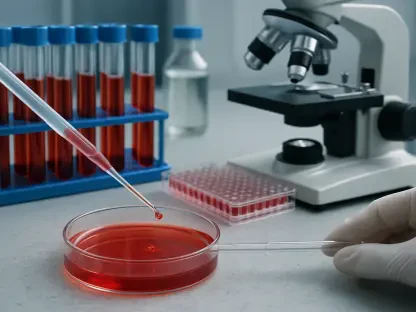
Building on this regulatory foundation, recent technological breakthroughs are fundamentally reshaping the capabilities and potential of NAMs, elevating them from simple screening assays to highly sophisticated systems that offer unprecedented biological relevance. The development of 3D human tissue models, cell-based protein arrays, lab-grown miniature organs known as organoids, and complex organs-on-a-chip is at the forefront of this transformation. These advanced platforms are revolutionizing the early stages of discovery research by allowing scientists to investigate a compound’s safety and efficacy in a human-like context much earlier in the development process. This ability to answer critical “go/no-go” questions before committing to costly and lengthy animal studies is a game-changer. It not only serves as a powerful strategy for derisking subsequent development stages but also powerfully reinforces the industry’s commitment to the guiding principles of the “3Rs”—the replacement, reduction, and refinement of animal use in scientific research, aligning ethical considerations with scientific innovation.
Navigating Opportunities in a New Regulatory Era
Among the most promising strategies for minimizing animal use is the innovative concept of Virtual Control Groups (VCGs), which aims to reduce the number of animals required in a study by replacing live control groups with robust, curated datasets from historical toxicology studies. This approach leverages vast amounts of existing data to provide a baseline for comparison, thereby avoiding the need for additional control animals in new experiments. A landmark pilot project initiated in 2024 by Charles River Laboratories and Sanofi serves as a real-world test case, demonstrating the industry’s serious commitment to exploring this possibility. However, the path to widespread adoption is paved with significant challenges. The success of VCGs is entirely dependent on establishing globally standardized protocols for data collection and curation, applying rigorous statistical evaluation methods to ensure comparability, and developing a clear, universally accepted validation strategy. Without these critical prerequisites, the scientific community cannot guarantee that study outcomes will remain reliable or that the integrity of human risk assessments will be upheld.
The regulatory landscape in the United States, particularly within the cosmetics industry, presents a significant and timely opportunity to champion the adoption of NAMs. Catalyzed by the FDA’s Modernization of Cosmetics Regulation Act of 2022 (MoCRA) and heavily influenced by the animal testing bans already in place in Europe and Canada, there is a mounting imperative for manufacturers to substantiate the safety of their products using non-animal methods. With approximately 784,000 cosmetic products currently listed with the FDA, many of which now require updated safety assessments, a substantial market has opened for NAMs. This provides a crucial opening for developers to leverage in vitro methods already validated abroad to meet US requirements. Beyond cosmetics, a major opportunity exists in assessing the immunogenicity of biological therapeutics. Developing a validated in vitro assay to predict a biologic’s potential to trigger an unwanted immune response would be an incredibly powerful tool, enabling safer drug design without reliance on animal models and potentially accelerating the approval of these advanced therapies.
A Pragmatic Look at the Path Forward
Despite the remarkable progress in alternative methodologies, a pragmatic view reveals that the near-term future of drug development will likely be a hybrid model, skillfully blending the systemic insights from traditional animal models with the targeted, human-relevant data from cutting-edge NAMs. The fundamental challenge that NAMs face is the sheer complexity of a living organism. The human body is an intricate system of 78 interconnected organs, governed by complex metabolic pathways, systemic interactions, and a dynamic immune system that is incredibly difficult to fully replicate in a petri dish or a computer simulation. For this reason, animal models remain indispensable for evaluating certain complex biological processes. Key areas such as pharmacokinetics (how a drug is absorbed, distributed, metabolized, and excreted), biodistribution, and systemic immune responses currently lie beyond the full predictive capacity of available NAMs. These whole-body insights are critical for ensuring a drug is not only effective at its target but also safe for the entire system, a holistic view that remains a crucial component of modern toxicology.
The journey toward validating and gaining regulatory acceptance for any new scientific method has always been a slow and arduous process, and NAMs are no exception. The history of skin irritation studies serves as a salient example; it took over two decades of research and collaboration for the OECD to formally adopt a validated test guideline and an additional decade before a fully integrated assessment approach was implemented. This thirty-year timeline for a relatively straightforward toxicological endpoint underscores the immense challenge of validating alternatives for more complex endpoints, such as long-term toxicity or developmental effects, for which reliable in vitro assays do not yet exist. Ultimately, the central goal of this entire scientific endeavor was reframed. The most critical question became not simply about phasing out animals, but about improving clinical outcomes for patients. Given the high failure rate of drug candidates in clinical trials, the true measure of success for any new methodology—be it an animal model, a NAM, or a combination of both—was its ability to better predict human responses. Collaborative initiatives, like the Foundation for the National Institutes of Health’s Validation and Qualification Network, proved crucial in bringing together industry, academia, and regulators to accelerate this process in a responsible, science-driven, and patient-centric manner.