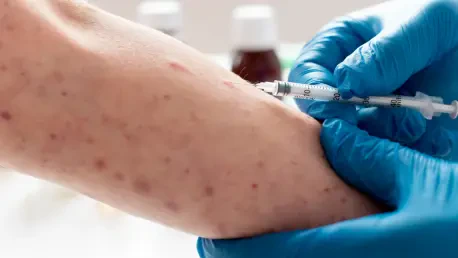

The resurgence of measles in urban centers like London has reached a critical juncture that demands a fundamental shift in how public health departments engage with local communities. Recent data from the early months of 2026 indicates a sharp rise in infections, with Enfield reporting dozens of cases that contribute to a concerning nationwide tally of nearly two hundred incidents in less than eight weeks. This trend highlights a significant failure in maintaining herd immunity, particularly as the World Health Organization recently declared that the United Kingdom has officially lost its measles elimination status. The reversal follows a decade-high spike observed in 2024 and persistent gaps in vaccination coverage that have left large portions of the population vulnerable to this highly contagious disease. Public health officials are now forced to look beyond traditional clinical settings to find ways to reach families who have either missed their scheduled appointments or remain hesitant.
Expanding the Reach of Preventive Care
The current strategy in Enfield involves a comprehensive plan to utilize every possible community interaction as an opportunity for health education and vaccine signposting. Dudu Sher-Arami, the director of public health for the borough, emphasized during a London Assembly Health Committee hearing that the goal is to integrate the measles, mumps, rubella, and varicella vaccine into the fabric of daily life. By leveraging non-traditional touchpoints such as dental offices, registry offices, and even leisure centers, the initiative aims to meet parents where they already spend their time. This localized effort recognizes that the barriers to vaccination are often logistical or related to a lack of immediate access rather than a wholesale rejection of medical science. By transforming routine administrative or recreational visits into health-conscious moments, the borough hopes to close the gap that has allowed the virus to gain a foothold in the local population.
Innovative models for vaccine delivery are already proving their worth in other major metropolitan areas, providing a blueprint for the expansion of these services across the country. In Manchester, a pilot program successfully utilized community pharmacies to deliver immunizations directly to populations that were previously labeled as hard to reach, resulting in more than three hundred individuals receiving protection in a short period. This success demonstrates that when the burden of scheduling and travel is reduced, the uptake of essential vaccines naturally increases. The integration of pharmacists as frontline advocates allows for a more personalized approach to healthcare, where trusted local figures can answer questions and address concerns in a familiar environment. Moving forward from 2026 to 2028, the expansion of such programs will be vital for restoring the national immunity levels required to prevent future outbreaks and ensure that the healthcare system is not overwhelmed by preventable conditions.
Building Trust through Long-Term Community Engagement
The scale of the challenge is reflected in the statistics provided by the UK Health Security Agency, which showed that a significant percentage of children under five remained unprotected by the midpoint of 2025. London has emerged as the epicenter of this crisis, accounting for more than half of all laboratory-confirmed cases over the past year. In response, national authorities have launched the Stay Strong, Get Vaccinated campaign, which specifically targets the parents of infants to emphasize the life-saving benefits of the MMRV series. This campaign moves away from generic messaging and instead focuses on the emotional and physical resilience of the community. However, the effectiveness of these messages often depends on the messenger, which is why the involvement of faith forums and local business leaders has become a cornerstone of the current outreach strategy. By fostering a culture of collective responsibility, health officials believe they can overcome the misinformation that often circulates in digital spaces.
The path toward reclaiming measles elimination status required a transition from reactive measures to a proactive, multi-channel framework that prioritized accessibility and trust. Public health departments realized that sustainable success was only possible if they moved beyond the walls of the clinic and into the heart of the community. It was determined that future efforts must involve a permanent integration of vaccination awareness into school systems and local businesses to maintain high immunity levels over the long term. Officials recommended that the lessons learned from the Enfield and Manchester initiatives be formalized into national policy to prevent the recurrence of such outbreaks. By establishing a robust network of community advocates and diverse delivery points, the healthcare system moved toward a model where preventive care became a seamless part of civic life. These actions provided a clear roadmap for addressing other public health challenges through the power of localized, evidence-based outreach.