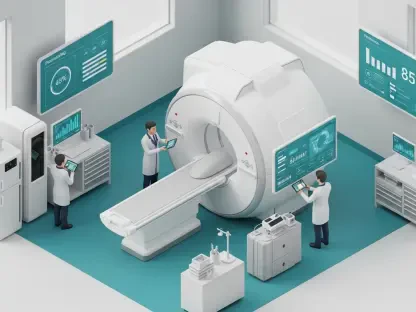

The traditional bottleneck of clinical trials for rare diseases often leaves patients waiting years for life-saving treatments while researchers manually sift through mountains of digital paperwork. In a significant move to address this, the Cleveland Clinic and Dyania Health recently published a study in the Journal of Cardiac Failure that highlights how specialized artificial intelligence can drastically change the landscape. By focusing on transthyretin amyloid cardiomyopathy, a rare and often underdiagnosed form of heart failure, researchers demonstrated that a medically trained large language model could navigate the complexities of electronic medical records with unprecedented speed. This platform, known as Synapsis AI, was specifically designed to identify potential candidates for the Phase 3 DepleTTR-CM clinical trial. By automating the screening process, the study aimed to solve the chronic delays that typically plague specialized medical research, proving that technology can act as a catalyst for faster medical breakthroughs.
Revolutionizing Data Interpretation: The Power of Natural Language Processing
Unlike earlier iterations of data-mining software that relied almost exclusively on structured data points like ICD-10 codes or standardized medication lists, the Synapsis AI platform utilizes advanced natural language processing to understand the broader clinical context. This technology allows the system to interpret unstructured information found in physician notes, diagnostic lab reports, and complex clinical narratives where the most critical details of a patient’s condition are often hidden. For a disease as nuanced as ATTR-CM, these narrative details are essential for determining eligibility. The ability of the AI to “read” and comprehend medical jargon ensures that the subtle clinical cues necessary for inclusion are not overlooked during the initial screening phase. This shift represents a fundamental change in how healthcare systems manage vast quantities of data, transforming passive electronic records into a dynamic resource for active clinical research and patient identification.
A cornerstone of this technological integration is the “clinician-in-the-loop” model, which preserves the essential role of human judgment in medical decision-making. While the AI performs the heavy lifting by processing thousands of records in a fraction of the time a human would require, the final validation of a patient’s eligibility remains with qualified medical professionals. This synergy ensures that the speed and efficiency of the artificial intelligence are balanced by the rigorous safety standards and clinical expertise of the hospital staff. The study demonstrated the scalability of this approach by deploying the system across a massive network of 25 hospitals and 250 outpatient centers located throughout Ohio, Florida, and Nevada. This broad application proves that the technology is not limited to isolated academic settings but can be effectively implemented across large, diverse health systems to streamline research operations and optimize the allocation of clinical resources in a real-world environment.
Measuring the Impact: Efficiency and Accuracy in Practice
The results of the AI implementation revealed a staggering improvement in recruitment efficiency that could fundamentally change trial timelines. For the Phase 3 clinical trial, the AI-assisted screening process successfully enrolled seven patients in just six days of operation. When compared to traditional manual recruitment methods, which took 90 days to enroll only 10 patients, the disparity in speed becomes strikingly clear. By condensing months of administrative effort into less than a week, the technology allows for a much faster transition from the recruitment phase to the actual study of a treatment’s efficacy. This acceleration is particularly critical for rare diseases where time is often a luxury that patients do not have. Furthermore, the system maintained a 96.2% accuracy rate while answering thousands of trial-specific questions across nine clinical domains. This level of precision ensures that the speed of the process does not come at the expense of data quality or the rigorous standards required for regulatory approval.
Beyond mere speed, the AI system demonstrated a remarkable ability to surface “invisible” patients who would have otherwise been missed by standard hospital procedures. The study found that out of the 30 eligible patients identified through the combined efforts of the AI and clinician review, 29 of them had been completely overlooked by routine screening methods. This suggests that conventional recruitment strategies only capture a tiny fraction of the potential participant pool, leaving many qualified candidates without access to potentially life-saving experimental therapies. The system also achieved a 99% negative predictive value, meaning it was exceptionally reliable at filtering out patients who did not meet the study criteria. This high reliability prevented clinical staff from wasting hundreds of hours reviewing irrelevant files, allowing them to focus their energy on the most promising candidates. Each AI-generated recommendation included a transparent justification, providing an auditable trail that clinicians could easily verify.
Advancing Equity: Democratizing Access to Clinical Research
One of the most profound implications of this study is the potential for artificial intelligence to address the long-standing issue of demographic disparity in clinical research. Historically, minority populations have been significantly underrepresented in medical trials, leading to a gap in understanding how new therapies affect diverse groups. However, the AI-driven recruitment process at the Cleveland Clinic resulted in a notably more diverse group of participants. Specifically, 36.6% of the patients identified by the AI were Black, a sharp contrast to the 7.1% identified through routine screening methods. By removing the inherent biases of manual selection and searching across an entire patient population without preconceptions, the technology helps ensure that clinical trials are more representative of the real-world demographics. This shift toward inclusivity is not just an ethical victory but a scientific necessity for developing treatments that are effective for everyone, regardless of their background.
The AI platform also successfully bridged the gap for patients who were not currently under the care of specialized heart failure experts. Research indicated that only 60% of the AI-identified candidates had previously seen a specialist, compared to nearly 93% in the traditionally identified group. This suggests that many patients receiving care in general medical settings or smaller community clinics are often excluded from the cutting-edge research opportunities available at major academic centers. By scanning the records of patients across a broad geographical and socioeconomic range, the AI identified qualified individuals who would have remained disconnected from specialized care networks. This democratization of access ensures that high-quality research is not restricted to those with the means to visit a specialist, effectively expanding the reach of modern medicine to underserved areas. This capability transforms the AI into a powerful tool for achieving healthcare equity on a national scale.
Strategic Implications: Building a Better Research Framework
The integration of medically trained large language models into the electronic medical record ecosystem established a new benchmark for clinical research efficiency. By serving as a force multiplier, the technology allowed researchers to expand their reach without needing to hire an army of manual reviewers. This study proved that the most significant hurdles to trial enrollment—namely, the labor-intensive nature of data abstraction and the difficulty of finding rare disease patients—could be overcome with the right technical framework. The success of the partnership between Cleveland Clinic and Dyania Health offered a clear roadmap for other institutions looking to modernize their research infrastructure. As healthcare systems continue to generate massive amounts of data, the ability to rapidly and accurately parse that information became the deciding factor in how quickly new therapies could be validated and deployed. The project demonstrated that financial investment and technological precision can converge to improve patient outcomes.
In summary, the transition toward AI-enabled patient identification provided a viable solution for the systemic inefficiencies that have historically delayed medical progress. The final results suggested that healthcare providers should prioritize the adoption of these platforms to automate the most burdensome aspects of clinical trials. Looking forward, the focus shifted toward expanding these AI systems to cover a wider range of rare diseases and observational studies, ensuring that evidence-based therapies reached the general population much faster. Organizations were encouraged to integrate these tools into their standard workflows to maintain a competitive edge in the rapidly evolving landscape of medical science. By fostering a transparent and auditable process, the system built trust among clinicians and regulators alike, paving the way for a more inclusive and technologically advanced future in healthcare. The successful implementation of this model served as a definitive turning point for the industry, emphasizing that the era of manual chart review had finally ended.