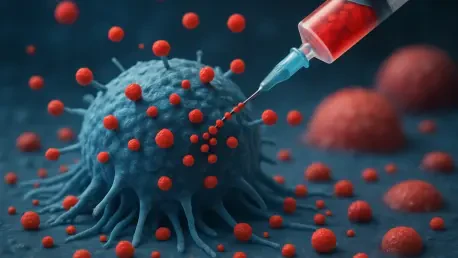

The future of medicine is no longer being synthesized exclusively in a chemistry lab; it is being grown, cultivated, and programmed within the very biological systems it is designed to heal. A transformative class of treatments known as biologics is fundamentally altering the therapeutic landscape, offering a level of precision and efficacy that was once the domain of science fiction. These complex agents, derived from living organisms, represent a monumental shift away from the broad-spectrum effects of traditional chemical drugs. Instead of carpet-bombing a disease, biologics function like molecular scalpels, targeting the specific pathways and cells responsible for illness. This has profound implications for patients battling some of the most challenging conditions, from aggressive cancers and debilitating autoimmune disorders to rare genetic diseases, ushering in an era of highly personalized and effective care that promises to redefine the standards of modern medicine.
The Fundamental Distinction in Modern Medicine
Biologics are a diverse group of therapeutic agents meticulously prepared from materials made or expressed within a living system, including animal cells, bacteria, or yeast. This category encompasses a wide range of complex substances, such as proteins and products derived from sophisticated recombinant DNA technologies. While the concept isn’t entirely new, the field has surged in complexity and impact since 1982, when the U.S. Food and Drug Administration (FDA) approved Humulin, the first biologic produced through recombinant DNA. This milestone marked the beginning of a new chapter in pharmacology. The fundamental difference between these agents and conventional drugs lies in their very nature. Traditional pharmaceuticals are typically small, chemically synthesized molecules with well-defined structures and predictable functions. In stark contrast, biologics are vast, intricate molecules, often thousands of times larger. Their production is an intensely controlled and multi-faceted process involving cell line selection, large-scale culture, complex purification, and extensive validation to ensure both safety and consistency. This inherent complexity means they generally possess higher molecular weights, less precisely characterized structures, reduced stability, and a greater potential for immunogenicity—the tendency to provoke an undesirable immune response in the patient.
Further expanding this new therapeutic landscape is the emergence of biosimilars, which are biologic drugs developed to be highly similar to an already approved biologic, referred to as the “reference product.” It is crucial to distinguish biosimilars from the generic drugs found in traditional pharmacotherapy. While a generic is an identical chemical copy of its brand-name counterpart, a biosimilar is not an exact duplicate of its reference product due to the inherent variability of biological manufacturing processes; minor, clinically meaningless differences in inactive ingredients may exist. To gain regulatory approval, a biosimilar must undergo a rigorous evaluation to demonstrate that it has the same mechanism of action, route of administration, and strength as the original. Most importantly, it must prove equivalent clinical efficacy and safety. Some biosimilars can achieve a special designation of “interchangeable,” which permits a pharmacist to substitute it for the reference biologic without requiring a new prescription. This higher standard requires additional studies demonstrating that alternating between the two products neither compromises effectiveness nor introduces new safety concerns. The primary benefit of this system is the introduction of market competition, which helps lower development expenses and ultimately reduces healthcare costs for both patients and healthcare systems.
A Diverse Arsenal for Precision Treatment
The versatility of biologics is showcased in the wide array of therapeutic modalities they encompass, each with a unique mechanism for targeting disease. Among the earliest forms were peptide hormones, small molecules essential for regulating physiological processes like growth. Insulin is the quintessential example; used for diabetes since the 1920s, it was initially extracted from animals before recombinant DNA technology enabled more consistent production in the 1980s. A more recent and powerful category is monoclonal antibodies (mAbs), which are laboratory-engineered proteins designed to mimic the body’s natural antibodies. Derived from a single B cell clone, these molecules bind with exceptional specificity to a single target antigen, making them highly effective tools in oncology for triggering cell death or in autoimmunity for blocking inflammatory signals. A revolutionary subclass of these are the immune checkpoint inhibitors (ICIs), which target the natural “off switches” on immune cells that cancer often exploits to evade detection. By blocking these checkpoints, such as CTLA-4 and PD-1, ICIs effectively release the brakes on the immune system, unleashing a potent T cell response against tumors. These therapies represent a cornerstone of modern cancer immunotherapy and have transformed outcomes for numerous malignancies.
Building on the principles of immunotherapy, more advanced biologic platforms have emerged that offer even greater personalization and power. Chimeric antigen receptor (CAR) T-cell therapy is a prime example of this evolution. This cutting-edge approach involves harvesting a patient’s own T cells and genetically engineering them to express a synthetic receptor—the CAR—that can recognize and bind to specific antigens on the surface of cancer cells. These reprogrammed T cells are then reinfused into the patient, where they function as a living drug, actively seeking out and destroying the malignancy. This highly personalized therapy has shown remarkable success in treating certain hematologic cancers. Other biologics work by directly modulating the immune system’s complex signaling network. Cytokine therapy, for instance, targets small proteins called cytokines, such as tumor necrosis factor (TNF), which are key drivers of the inflammation underlying autoimmune disorders. By using decoy receptors or monoclonal antibodies to neutralize these cytokines or their receptors, these therapies can effectively interrupt the inflammatory cascade that causes diseases like rheumatoid arthritis and psoriasis, offering significant relief to millions of patients worldwide.
The innovative potential of biologics extends even further, creating entirely new therapeutic categories that fuse different biological concepts. Anti-tumor vaccines, for example, have been developed to train the immune system to recognize and attack cancer-specific antigens. These can be preventive, such as the widely used HPV vaccine Gardasil, or therapeutic, with cutting-edge research now focused on personalized mRNA vaccines tailored to the unique neoantigens expressed by an individual’s tumor. Another strategy, oncolytic viruses (OVs), uses naturally occurring or genetically modified viruses that are engineered to selectively infect and replicate within cancer cells, causing them to burst while sparing healthy tissue. This process kills tumor cells directly and simultaneously releases a cascade of antigens and alarm signals that stimulate a robust, system-wide anti-tumor immune response. Perhaps one of the most elegant fusions of technologies is the antibody-drug conjugate (ADC). Often described as “biological missiles,” ADCs link a highly specific monoclonal antibody to a potent cytotoxic agent. The antibody serves as a sophisticated guidance system, delivering its toxic payload directly to cancer cells that express a specific surface antigen. This maximizes the anti-tumor effect while dramatically minimizing the collateral damage to healthy tissues characteristic of conventional chemotherapy.
Redefining Clinical Outcomes and Future Trajectories
The paramount advantage of biologics lies in their unparalleled specificity, which stands in stark contrast to the indiscriminate nature of many conventional treatments. Traditional cytotoxic chemotherapies, for instance, attack all rapidly dividing cells, whether cancerous or healthy. This leads to widespread toxicity and the well-known side effects that diminish a patient’s quality of life, from hair loss to severe organ damage. Biologics, with their ability to home in on a precise molecular target, largely circumvent this issue, minimizing harm to normal tissues and improving the therapeutic window. The clinical impact of this precision has been profound. The success of therapies like trastuzumab, a monoclonal antibody that targets the HER2 protein, has dramatically improved survival rates and outcomes for patients with certain types of breast cancer, turning a once-dire diagnosis into a manageable condition for many. Biologics are now frequently used in powerful combination regimens, integrated with traditional treatments to create synergistic effects that are far more potent than any single therapy used in isolation. This strategic blending of old and new paradigms is continually pushing the boundaries of what is possible in treating complex diseases.
The development and refinement of biologics marked a pivotal chapter in the history of medicine. Researchers successfully navigated formidable challenges related to manufacturing complexity, therapeutic delivery, and the management of immunogenicity. These breakthroughs ultimately paved the way for an era where treatment could be tailored to the molecular fingerprint of a disease. Innovations in delivery systems began to move beyond traditional injections and infusions, exploring oral, topical, and inhaled formulations that enhanced patient convenience and adherence. Furthermore, the integration of cutting-edge fields like nanomedicine and precision diagnostics enabled the creation of even more sophisticated and personalized biologic treatments. The evolution of multivalent and multispecific therapeutics, capable of engaging multiple targets or pathways simultaneously, further expanded the capabilities of these powerful medicines. This relentless progress not only established a new standard of care across oncology and immunology but also fundamentally reshaped the future of drug development, creating a legacy of targeted therapy that continues to inspire new discoveries.