
The traditional path from a laboratory breakthrough to a bedside diagnostic tool is often obstructed by a massive gap known in the industry as the valley of death, where promising research fails to reach clinical maturity due to a lack of specialized validation infrastructure. ARUP Laboratories, the largest nonprofit reference laboratory in the United States, has addressed this systemic challenge by officially launching its Innovation Central Laboratory. This facility is far more than a simple expansion of physical space; it serves as a strategic ecosystem designed to foster high-level collaboration between diagnostic experts and leaders in the pharmaceutical, biotechnology, and life sciences sectors. By functioning as a specialized incubator, the laboratory aims to bridge the perilous divide between initial conceptualization and final commercial application. This initiative ensures that emerging technologies are not only scientifically sound but also rigorously validated to meet the “commercial-ready” standards required for seamless integration into global healthcare systems.
Bridging Research and Commercial Application
Specialized Services: Diagnostic Development
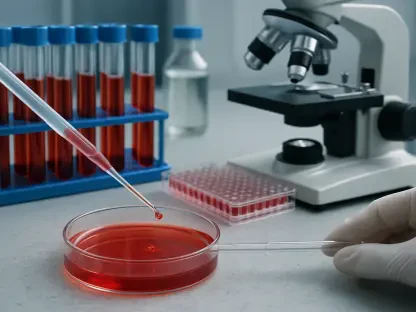
The Innovation Central Laboratory provides a comprehensive suite of services that are specifically engineered to streamline the complex path to market for novel diagnostic tools. Among these offerings is custom assay development, a critical service that allows researchers to tailor diagnostic tests to specific clinical needs, ensuring that new biomarkers can be measured with unprecedented precision. This capability is essential for identifying the subtle biological signals that define early-stage diseases or monitor the effectiveness of experimental therapies. Furthermore, the laboratory offers extensive clinical trial support, providing the necessary infrastructure to validate the efficacy of new treatments. This technical foundation allows biotechnology partners to move through the development lifecycle with greater confidence, knowing that their diagnostic components are backed by the same clinical rigor that healthcare providers expect in a high-volume laboratory environment.
A central pillar of this collaborative effort is the central pathology review service, which has already demonstrated its effectiveness in high-stakes clinical trials involving rare conditions. For instance, in trials investigating therapies for nonadvanced systemic mastocytosis, ARUP’s specialized oversight provided the consistent diagnostic interpretation required across multiple global study sites. This level of standardization is often the difference between a successful trial and one marred by data variability. By centralizing the review process, the Innovation Central Laboratory ensures that every sample is evaluated by top-tier experts using uniform criteria, thereby increasing the reliability of the resulting data. This structured approach helps pharmaceutical companies navigate the regulatory landscape more efficiently, as the data produced is of the highest quality and adheres to the most stringent international standards for diagnostic accuracy and clinical validity.
Advanced Technology: Integrating Applied Bioinformatics
In addition to its focus on physical laboratory processes, the new facility prioritizes the deep integration of applied artificial intelligence and bioinformatics into modern medical workflows. These digital solutions are not merely peripheral additions but are woven directly into the fabric of laboratory operations to enhance both the accuracy and the speed of diagnostic reporting. By utilizing advanced computational power, ARUP can uncover profound insights from complex biological data sets that would remain hidden under traditional analysis methods. This marriage of biological science and high-speed technology is a cornerstone of the laboratory’s mission to modernize diagnostic medicine. The ability to process genomic information and large-scale proteomic data through AI-driven algorithms allows for the identification of patterns that can predict patient outcomes or suggest more effective, personalized treatment strategies for complex chronic illnesses.
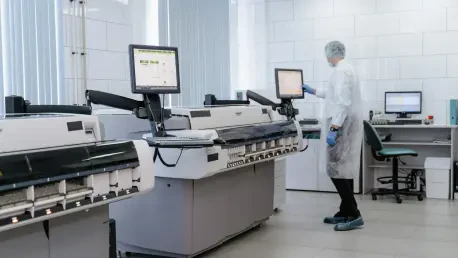
The focus on bioinformatics also extends to the operational efficiency of the laboratory itself, where digital systems optimize sample tracking and data management to reduce the potential for human error. This environment enables biotechnology firms to explore the frontiers of digital pathology and automated screening without the constraints of routine clinical workflows. By providing a dedicated space for these high-tech experiments, ARUP allows its partners to iterate on their designs rapidly, testing how new software interfaces with physical diagnostic hardware in a real-world setting. This synergy between the digital and physical realms ensures that when a new technology is finally deployed to the broader medical community, it has already been stress-tested against the rigors of modern clinical practice. The resulting innovations represent a significant leap forward in the ability of the healthcare industry to deliver rapid and reliable diagnostic results.
Advancing Specialized Testing and Patient Access
Medical Breakthroughs: Neurodegenerative and Rare Diseases
The tangible impact of the Innovation Central Laboratory is already visible through several significant milestones, most notably the introduction of a revolutionary blood-based biomarker assay for Alzheimer’s disease. This test represents a major shift in neurodegenerative diagnostics, offering a far less invasive and more accessible alternative to traditional amyloid positron emission tomography imaging. For patients aged sixty and older who are experiencing symptoms of cognitive decline, this blood test can help determine if their condition is linked to Alzheimer’s pathology with a high degree of certainty. By enabling earlier detection through a simple blood draw, ARUP is helping to pave the way for earlier medical intervention and more proactive management of neurodegenerative diseases. This progress is vital for improving the quality of life for millions of aging individuals and their families as they navigate the complexities of cognitive health.
Beyond the realm of neurodegeneration, the facility is actively engaged in developing assays for rare and underrecognized diseases while simultaneously enhancing genomic sequencing technologies. These efforts are specifically designed to provide clear answers for patients who often face long and exhausting diagnostic odysseys, frequently visiting multiple specialists without a definitive diagnosis. By refining molecular assays and utilizing the latest sequencing platforms, the laboratory can identify rare genetic variants that were previously undetectable. This work is not only about identifying a disease but also about understanding the unique biological profile of the individual patient to inform future treatment decisions. The laboratory’s commitment to these specialized areas of medicine underscores its role as a leader in diagnostic innovation, providing hope for patients with complex medical conditions that have traditionally been difficult to diagnose and manage effectively.
Decentralized Healthcare: Expanding At-Home Testing
Recognizing the broader industry shift toward patient-centric care models, ARUP has forged a strategic partnership with Tasso Inc. to pioneer advanced at-home blood testing services. This collaboration utilizes innovative capillary blood microsampling devices that allow patients to collect their own samples from the comfort of their homes, which are then shipped to ARUP’s laboratory for high-complexity processing. This initiative is a critical component of the laboratory’s strategy to support decentralized clinical research and modern healthcare delivery. By removing the need for a traditional phlebotomy appointment, ARUP is significantly reducing the logistical burden on patients, particularly those who live in rural areas or have mobility challenges. This approach makes it easier for diverse populations to participate in vital clinical trials, ensuring that the data collected is more representative of the general population.
The validation of these microsampling assays at the Innovation Central Laboratory ensures that the samples collected at home meet the same rigorous quality standards as those collected in a clinical setting. This technological advancement is essential for the growth of decentralized clinical trials, which rely on the ability to monitor patient health remotely and accurately over long periods. Moreover, this shift toward at-home testing aligns with the increasing consumer demand for healthcare services that are convenient, private, and integrated into daily life. By positioning itself as the primary performing laboratory for these combined services, ARUP is helping to redefine the relationship between the laboratory and the patient. This model not only improves the patient experience but also enhances the overall efficiency of the healthcare system by reducing the strain on traditional clinics and diagnostic centers while maintaining clinical excellence.
Defining the Future of Precision Medicine
Global Trends: Aligning with Precision Medicine
The creation of the Innovation Central Laboratory is a direct response to the global trends favoring precision medicine and personalized treatment plans. By focusing on specific genomic markers and digital pathology, ARUP is helping to create healthcare solutions that are tailored to the unique biological profile of each individual patient. This facility reflects a deep commitment to making high-quality diagnostics more convenient, less invasive, and more precise than ever before. The laboratory serves as a nexus where scientific discoveries are translated into tangible tools that improve patient outcomes worldwide. As the industry moves away from a one-size-fits-all approach to medicine, the work performed at this facility provides the scientific foundation necessary to support targeted therapies that are more effective and have fewer side effects. This alignment with the future of medicine ensures that ARUP remains at the forefront of the diagnostic sector.
Furthermore, the operationalization of advanced diagnostic tools within this new facility signals a consensus that the future of medicine lies in the intersection of biological science and sophisticated computational analysis. The laboratory’s focus on integrated data sets and molecular profiles allows for a more holistic understanding of human health and disease progression. This perspective is essential for the development of companion diagnostics, which are increasingly required by regulatory agencies to ensure that certain drugs are only prescribed to patients who are genetically predisposed to respond to them. By facilitating the co-development of drugs and diagnostics, the Innovation Central Laboratory is accelerating the pace of medical progress. These efforts not only benefit individual patients but also contribute to the overall sustainability of the healthcare system by ensuring that medical resources are used more effectively and that treatments are directed where they will do the most good.
Organizational Legacy: Sustaining Academic Excellence
Founded in 1984 as a nonprofit enterprise of the University of Utah’s Spencer Fox Eccles School of Medicine, ARUP Laboratories has always maintained a mission-driven approach to the field of pathology. This academic foundation provides a unique perspective that prioritizes the advancement of medical science and patient care over purely profit-driven motives. The new Innovation Central Laboratory builds upon this decades-long legacy of excellence, serving as a vital bridge between academic research and clinical application. With a catalog of over three thousand tests and a reputation for adhering to the most rigorous quality standards, ARUP remains a central pillar of the United States healthcare infrastructure. The inauguration of this facility ensures that the organization can continue to lead the industry in diagnostic innovation while remaining true to its core values of education, research, and high-quality patient service.
In conclusion, the strategic launch of this facility established a new benchmark for how diagnostic institutions collaborated with the broader life sciences industry. The laboratory successfully integrated clinical rigor with commercial agility, ensuring that groundbreaking scientific discoveries were transformed into reliable medical tools. Stakeholders in the healthcare sector looked to this model as a blueprint for overcoming the traditional barriers to diagnostic innovation. By focusing on specialized testing, digital transformation, and patient-centered access, the organization solidified its role in the future of precision medicine. Moving forward, the industry was encouraged to adopt similar collaborative frameworks to accelerate the delivery of life-saving technologies. The successful implementation of these initiatives proved that when academic expertise met industrial innovation, the resulting impact on global health outcomes was both profound and lasting, setting the stage for the next generation of medical excellence.