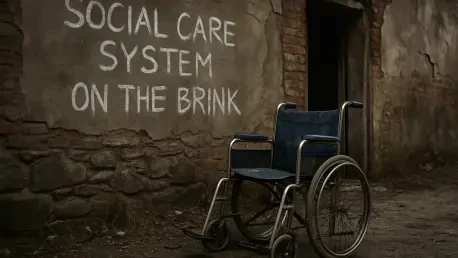

An unprecedented convergence of rapidly aging demographics and escalating financial pressures is pushing Telford & Wrekin Council’s adult social care system to a critical breaking point, creating a fiscal challenge that threatens the stability of all public services across the borough. The local authority is grappling with a demographic explosion that far outpaces national trends, forcing it into a difficult position where the overwhelming majority of its budget is consumed by care-related costs. This situation has necessitated channeling every available penny from tax increases directly into social care, yet even this drastic measure is proving insufficient to stem the tide, signaling an urgent need for systemic solutions as other essential services face unavoidable cuts to balance the books. The crisis is not merely a line item in a budget; it represents a profound societal challenge impacting the most vulnerable residents and the very structure of local governance.
An Unprecedented Demographic Shift
The demographic foundation of Telford is shifting at an alarming rate, placing an unsustainable level of demand on its social care infrastructure and distinguishing it as an area of exceptional concern. A council report highlights that the borough has witnessed the fourth-highest increase in residents aged 65 and over out of 151 comparable English councils. Over the decade leading to 2024, this population segment grew by a staggering 27.6%, a figure that is nearly double the national average of 15.5%. This surge is the most significant of any upper-tier authority within the West Midlands, illustrating a localized aging trend that is far more acute than in surrounding areas. The direct consequence of this rapid demographic aging is a corresponding explosion in the need for complex, long-term care services, which are inherently resource-intensive and place a heavy burden on public funds. The council is therefore not just managing a gradual increase in demand but is instead facing a demographic tidal wave that threatens to overwhelm its capacity to provide adequate support.
The challenge facing the council is further compounded by a broader set of demographic factors that extend beyond the elderly population, creating a perfect storm of social need. Telford’s overall population is growing faster than the national average, increasing the general demand for public services. Critically, the borough also has a higher-than-average proportion of disabled residents, at 20.5% compared to the 17.7% English average, which translates into a greater baseline requirement for specialized support and care. Furthermore, medical advancements mean that residents are living longer, but often with complex, long-term conditions such as dementia that necessitate continuous and costly care. Adding another layer of complexity is a growing cohort of young adults with profound needs who are transitioning from children’s services into the adult care system. This multifaceted demographic pressure means the council is contending with increased demand from multiple population segments simultaneously, each with unique and expensive care requirements.
The Crushing Weight on Public Finances
The immense demographic pressures have translated into a severe financial crisis for Telford & Wrekin Council, with social care now consuming the vast majority of its financial resources. An astonishing 70% of the council’s entire revenue budget is now dedicated to funding care services for both adults and children, a level of spending that leaves little room for other vital public services. To address the relentless rise in demand, the council has made the difficult decision to direct all of this year’s anticipated council tax increase exclusively toward social care. However, this significant injection of funds is still not enough to cover the escalating costs. Consequently, leaders have acknowledged that further cuts to other services are unavoidable, forcing them to make painful choices about what the council can and cannot afford to provide for its residents. This financial reality underscores the severity of the crisis, as the needs of one essential service begin to cannibalize the budgets of others, from road maintenance to library services.
Exacerbating the council’s internal budgetary struggles are powerful external market pressures that are driving up the cost of care beyond its direct control. The private providers that deliver a significant portion of social care services are facing their own financial challenges, primarily due to government-mandated increases in the National Minimum Wage and rising National Insurance contributions. These increased operational costs are inevitably passed on to the local authority in the form of higher fees for commissioned services. This market-driven inflation places an additional, unpredictable strain on an already overstretched budget. The council is therefore caught in a financial vise, squeezed by soaring internal demand on one side and escalating external costs on the other. This dynamic makes long-term financial planning exceptionally difficult and means that even with rigorous budget management, the system remains vulnerable to market volatility that can quickly erase any fiscal gains.
A Strategy of Prevention and Empowerment
In response to this mounting crisis, Telford & Wrekin Council has adopted a proactive and preventative strategy designed to manage demand by empowering residents to live independently for as long as possible. The core of this approach is a “preventative, person-centered” model that aims to prevent, reduce, or delay the need for formal, intensive care packages. By focusing on early intervention and support, the council hopes to build individual and community resilience, thereby curbing the long-term growth in social care expenditure. A central pillar of this strategy is the “home-first approach,” which prioritizes keeping people in their own homes and familiar surroundings rather than resorting to residential care. This is supported by efforts to improve public access to high-quality information, advice, and guidance, enabling residents and their families to make informed choices about their care and to access support networks before reaching a crisis point. The ultimate goal is to foster a culture of independence that benefits both the individual’s well-being and the council’s bottom line.
To bring its preventative strategy to life, the council has invested in a range of community assets and technological solutions designed to support residents directly. Initiatives such as the Independent Living Center, which showcases adaptations and equipment, and community-led Calm Cafes, which offer mental health support, provide accessible, low-level interventions. A significant focus is placed on supporting the region’s estimated 18,000 unpaid carers through the Telford All Age Carers Centre, recognizing their crucial role in the social care ecosystem. The council also works in close partnership with the National Health Service (NHS) to ensure smooth and timely hospital discharges, preventing prolonged hospital stays that can lead to deconditioning. Furthermore, the use of assistive technology is being actively promoted to help people manage their health and safety at home. To ensure these services are effective and responsive, a “Making It Real Board,” composed of service users and carers, collaborates directly with council leaders to co-design and develop services, embedding the user voice at the heart of the system.
The Persistent Challenge of an Unpredictable System
Ultimately, the council’s proactive and community-focused strategies represented a determined effort to manage an increasingly volatile situation. The array of preventative measures, from enhancing community assets to integrating assistive technologies, was designed to build resilience and empower residents. Close collaboration with the NHS and the direct involvement of service users through the “Making It Real Board” were critical components that aimed to make the system more responsive and efficient. Despite these comprehensive efforts, the fundamentally demand-led nature of social care made accurate budget forecasting an exceptionally challenging endeavor. The rigorous financial monitoring conducted throughout the year was a necessary, reactive measure in a system where unforeseen needs could arise at any moment, highlighting the persistent difficulty of planning for a future that remained profoundly unpredictable.