
The transition from adult-centric medical bags to height-and-weight-specific trauma kits marks a major shift in how emergency services approach pediatric prehospital care. For many years, emergency responders have operated under the difficult assumption that children could be treated using scaled-down adult equipment, often leading to improvisation in high-pressure situations. This mindset frequently resulted in delays during the “golden hour” of trauma management, as medics struggled to adapt oversized tools to tiny patients. The introduction of the PEDS EMS Pediatric Trauma Kit represents a decisive move away from this outdated model, providing a system that respects the distinct physiological and anatomical needs of infants and children. By combining evidence-based medical protocols with an ergonomic design, this solution addresses the unique challenges faced by clinicians in the field. This shift is not just about resizing medical tools but about fundamentally reorganizing response.
Bridging the Gap in Prehospital Pediatric Support
The Clinical Origins: Specialized Field Gear
The development of the PEDS EMS system was deeply rooted in clinical reality, drawing on the experiences of experts who have worked in both combat zones and rural healthcare environments. In these settings, responders often find themselves well-equipped for adult trauma but severely lacking the specialized resources needed for pediatric patients. This deficiency becomes particularly dangerous during mass casualty events where resource allocation must be instantaneous. The partnership between Rescue Essentials and clinical specialists aimed to bridge this gap by creating a kit that withstands the rigors of modern emergency services while offering precise tools for stabilization. By focusing on the unique requirements of pediatric patients, such as smaller airway diameters and distinct blood volume ratios, the kit provides a foundational standard that was previously absent in many prehospital settings. This allows for a level of medical precision during initial field care that was once reserved for hospital rooms.
Standardized Protocols: The Treatment Sequence
Standardizing the approach to pediatric trauma involves more than just supplying smaller tools; it requires a systematic adherence to proven medical algorithms designed for life-saving efficiency. The PEDS EMS Kit utilizes the M.A.R.C.H. treatment sequence, which prioritizes the management of massive hemorrhage, airway, respiration, circulation, and hypothermia in a logical flow. This methodology is vital in pediatric care because children are more susceptible to rapid heat loss and respiratory failure compared to adults. By aligning the physical layout of the kit with this diagnostic order, the system minimizes the time wasted searching for components in a crowded bag. The internal logic ensures that a responder, regardless of their fatigue level or the environmental chaos, follows a path that optimizes physiological stabilization. This structure bridges the gap between field improvisation and the high-level care found in pediatric emergency departments, extending trauma management.
Engineering Efficiency Through Cognitive Load Reduction
Precision Management: Weight-Based Decision Support
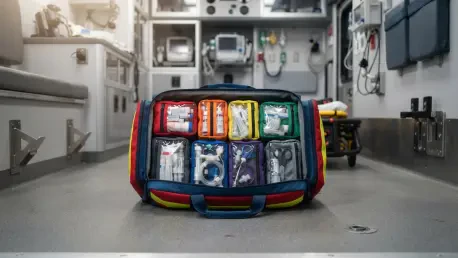
One of the most significant hurdles in pediatric emergency medicine is the rapid calculation of dosages and equipment sizes, a process that becomes difficult under high stress. The PEDS EMS Kit addresses this by incorporating color-coded, weight-based modules that correspond to established pediatric reference systems used globally. This allows a medic to immediately select a pouch tailored to the child’s estimated weight or height, effectively removing the mental math required in the heat of a crisis. The kit features six distinct airway pouches, ensuring that delicate procedures like intubation or suctioning are performed with instruments that match the patient’s anatomy perfectly. This design philosophy focuses on reducing the “cognitive load” on the provider, allowing them to remain calm and focused on the patient’s life threats. When the decision-making process is streamlined through intuitive organization, the likelihood of procedural errors drops, leading to better clinical outcomes for these patients.
Future Directions: Implementation and Training Cycles
To move forward, emergency medical directors initiated comprehensive audits of their existing pediatric inventories to identify critical gaps in size-specific gear. They prioritized the integration of modular kits that allowed for rapid scalability during multi-patient scenes, ensuring that responders were never forced to choose between patients due to equipment shortages. Furthermore, agencies established recurring training cycles that focused on the mechanical operation of these new kits, moving beyond simple familiarity to achieve muscle memory under stress. By tracking patient outcomes specifically linked to the speed of pediatric intervention, departments gathered the data necessary to justify further investments in specialized technology. This proactive stance ensured that pediatric trauma care remained a top priority, pushing the boundaries of what was possible in the prehospital setting and setting a new standard for the next generation of responders. These steps provided a clear roadmap for improving survival rates in vulnerable populations.