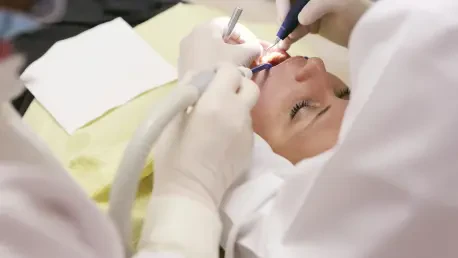

England’s system for urgent dental care, once a safety net for genuine emergencies, has buckled under the weight of a failing National Health Service (NHS), becoming a default pathway for countless individuals unable to find routine treatment. This fundamental breakdown in accessible preventative care means that minor dental issues, such as a small cavity or a loose filling, are frequently left to escalate into severe pain, debilitating abscesses, and dangerous infections. As a result, patients are funneled into a crisis-driven system that was never designed to manage the sheer volume or complexity of their needs. This forces them into a debilitating cycle of temporary fixes, recurring agony, and profound distress, exposing deep-seated failures in national healthcare policy. Public feedback paints a grim picture of a system that is not only difficult to navigate but also offers severely limited treatment, trapping people in a revolving door of pain while disproportionately harming the most vulnerable members of society.
The Maze of Seeking Help
A recurring and deeply frustrating theme in patient feedback is the monumental difficulty of simply accessing the urgent care system. The official guidance from NHS England—to contact a local dentist or call NHS 111—rarely results in an appointment, instead leading to a confusing and exhausting ordeal. Patients describe spending hours on hold, only to be informed that no appointments are available, or worse, being given the Sisyphean task of cold-calling every dental practice in their county. This systemic bottleneck is starkly reflected in NHS data, which showed a 20% year-over-year increase in online inquiries for dental problems via the NHS 111 webform between July and September 2025. This surge demonstrates that for many, the official front door to care is effectively closed. A “mystery shopping” exercise conducted by local Healthwatch teams in the North East further confirmed this scarcity, with volunteers making as many as 15 calls without securing a single appointment, highlighting a system that is failing at the most basic level of access.
This struggle for care is significantly worsened by the absence of a standardized national pathway, creating a “postcode lottery” that determines a patient’s chances of receiving treatment. The process varies dramatically depending on geographical location; for instance, in areas like Essex, NHS 111 operators have the ability to book appointments directly into a dental practice’s system. In stark contrast, patients in other Integrated Care Board (ICB) regions are often just given a list of local dentists and told to arrange an appointment themselves—a nearly impossible task when most practices are not accepting new NHS patients. This fragmentation leads to chaos, with people receiving incorrect information, such as being told urgent appointments cannot be booked on weekends. The consequences of these access failures can be dire, as illustrated by a patient in North Devon with a painful dry socket who, after being informed no urgent care was available in the entire county, had to endure a seven-hour wait in a hospital A&E just to receive a course of antibiotics. This lack of a clear, coherent process not only leaves patients struggling to navigate the system but also undermines the government’s promise of additional capacity.
A System of Temporary Fixes
For the fortunate few who manage to overcome the significant hurdles and secure an urgent appointment, the relief is often short-lived due to the severely limited scope of treatment offered. Patient testimonies consistently reveal that urgent care frequently provides only the most basic, temporary interventions rather than comprehensive solutions to their dental problems. Under the terms of their contracts, NHS practices operating urgent care clinics may only be equipped or commissioned to treat a single tooth or address a single problem at a time, irrespective of the patient’s overall dental health. The type of care also varies drastically between clinics; some may only offer antibiotics to manage an infection, while others perform only extractions, leaving no option for restorative work like repairing a filling. This lack of choice is a source of immense frustration for patients who watch their teeth being lost due to a system that prioritizes a quick, temporary fix over long-term preservation and health.
A critical and systemic failure of the urgent care model is the complete absence of a pathway to necessary NHS follow-up care. After receiving emergency treatment, patients are often discharged and left in a precarious position with no plan for ongoing support. The urgent care provider typically has no capacity to take them on as a regular NHS patient for subsequent or definitive treatment, leaving individuals with an impossible choice: pay for expensive private care to resolve the underlying issue or return to the beginning of the frustrating and often fruitless process of seeking another urgent appointment when the pain inevitably returns. This dynamic effectively creates and perpetuates a two-tier system where those who cannot afford private dentistry are condemned to a relentless cycle of recurring dental crises. An elderly patient from the Isle of Wight, living on a pension, recounted receiving an emergency appointment for a lost filling and crown, only to be told that the required restorative treatment could only be provided by the practice’s private dentists at a cost they simply could not afford, leaving them in constant pain with no resolution in sight.
Trapped in a Revolving Door of Agony
The dangerous combination of difficult access and limited treatment ultimately traps patients in a “revolving door” of temporary relief and recurring pain. Official NHS England guidance states that urgent services should not only address the immediate problem but also begin to manage underlying issues and help patients access further NHS treatment. However, extensive feedback from across the country demonstrates that this is rarely happening in practice. Patients often receive a temporary fix—such as a course of antibiotics to reduce swelling from an infection—which subsides the acute symptoms just long enough for them to no longer meet the clinical threshold for “urgent” care. Yet, the root cause of the problem, whether a cracked tooth or deep decay, remains unaddressed. When the antibiotics run out, the infection and pain quickly return, but the patient is once again unable to access routine care and may struggle to be seen again in the urgent system, restarting the entire painful cycle.
This systemic failure forces desperate individuals to seek help from other parts of the health service, including their GP, who is not equipped to provide dental treatment, and hospital A&E departments. National data starkly illustrates this dangerous trend, with A&E attendances for dental conditions rising by nearly 45%, from 81,773 in 2019/20 to 117,977 in 2023/24. This not only places an enormous and inappropriate burden on emergency departments but also signifies a profound failure in primary dental care. The personal toll of this cycle is immense. One individual shared their story of living with a cracked tooth since April 2024; after receiving antibiotics from an emergency dentist, they could not secure a follow-up appointment for definitive treatment once the immediate infection subsided. They described being “stuck in a cycle of agony” that severely impacted their mental health and their ability to care for their children. This revolving door is a direct result of a fragmented system that fails to provide a continuous and complete pathway of care, leaving patients to suffer the consequences.
The Devastating Human Cost
The consequences of a failing dental care system extend far beyond toothaches, inflicting profound and lasting damage on people’s health, finances, and overall well-being. Patients from across England report enduring extreme, chronic pain that leads to sleepless nights, an inability to eat properly, and a significant decline in their quality of life. The story of a resident in York with two broken teeth, a persistent abscess, and constant pain, who now lives on painkillers because the only available appointment was in another city, encapsulates the daily suffering of many. This physical agony is often accompanied by severe financial strain. Unable to access NHS care, many feel they have no choice but to pay hundreds or even thousands of pounds for private treatment. This forces them to go into debt, borrow money from family, or deplete savings, pensions, or benefits that were intended for daily living expenses, creating a vicious cycle of poverty and poor health.
Perhaps most alarmingly, the desperation caused by constant pain and a complete lack of viable options is driving people to dangerous and unthinkable forms of self-treatment. Harrowing accounts have emerged of individuals performing “DIY dentistry” out of sheer desperation. One person, after being unable to find any professional care for an agonizing tooth, pulled it out themselves. This resulted in a severe infection, for which they then had to obtain antibiotics from an untrusted source because no medical professional—whether at an A&E, a GP’s office, or a dental practice—was available to help. This single act of desperation left them thousands of pounds in debt and highlights a catastrophic failure of the healthcare system to provide even the most basic safety net for its citizens. These are not isolated incidents but rather symptoms of a system that has broken down at every level, leaving people to face unimaginable choices between enduring pain and taking life-threatening risks.
An Unequal Crisis
The crisis in dental care does not affect everyone equally; it disproportionately impacts the most vulnerable populations, thereby deepening existing health inequalities and failing those who need support the most. Elderly patients, individuals with chronic illnesses, and people undergoing treatments like chemotherapy, all of whom require consistent and prioritized dental care, are being left behind by a system that cannot meet their needs. The experience of a cancer patient whose teeth broke during radiotherapy and chemotherapy but could not find any urgent care is a stark example of this failure. Another person with Parkinson’s disease reported that their neurological symptoms were worsening due to the stress and pain of untreated tooth decay. These experiences persist despite clear guidance from the Chief Dental Officer stating that cancer patients require prioritization to prevent delays in their vital medical treatments. The failure to implement this guidance on the ground demonstrates a critical and dangerous disconnect between policy and practice.
Analysis of NHS figures reveals a widening and alarming gap in dental health outcomes between the richest and poorest communities in England. While the raw number of NHS dental treatments in deprived areas has grown, the type of treatment has shifted dramatically toward emergency interventions. People living in the most deprived areas are now 67% more likely to require urgent dental treatment than those in the most affluent areas, a significant increase from 40% in 2019. This statistic is a clear indicator that a lack of routine and preventative NHS dentists in rural and low-income areas is forcing these populations to rely on urgent care for problems that should have been prevented or treated at an earlier, simpler, and less painful stage. They are trapped in a system where they can neither access routine care to prevent problems nor afford private alternatives to fix them, cementing a cycle of poor oral health and emergency interventions that perpetuates and deepens social and health inequalities.
Political Promises vs Patient Reality A Call for Transparency and Reform
In response to sustained public outcry and widespread campaigning, the government had committed to delivering an additional 700,000 urgent dental appointments annually through 2028-29. However, the rollout of this plan was slow and opaque, with clear implementation instructions not issued to ICBs until February 2025 and finer policy details arriving only in May 2025. Critically, there was a complete lack of publicly available data to track whether these promised appointments were materializing and reaching patients in need. Despite ministerial assurances, the NHS Business Services Authority (NHSBSA) only shared this information internally with dental contractors and commissioners, making it impossible for the public or policymakers to assess whether the plan was on track. This situation called for comprehensive reform, starting with transparent monitoring of the urgent appointments target. Furthermore, it was urged that ICBs hold dental practices accountable for stabilizing patients and supporting them in accessing follow-on care. The need for clear, consistent information and centralized booking systems was paramount to ending the postcode lottery. Most fundamentally, these reforms pointed to the necessity of a new dental contract, one that would introduce a legal right for people to be registered with an NHS dentist. Such a foundational change aimed to rebuild NHS dentistry around the principles of fair access, prevention, and long-term patient care, finally breaking the cycle of pain that had come to define the system.